Hosts set on organic tea
If organic status is a requirement for the party, check the claim on the particular loose-leaf tea rather than relying on a premium-looking caddy or a brand-wide description.


Choose a bergamot-flavoured Earl Grey if its scent suits your guests, or a plain organic black tea if you want a more neutral pot that can be served with milk. Check the organic claim on the exact loose-leaf product, then plan its brewing instructions and a separate drink for guests who avoid caffeine.
If organic status is a requirement for the party, check the claim on the particular loose-leaf tea rather than relying on a premium-looking caddy or a brand-wide description.
A bergamot-flavoured Earl Grey and an unflavoured black tea offer different pots for cakes and scones. Decide whether guests would welcome a scented tea or prefer a plain one they can take with milk.
Plan how much tea to brew, follow the chosen product’s directions and provide a separate decaffeinated or caffeine-free drink if some guests limit caffeine.
Settle the flavour choice first, then check the exact product’s organic labelling and preparation directions before deciding how much to serve.
Choose it when: Guests are likely to enjoy bergamot with their afternoon tea; Fortnum & Mason lists black tea and bergamot flavouring in its Highgrove Organic Earl Grey.
Bear in mind: Bergamot is a distinct flavour, not a substitute for a plain black tea if guests want a neutral pot.
Choose it when: A straightforward black tea matters more than added flavour; Fortnum & Mason lists Organic Black Tea (100%) for its Highgrove Prince of Wales blend.
Bear in mind: Fortnum & Mason describes that blend as malty and strong, so follow its brewing directions rather than assuming every guest wants the same strength.
| Priority | What to check | Your needs |
|---|---|---|
| Organic labelling | Check the organic claim and certification information on the exact product. The UK Department for Environment, Food & Rural Affairs states that at least 95% of a food product’s agricultural ingredients must be organic for the product to be labelled organic. | If organic tea is the reason I’m buying, a general claim about a brand or its packaging is not enough. |
| Flavour and ingredients | Read the ingredients for added flavouring or a plain black-tea blend. Check whether the tea is intended to be served with milk if that matters to your guests. | I’d choose a scented pot for guests who enjoy bergamot, but a plain tea if I’m serving only one option to a mixed group. |
| Brewing | Use the chosen tea’s leaf quantity, water temperature and infusion time. Fortnum & Mason specifies one and a half teaspoons per person and five minutes for Highgrove Prince of Wales; Ringtons gives a general guide of one teaspoon per cup and three to five minutes. | With several cups to pour, I want a method I can repeat without leaving the leaves steeping in the serving pot. |
| Guest choices | Check whether you need a separate decaffeinated or caffeine-free drink, and identify flavoured teas clearly when serving. | Not everyone at my table may want standard black tea or the same flavour. |
A loose-leaf range or a sustainability statement does not establish the organic status of every tea in it.
Read the exact product’s organic labelling and ingredients before ordering it for an organic-only party.
Bergamot changes the flavour of the pot; guests expecting plain tea with milk may not want it.
If you can serve two teas, offer a plain black tea alongside it. Otherwise, choose the flavour with your guests’ preferences in mind.
Leaf quantities and infusion times differ between product instructions and general loose-tea guidance.
Follow the pack first and try a small pot before guests arrive. Strain the leaves when the stated infusion time is up.
Guests may limit caffeine or simply prefer another drink. The NHS identifies tea as a source of caffeine.
Make a clearly identified decaffeinated or caffeine-free option available without assuming it has the same ingredients as the main pot.
A brand’s loose-leaf range is a starting point for choosing a flavour; check organic status on the particular tea you intend to buy.
Its Highgrove range includes an Organic Earl Grey loose-leaf caddy and an Organic Prince of Wales loose-leaf blend.
Its Afternoon loose tea combines Chinese black tea, oolong and jasmine-scented green tea.
Twinings has a loose-leaf range and a separate Organic & Fairtrade collection.
Yorkshire Tea describes loose versions of Yorkshire Tea and Yorkshire Gold for teapot use.
Its loose-tea range includes Earl Grey and Breakfast Tea caddies.
Ringtons supplies loose tea and general guidance for brewing it.
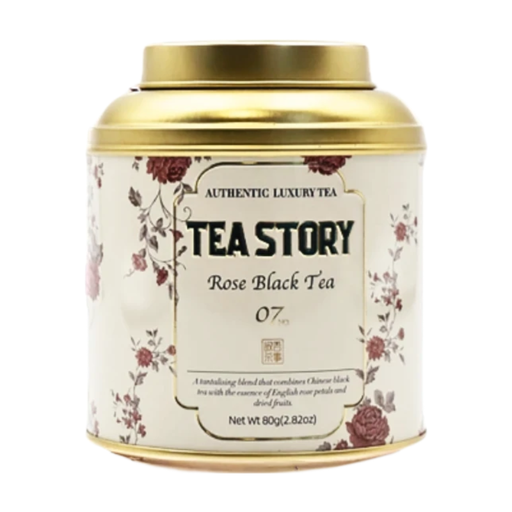
This rose-flavoured loose black tea is an option to consider if you want a scented pot for the party. Check its organic labelling on the exact product before treating it as an organic choice.
 No image available
Consider this rose-flavoured black tea for guests who want a scented tea rather than a plain pot. Its product title claims ECOCERT organic status; check the pack’s organic labelling and certification details if organic status is essential. Check the brewing directions and plan a separate drink for guests avoiding standard black tea.
Check the organic claim and certification information for the exact tea, not just the brand. The UK Department for Environment, Food & Rural Affairs states that at least 95% of a food product’s agricultural ingredients must be organic for the product to be labelled organic.
Start with the chosen product’s instructions and the number of cups you plan to serve. Fortnum & Mason advises one and a half teaspoons per person and five minutes for its Highgrove Prince of Wales blend; Ringtons’ general guide is one teaspoon per cup and three to five minutes. Try a small pot rather than applying either measure to every tea.
Offer a clearly identified decaffeinated or caffeine-free alternative when guests’ preferences are unknown. Standard black tea contains caffeine, so a separate drink gives guests who limit it a choice.
Keep it in an airtight container away from sunlight, following Ringtons’ loose-tea storage guidance.