Shoppers prioritising an organic claim
You want loose-leaf black tea for breakfast and need to check the organic claim on the particular product, rather than treating words such as “natural” as equivalent.


Choose a loose-leaf black tea explicitly labelled organic if organic sourcing is a priority, but check the claim on the exact pack rather than relying on a brand’s wider range. For a weekday breakfast, compare each blend’s brewing instructions with the time you have. Organic status does not tell you whether a black tea is decaffeinated.
You want loose-leaf black tea for breakfast and need to check the organic claim on the particular product, rather than treating words such as “natural” as equivalent.
You want a breakfast-style blend with clear instructions for the amount of tea, water temperature and infusion time, so preparation fits your morning routine.
You need to distinguish organic from decaffeinated tea, or take account of advice you follow about drinking tea around meals when managing iron deficiency.
Start with the exact tea’s organic claim, then compare its preparation instructions and whether ordinary black tea fits your circumstances.
| Priority | What to check | Your needs |
|---|---|---|
| Organic status | Read the exact product’s organic wording and ingredients. Check its pack or producer information for approved control-body details: the UK Department for Environment, Food & Rural Affairs says organic food claims depend on production rules and certification. | I want an organic claim I can check for the tea I am buying, not an assumption based on a brand’s ethical language or another product in its range. |
| Breakfast brew | Compare the blend description, amount of leaves, water temperature and infusion time. Hampstead Tea instructs up to three minutes for its Organic English Breakfast; Fortnum & Mason specifies five minutes for the Highgrove Organic Prince of Wales Blend. | A clearly described black-tea blend and a repeatable brewing method would help me make loose leaf part of a weekday breakfast. |
| Caffeine | Check whether the exact product is labelled decaffeinated; an organic claim does not establish this. If caffeine intake matters to you, also consider the other sources in your day. | I may need a decaffeinated tea rather than an ordinary organic black tea. |
| Tea with meals | If you follow iron-deficiency dietary guidance, check when it advises you to drink tea. University Hospitals Coventry and Warwickshire NHS Trust advises avoiding tea within one hour before or after meals in that context. | If I am managing iron deficiency, I need to consider when I drink tea as well as which blend I choose for breakfast. |
In the UK, the Department for Environment, Food & Rural Affairs ties organic food labelling to production rules and certification by an approved control body. General natural or ethical wording does not establish an organic claim for the tea in your basket.
Check the exact product’s label, ingredients and control-body information before relying on its organic wording.
Twinings lists loose-leaf teas and has a separate Organic & Fairtrade collection. Those range descriptions alone do not establish that a particular loose-leaf breakfast tea is organic.
Read the individual product listing and pack rather than transferring a claim between teas.
Organic status and decaffeination describe different things. Tea with a meal can also affect iron absorption for people following iron-deficiency dietary advice, according to University Hospitals Coventry and Warwickshire NHS Trust.
Check for an explicit decaffeinated label if that is what you need. If you follow iron-deficiency advice, take its guidance on drinking tea around meals into account.
These brand references point to particular teas or ranges; a loose-leaf range does not establish organic status for every product in it.
Hampstead Tea lists an Organic English Breakfast loose-leaf tea for a morning brew.
Fortnum & Mason lists the Highgrove Organic Prince of Wales Blend as a loose-leaf black tea.
Twinings lists loose-leaf Assam, English Breakfast and Earl Grey teas, alongside a separate Organic & Fairtrade collection.
Yorkshire Tea describes loose versions of its Yorkshire Tea and Yorkshire Gold blends.
Whittard of Chelsea lists loose teas including English Breakfast, Chelsea Breakfast, Assam and Darjeeling.
Bettys lists loose-leaf Breakfast Tea, Tea Room Blend and Earl Grey.
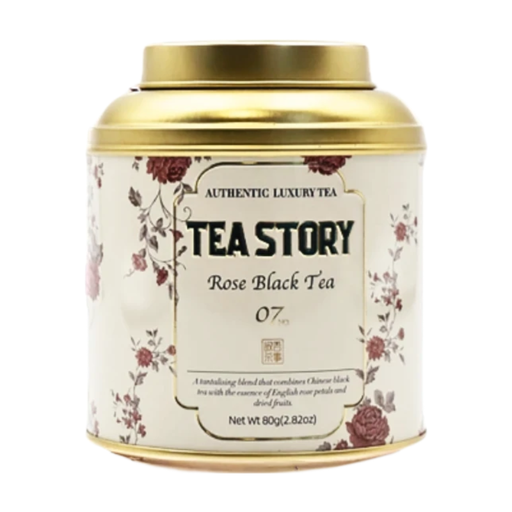
This rose black tea is a floral loose-leaf option with an organic claim in its product name, rather than a conventional English Breakfast blend.
 No image available
Consider this 80g loose-leaf rose black tea if a floral blend appeals more than a conventional breakfast tea. Its name makes an ECOCERT Organic claim; check the exact pack’s organic control-body details before relying on it. The product is described as an evening blend, so compare its flavour with what you want at breakfast.
The UK Department for Environment, Food & Rural Affairs says food can be labelled organic only when it meets the applicable organic-production rules and the product and its suppliers are certified by an approved organic control body. Check the claim on the particular tea you intend to buy.
Read the exact product’s organic wording and ingredients, then inspect its pack or producer information for control-body identification. An organic collection name or a different tea from the same brand is not confirmation for this product.
Follow the instructions for your chosen blend rather than using one time for every tea. Hampstead Tea specifies freshly boiled water and up to three minutes for its Organic English Breakfast, while Fortnum & Mason specifies 100°C water and five minutes for the Highgrove Organic Prince of Wales Blend.
No: an organic claim does not mean the tea has been decaffeinated. If caffeine reduction is your requirement, look for an explicit decaffeinated label on the exact product rather than relying on its organic status.
It can. University Hospitals Coventry and Warwickshire NHS Trust advises people following its iron-deficiency dietary guidance not to drink tea within one hour before or after meals because tea with food can reduce iron absorption. This advice concerns that dietary condition, not every breakfast-tea shopper.