Everyday organic black-tea drinkers
If you add milk to your tea, check the exact blend’s description as well as its organic claim. Pack weight and the quantity you expect to use also matter when choosing a tea for regular brewing.


For an organic loose-leaf tea you plan to drink regularly, check the claim on the exact product before weighing up pack size, delivery terms and how you brew it. Tea People describes its Organic English Breakfast as a certified black tea suitable for milk; Fortnum & Mason lists the Highgrove Organic Prince of Wales Blend in a 110g caddy if that format matters more to you.
If you add milk to your tea, check the exact blend’s description as well as its organic claim. Pack weight and the quantity you expect to use also matter when choosing a tea for regular brewing.
A brand’s organic collection and its loose-leaf range do not necessarily contain the same products. Check the claim on the particular tea rather than relying on the brand name or caddy presentation.
Before ordering, check whether you have a strainer or infuser and somewhere airtight to store the leaves. The product’s measuring and brewing instructions will help you prepare the quantity you intend to drink.
Start with the organic claim on the exact tea, then consider the pack and how it will fit into your usual brewing routine.
| Priority | What to check | Your needs |
|---|---|---|
| Organic status | Find the organic claim on the exact loose-leaf listing or pack. Check its certification information rather than relying on a brand-wide description. | I want the tea I buy—not merely another product in the range—to carry an organic claim. GOV.UK’s UK organic food labelling guidance, updated in August 2025, ties that claim to production rules and certification by an approved control body. |
| Pack and delivery | Check the stated net weight, delivery terms and whether you expect to use the pack while the tea remains fresh. | A smaller pack may suit me if I drink this blend occasionally; for a regular brew, I may prefer a pack that lasts longer. |
| Blend and brewing | Read the tea type, any stated milk suitability, and the product’s dose, water-temperature and steeping instructions. | If I take milk, I want a black-tea blend described for that use. I also need brewing instructions I can follow at home. |
| Preparation and storage | Check that you have a way to strain the leaves and an airtight container that can be kept away from sunlight. | Loose tea needs to fit my daily routine, including clearing away the leaves and storing the opened pack. |
Twinings has an Organic & Fairtrade collection and a separate loose-leaf range. Ringtons lists organic tea bags alongside loose teas. Neither fact establishes an organic claim for every loose-leaf product.
Check the exact loose-leaf product or pack for its organic claim and certification information before treating it as an organic option.
Bettys lists Yorkshire Gold as loose black-leaf tea, but that listing does not present the product as organic. Its suitability for an everyday brew does not answer an organic-shopping requirement.
If organic production is essential to your choice, apply that check before comparing conventional and organic teas.
A loose-leaf pack requires a way to separate the leaves from the drink. Dose and steeping instructions also vary between teas.
Check the product’s brewing directions and whether you already have a suitable strainer, infuser or filtered teapot. Store opened leaves airtight and away from sunlight, as Ringtons advises for its loose tea.
A strainer or suitable storage container is an additional item to arrange if you do not already have one.
These ranges offer different starting points, but organic status must be checked for the particular loose-leaf tea you choose.
Fortnum & Mason lists Highgrove Organic Prince of Wales Blend Tea as a 110g loose-leaf caddy.
Twinings maintains an Organic & Fairtrade tea collection and a separate loose-leaf range.
Yorkshire Gold is listed by Bettys as loose black-leaf tea.
Whittard’s loose-tea collection includes black, green, fruit and herbal choices.
Ringtons lists several loose teas and provides guidance on brewing and storage.
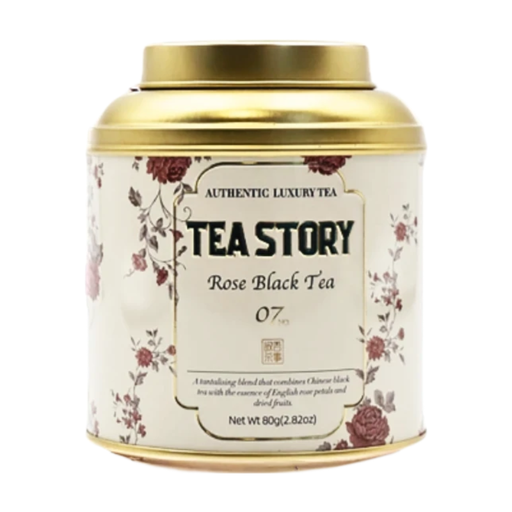
This option is a rose black loose-leaf tea for shoppers considering an organic-labelled blend. Check its product-specific claim before making organic status part of your decision.
 No image available
This 80g rose black tea is a loose-leaf option if that blend appeals to you. Its title claims ECOCERT organic; check the exact product’s certification details before relying on the claim, and check whether the blend suits milk if that matters to you.
Look for an organic claim on the exact product listing or pack, along with its certification information. GOV.UK’s organic food labelling guidance, updated in August 2025, says a food product labelled organic must meet the applicable production rules and that the product and suppliers must be certified by an approved organic control body. A brand’s general ethical or premium description is not the same check.
No such conclusion follows from the range name alone. Twinings lists organic teas and loose teas, while Ringtons lists organic tea bags alongside loose-leaf products; check the organic claim on the particular loose-leaf tea you intend to buy.
Follow the instructions for your particular tea. Tea People specifies one teaspoon per cup, water at 95–100°C and a 3–4 minute steep for its Organic English Breakfast. Other blends may give different directions; Ringtons advises keeping opened loose tea airtight and away from sunlight.
No special electrical appliance is needed, but you do need a way to contain or strain the leaves. Check whether you already have an infuser, a tea strainer or a teapot with a filter.