Hotels offering an in-room tea ritual
This approach suits rooms equipped with an infuser or teapot, a way to measure and discard leaves, and instructions for the tea being served.


Choose organic loose-leaf tea for hotel rooms only if guests can use a clean infuser or teapot, measure the leaves and follow instructions for the particular tea. If that setup is difficult to maintain, a pre-portioned format may be simpler; either way, check the exact product label and supplier documentation before describing the tea as organic.
Loose leaf fits a hotel-room service where the tea, preparation equipment and guest instructions can be managed together.
This approach suits rooms equipped with an infuser or teapot, a way to measure and discard leaves, and instructions for the tea being served.
Buyers need to check the exact tea and pack against its current label and supplier documentation, rather than relying on a brand’s wider organic range.
Where guests prepare their own tea, a consistent portion measure and product-specific infusion time make the instructions easier to follow.
Start with the claim on the exact product, then decide whether its brewing method and flavour suit an unattended room.
| Priority | What to check | Your needs |
|---|---|---|
| Organic status | Check the exact pack’s label and supplier documentation. GOV.UK says an organic food claim requires certification of the product and suppliers by an approved organic control body. | I need an organic claim that applies to the tea guests will actually receive, including its particular blend and pack format. |
| Room preparation | Provide an infuser or teapot, a portion measure, a way to discard leaves and the selected tea’s brewing instructions. Hampstead Tea specifies one teaspoon and up to three minutes for its Organic English Breakfast; Fortnum & Mason specifies one and a half teaspoons per person and five minutes for Highgrove Organic Prince of Wales. | Guests should be able to prepare the tea without having to guess how much to use or how long to leave it brewing. |
| Tea profile | Read the ingredients and flavour description of each option. Fortnum & Mason lists black tea and bergamot flavouring for Highgrove Earl Grey, which makes it a different choice from a plain breakfast-style black tea. | I want a familiar black-tea option for the core offer, with an aromatic blend only if there is room for a second choice. |
| Ingredients and handling | Keep current supplier and finished-product specifications. If staff decant or portion tea, consider closed storage and handling arrangements; the Food Standards Agency’s myHACCP guidance addresses specifications and storage risks. | Staff need to identify what is in each tea and handle loose leaves consistently, especially when serving flavoured blends. |
| Serving format | Confirm whether every relevant room can support loose-leaf preparation. If not, check the exact organic claim and preparation instructions of a pre-portioned alternative rather than transferring claims from a loose-leaf product. | If an infuser, measuring method and leaf disposal cannot be maintained in the room, I need a simpler serving format. |
An organic collection and a loose-leaf collection do not establish the claim for every product in either range. GOV.UK’s organic-labelling guidance concerns the food being labelled and its certified supply chain.
Check the exact product name, pack and current label or supplier documentation before using an organic description in the room.
Guests need a way to contain and remove the leaves. Brewing directions also differ: Hampstead Tea and Fortnum & Mason give different quantities and infusion times for their respective black teas.
Supply a clean infuser or teapot, a portion measure, disposal arrangements and a short card with the chosen tea’s instructions. Otherwise, consider a pre-portioned format whose own organic claim has been checked.
Earl Grey contains a bergamot flavouring, so it does not offer the same flavour as a plain breakfast-style black tea.
Choose the core tea with the expected guest-room offer in mind, and use a flavoured blend as an additional option where practical.
Once tea is removed from its original pack, staff still need to identify the blend and its ingredients. The Food Standards Agency’s myHACCP guidance calls for raw-material and finished-product specifications.
Keep specifications current, identify decanted containers and maintain the supplier’s ingredient and allergen information for each blend.
These ranges offer different starting points for checking tea profiles and pack details; an organic claim must still be checked for the product selected.
Hampstead Tea lists several organic loose-leaf teas, including English Breakfast and Earl Grey.
Fortnum & Mason lists Highgrove loose-leaf black teas in caddies, including Prince of Wales Blend and Earl Grey.
Twinings has loose-leaf and Organic & Fairtrade collections.
Whittard of Chelsea lists loose-leaf black teas including Earl Grey, English Breakfast and Assam.
Bettys lists loose-leaf teas, while its Yorkshire Tea range includes Yorkshire Gold Leaf Tea.
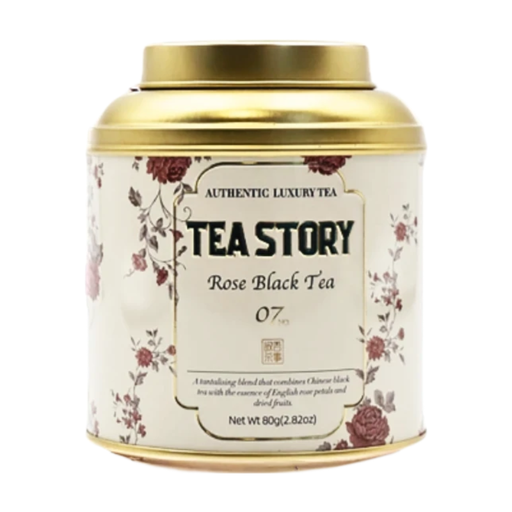
This rose black tea is an aromatic loose-leaf option for a hotel room equipped for guests to prepare and discard loose leaves.
 No image available
Consider this rose black tea as an aromatic choice where guests can prepare loose leaf in their rooms. The product title identifies an 80g pack; check the exact pack’s brewing directions and organic documentation before setting out guest instructions or making an organic claim.
Check the exact tea’s label and supplier documentation, not just the brand’s wider range. GOV.UK says food can be labelled organic only when the product and its suppliers are certified by an approved organic control body and the applicable organic rules are met.
Yes, if guests have an infuser or teapot, a way to measure and discard leaves, and instructions for that tea. Hampstead Tea instructs one teaspoon and up to three minutes for its Organic English Breakfast, while Fortnum & Mason instructs one and a half teaspoons per person and five minutes for Highgrove Prince of Wales Blend. If the room cannot support those steps, consider a pre-portioned format.
No. Fortnum & Mason’s Highgrove Earl Grey listing includes bergamot flavouring, while its Highgrove Prince of Wales listing identifies black tea as the ingredient. Check each blend’s ingredients and organic documentation separately, and decide whether a flavoured tea should supplement the core room offer.
Keep current supplier and finished-product specifications, particularly if staff decant or portion leaves. The Food Standards Agency’s myHACCP guidance addresses specifications for raw materials and finished products and considers storage arrangements that reduce contamination and deterioration risks.
Yes: retain the current ingredient and allergen information for each tea, including flavoured blends, so staff can answer guest questions accurately. The Food Standards Agency says non-prepacked allergen-information requirements can apply to loose items as well as food served in restaurants.