Households making tea every day
If loose-leaf tea is a regular part of your weekly shop, look for an explicitly organic product in a quantity you expect to use. Have an airtight place to store larger packs away from sunlight.


For a weekly shop, choose loose-leaf tea whose exact pack carries an organic claim you can check, then pick a flavour and pack size your household will use. The Department for Environment, Food & Rural Affairs says products and suppliers must meet certification requirements for food to be labelled organic in Great Britain; a brand’s wider range or a premium-looking caddy is not enough to establish the status of a particular tea.
If loose-leaf tea is a regular part of your weekly shop, look for an explicitly organic product in a quantity you expect to use. Have an airtight place to store larger packs away from sunlight.
If you usually want a strong black tea, check the blend and its stated flavour before switching. Organic status alone will not tell you whether a tea has the morning-cup profile you prefer.
A smaller pack lets you try a lighter Darjeeling or a bergamot-scented Earl Grey without committing to a large quantity of an unfamiliar flavour.
Start with the organic claim on the exact product, then choose the tea style and quantity that fit how often you brew it.
| Priority | What to check | Your needs |
|---|---|---|
| Organic claim | Check the exact pack or product page for its organic claim and certification information. For a flavoured blend, read how the ingredients are described. The Department for Environment, Food & Rural Affairs says products and suppliers must meet certification requirements for food labelled organic in Great Britain. | I want to know that the loose-leaf tea I am buying is identified as organic, rather than relying on a general description of the brand or range. |
| Tea style | Check whether it is a plain black blend, a lighter Darjeeling or a flavoured tea, and read the product’s brewing directions. Fortnum & Mason describes Highgrove Prince of Wales as malty and strong; Hampstead describes its Darjeeling as light-bodied. | My usual cup matters: I may want a stronger morning tea, a lighter brew or the bergamot flavour of Earl Grey. |
| Pack size | Check net weight and format against how quickly you use tea. Hampstead lists its Organic Darjeeling in 100g, six 100g packs and 1kg formats; the Highgrove loose-leaf caddies described by Fortnum & Mason are 110g. Plan for airtight storage away from sunlight, as Ringtons advises for loose tea. | If this is a new flavour, I would rather start with a smaller pack. A larger format makes more sense once my household knows it will drink the tea regularly. |
Those descriptions do not establish the organic status of a particular loose-leaf product.
Check the exact pack’s organic claim and certification information instead of relying on the brand’s wider range.
A lighter Darjeeling, a strong black blend and a bergamot-scented Earl Grey answer different tastes. Tea left unused also needs suitable storage.
Try a smaller format when changing styles; consider a larger one once you know the household will drink it and can store it airtight, away from sunlight.
Hampstead describes its Darjeeling as light-bodied, while Fortnum & Mason describes Highgrove Prince of Wales as malty and strong. Earl Grey adds a distinct bergamot flavour.
Choose by the cup you actually want, and follow the directions for that particular tea.
These brands provide useful tea-style references; check the exact product whenever organic status is part of your decision.
Twinings lists loose Assam, English Breakfast and Earl Grey alongside an organic tea collection.
Yorkshire Tea lists loose Yorkshire Tea and Yorkshire Gold for shoppers who favour familiar black blends.
Whittard lists loose teas in styles including English Breakfast, Earl Grey and Darjeeling.
Fortnum & Mason lists Highgrove Organic Prince of Wales and Highgrove Organic Earl Grey as 110g loose-leaf caddies.
Bettys lists loose-tea caddies and larger formats for some blends.
Ringtons offers traditional and blended loose teas and gives preparation and storage guidance.
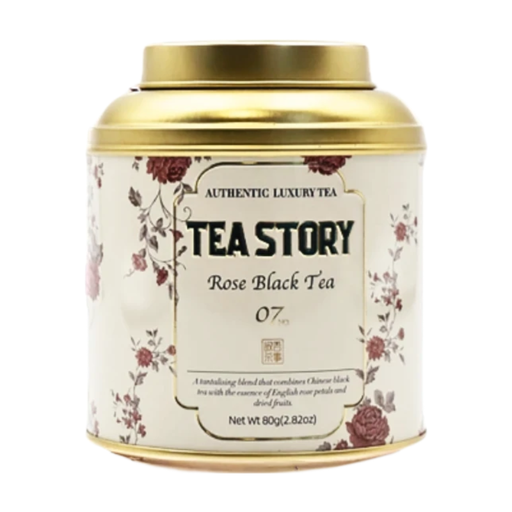
This 80g rose-flavoured black loose-leaf tea is a smaller-pack option for trying a floral style. Check the organic claim on the exact pack before choosing it for an organic weekly shop.
 No image available
The 80g pack offers a smaller quantity for trying black tea with rose flowers. Its title makes an ECOCERT organic claim; check the certification information on the exact pack if organic status is essential to your shop.
Check the organic claim on the exact product and its certification information. The Department for Environment, Food & Rural Affairs says products and suppliers must meet certification requirements for food to be labelled organic in Great Britain; for a flavoured tea, read the ingredient description as well.
No. Leaf format and premium presentation do not establish organic status. Check the individual loose-leaf product’s label rather than relying on those descriptions or a brand-level collection.
A 1kg pack makes more sense when your household already knows and regularly drinks that tea. Hampstead lists a 1kg format for its Organic Darjeeling; before choosing a large pack, make sure you can store the tea airtight and away from sunlight, as Ringtons advises for loose tea.
Follow the directions for your particular tea, because preparation can vary. Ringtons suggests one teaspoon per cup and brewing for three to five minutes according to the strength you want.