What to check before choosing
Start with the requirement you will not compromise on, then check whether the tea’s preparation and flavour fit the lunch break you actually have.
| Priority |
What to check |
Your needs |
| Organic claim |
Check that the exact loose-leaf product is labelled organic, rather than relying on its brand or a separate organic range. Check the ingredients and any control-body details shown on the pack or listing. The Department for Environment, Food & Rural Affairs sets certification conditions for organic food labelling in Great Britain. |
If organic status is essential to me, a premium description or an organic tea-bag range is not a substitute for an organic claim on the loose tea I buy. |
| Brewing |
Read the product’s measure, water and brewing instructions. Fortnum & Mason specifies 1.5 teaspoons per person, water at 100°C and five minutes for Highgrove Organic Prince of Wales Blend; other teas may give different instructions. |
Can I get hot water, use an infuser or strainer and allow the stated brewing time between lectures? If not, I would need to make the drink before class. |
| Tea style |
Check the tea type and ingredients on the exact product. Fortnum & Mason lists its Highgrove blend as organic black tea; other loose-leaf ranges include different tea styles and flavours. |
I want a tea whose stated ingredients suit the kind of cup I drink at lunch, whether that is black tea or a different loose-leaf option. |
| Storage |
Check whether the pack closes securely or you have an airtight container. The UK Tea & Infusions Association advises storing tea somewhere cool and dry, away from strongly flavoured or perfumed foods; Ringtons also advises keeping it away from sunlight. |
In a shared kitchen, I need somewhere I can close and store loose tea away from food odours between uses. |
| Pack format |
Check the stated pack weight and whether a caddy or other container suits where you will keep it. Fortnum & Mason lists the Highgrove loose-leaf caddy at 110g; the Joybuy Tea Story listing names an 80g pack. |
Would I rather keep a caddy in my room, or carry only the tea I need for the day? The pack size matters differently for each routine. |
Brand ranges to consider
These brand references describe particular loose-tea ranges and products, not an organic claim for every tea a brand sells.
Fortnum & Mason
Fortnum & Mason lists Highgrove Organic Prince of Wales Blend as a 110g loose-leaf caddy whose ingredient is organic black tea.
- The product listing gives a specific five-minute brewing instruction.
- A caddy and the time needed to brew it may not suit every between-lecture routine.
Twinings
Twinings lists loose-leaf teas including Assam, English Breakfast and Earl Grey, alongside a separate Organic & Fairtrade collection.
- The loose-leaf range offers several named black-tea styles.
- A separate organic collection does not establish that a particular loose-leaf tea is organic; check its own listing.
Whittard
Whittard’s loose-tea range includes English Breakfast and Decaffeinated English Breakfast among its listed options.
- Its range gives readers a choice of tea types and blends.
- Check an individual product’s wording if an organic claim is required.
Bettys
Bettys lists Tea Room Blend, Breakfast Tea and single-estate options in its loose-tea range.
- The catalogue offers both blends and named single-estate teas.
- The range listing does not establish an organic claim for those individual teas.
Yorkshire Tea
Yorkshire Gold Leaf Tea is a 250g black leaf tea product blended and packed by Taylors of Harrogate.
- Its product listing identifies the ingredient as black leaf tea.
- That listing does not make an organic claim for the product.
Ringtons
Ringtons lists loose-leaf teas and gives preparation and storage advice for the format.
- Ringtons advises one teaspoon per cup and a three-to-five-minute steep for its loose tea.
- An organic tea-bag product from the brand is not evidence that a separate loose-leaf product is organic.
Joybuy tea option
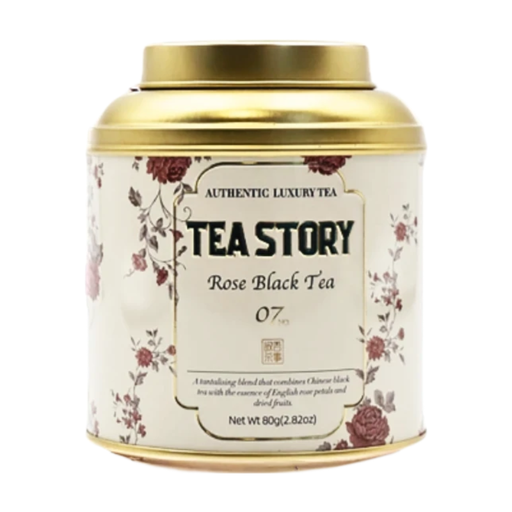
This Joybuy option is an 80g loose-leaf black tea with an organic claim in its product name. If that claim is essential to your choice, check the exact pack or listing for the organic details before relying on it.
 No image available
Tea Story Rose Black Tea ECOCERT Organic Loose Leaf 80g
This loose-leaf black tea is an option to consider for a lecture-day lunch if you have hot water and a way to brew loose leaves. The product name states an 80g pack and uses an organic claim; check the pack or listing for the details behind that claim, as well as its brewing instructions and whether you will need a separate infuser or strainer.
View on Joybuy
Questions about organic loose-leaf tea
How do I check an organic claim on loose-leaf tea?
Check the exact product’s organic wording, ingredients and any control-body details shown on its pack or listing. For food labelled organic in Great Britain, the Department for Environment, Food & Rural Affairs sets production and certification requirements; words such as “premium” or “natural” are not the same claim.
Can I make Highgrove organic loose tea during a university lunch break?
You can plan to make it during the break if you have hot water, an infuser or strainer, and time for the stated preparation. Fortnum & Mason instructs customers to use water at 100°C, 1.5 teaspoons per person and a five-minute brew for Highgrove Organic Prince of Wales Blend.
Does a brand’s organic tea-bag range mean its loose tea is organic?
No. An organic claim on one product does not establish the status of another format. Check the particular loose-leaf product rather than relying on a brand collection or an organic tea-bag listing.
How should I store loose tea in shared accommodation?
Keep it closed in a cool, dry place away from strongly flavoured or perfumed foods, following the UK Tea & Infusions Association’s storage advice. If the opened pack does not close securely, use an airtight container; Ringtons also advises keeping tea away from sunlight.


