For matcha scones and desserts, start with a plain organic powder explicitly recommended for baking: Clearspring describes its Premium Grade as suitable for both home baking and drinking. If you plan to serve matcha whisked alongside the cream tea, a product positioned for drinking is another option; in either case, check the finished pack’s organic claim and ingredients rather than choosing by grade name alone.
Who is choosing matcha for cream tea?
People baking matcha scones or desserts
If the powder is going into a recipe, look for an explicit home-baking recommendation instead of assuming a ceremonial label means it will work better in the finished bake. Clearspring positions its organic Premium Grade for both drinking and home baking.
Hosts serving a separate whisked drink
When guests will taste matcha prepared with water, preparation directions and the maker’s description of the drinking experience matter more than a baking-use claim. Clearspring and JING both describe organic ceremonial powders for this kind of service; their flavour descriptions are their own, not independent taste comparisons.
Shoppers checking an organic claim
If organic status is central to the purchase, inspect the claim on the finished product and its ingredient list. UK organic-labelling guidance from the Department for Environment, Food & Rural Affairs says organic claims depend on applicable production rules and certification of the product and suppliers by an approved control body.
What should you check before buying?
Decide whether the matcha is mainly an ingredient or a drink, then check the exact product’s composition, organic claim and serving directions.
| Priority |
What to check |
Your needs |
| Baking use |
Look for a home-baking statement for the exact powder. Clearspring explicitly recommends its organic Premium Grade for both baking and drinking; a ceremonial grade name alone does not establish a baking advantage. |
I’m making matcha scones, cakes or desserts, so I want a powder the maker actually recommends for recipes. |
| Whisked drink |
Read the product’s own preparation directions and flavour description. JING specifies 1.5g per 160ml cup and water at 70°C for its organic ceremonial matcha; those directions are specific to that product. |
The matcha will be served on its own alongside the cream tea, so how it is prepared and described as a drink matters to me. |
| Organic claim and ingredients |
Check the finished pack’s organic claim and ingredient declaration, particularly if you want plain powder rather than a sweetened latte blend. UK organic-labelling guidance from the Department for Environment, Food & Rural Affairs sets production and certification conditions for organic claims. |
I want to control what goes into the scones or the cup, without assuming that a matcha-flavoured mix is 100% matcha. |
| Portion and caffeine |
Check the grams used per serving and any product-specific caffeine information. Clearspring estimates approximately 32mg of caffeine per 1g of its Premium Grade matcha; do not apply that figure to a different product as a measured value. |
There may also be tea, coffee or chocolate at the cream tea, so I want to account for the matcha portion alongside those choices. |
What could be easy to overlook?
-
Choosing ceremonial grade for baking on the name alone
Clearspring explicitly positions its Premium Grade for home baking, while describing its ceremonial powder in terms of fine leaves and a smoother cup. The grade name does not, by itself, show which will suit a scone recipe.
For baking, check the exact powder’s intended-use statement and ingredients. Consider a drink-focused ceremonial option when you plan to serve the matcha whisked with water.
-
Assuming every matcha blend is plain organic powder
A matcha-flavoured latte mix can have a different ingredient list from 100% matcha powder. UK organic-labelling guidance from the Department for Environment, Food & Rural Affairs also sets conditions for using an organic claim.
Read the finished product’s name, organic claim and ingredient list. If you want to set the sweetness and dairy content of a recipe yourself, check that you are buying plain powder.
-
Forgetting the caffeine in a matcha serving
Serving size matters even when matcha is used in food. Clearspring estimates approximately 32mg caffeine per 1g of its Premium Grade powder, and other tea, coffee or chocolate may contribute caffeine at the same gathering.
Work from the quantity of the particular matcha you use and count other caffeine sources too. For pregnancy, the NHS advises no more than 200mg of caffeine a day from all sources.
Brand references for this choice
These brand examples help distinguish stated baking uses from drink-focused descriptions; they do not establish how every product from a brand will perform.
Clearspring
Clearspring lists organic Japanese matcha powders in both Premium Grade and Ceremonial Grade.
- Its Premium Grade page lists 100% organic matcha and explicitly recommends the powder for drinking and home baking.
- The brand’s descriptions of flavour and grade are not independent comparisons of results in scones or whisked drinks.
JING
JING describes a 30g organic ceremonial matcha made from the single Okumidori cultivar, with directions for preparing a cup.
- Its directions specify 1.5g per 160ml cup and water at 70°C, which helps when planning a separately served drink.
- Its drink-preparation details do not establish an advantage for baking.
Teapigs
In a 2017 company article, Teapigs described its matcha as organic and premium grade.
- That article identifies the organic and grade claims Teapigs made about its matcha at the time.
- For a current purchase, check the exact UK product’s pack, ingredients and organic claim rather than relying on the 2017 description.
Joybuy matcha options
These OMGTea powders offer two starting points for this cream-tea decision: one is positioned for a whisked drink, while the other is described for food and drink use. Check the current pack details for the particular use and organic claim that matter to you.
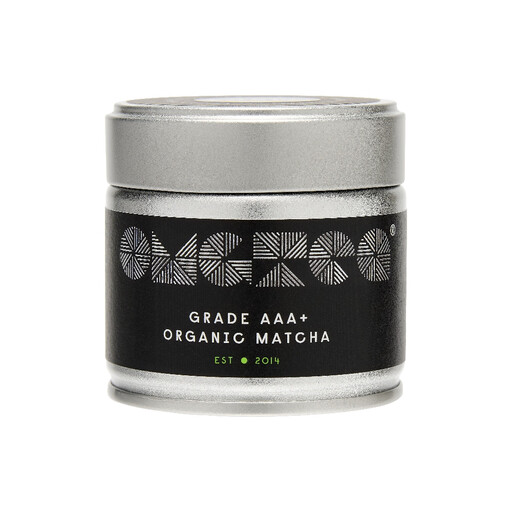 Image unavailable
OMGTea Organic Matcha AAA+ 30g
Positioned for preparing matcha as a separate whisked drink alongside cream tea. This is a 30g pack; if you primarily want to bake scones or desserts, check its baking suitability, as well as the current pack’s organic claim.
View on Joybuy
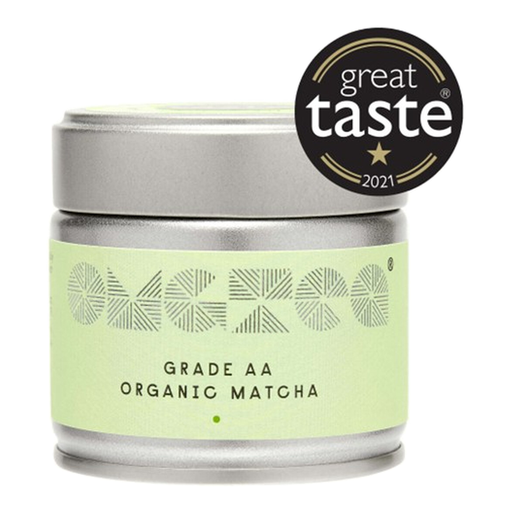 Image unavailable
OMGTea AA High Grade Organic Matcha Green Tea 30g
Described for food and drink use, making it an option to examine if your cream-tea plans include recipes as well as cups of matcha. This is a 30g pack; check the exact baking guidance, drink-preparation directions and current organic claim before choosing it for either use.
View on Joybuy
Questions about organic matcha and cream tea
How can I check an organic matcha claim in the UK?
Look for the organic claim on the finished product and read its ingredient list. The Department for Environment, Food & Rural Affairs says UK organic labelling depends on applicable production rules and certification of the product and suppliers by an approved control body. For plain matcha, an ingredient declaration of 100% organic matcha also tells you more about the powder’s composition than a general matcha-flavour description.
Which matcha should I consider for scones or cream-tea desserts?
Start with a plain powder that its maker explicitly recommends for home baking. Clearspring gives that recommendation for its organic Premium Grade matcha, which it also positions for drinking. A ceremonial label alone does not demonstrate a better result in a baked recipe.
How should I prepare matcha to serve alongside cream tea?
Use the directions for the exact powder you buy rather than assuming all matcha has the same dose. JING specifies 1.5g per 160ml cup with water at 70°C for its organic ceremonial matcha. Measure the portion before preparing drinks for several guests.
Does organic matcha still contain caffeine?
Yes. Clearspring estimates approximately 32mg of caffeine per 1g of its Premium Grade matcha; the amount in a serving depends on how much powder you use. Include other caffeine sources when considering the day’s total. The NHS advises a limit of 200mg of caffeine a day during pregnancy.


