First-time matcha buyers
If organic status matters to you, check the claim and ingredients on the exact product before deciding whether its grade or origin suits your first purchase.


For a first UK food shop, check the organic claim on the matcha product itself, then choose a powder for how you plan to use it. A premium powder positioned for drinks and baking is a sensible starting point for mixed recipes; if you mainly whisk matcha with water, compare ceremonial products for their stated flavour and preparation guidance without treating the grade as proof of organic status.
If organic status matters to you, check the claim and ingredients on the exact product before deciding whether its grade or origin suits your first purchase.
If you will mix matcha with other ingredients, look for a powder the maker recommends for those uses. Clearspring positions its organic Premium Grade for both drinking and home baking.
If you expect to whisk matcha with water, ceremonial products may be worth comparing. Clearspring and JING Tea position their organic ceremonial powders for this style of preparation; check each product’s ingredients and directions separately.
Start with the organic claim and ingredients, then match the powder’s intended use and serving directions to what you will make.
| Priority | What to check | Your needs |
|---|---|---|
| Organic status | Check the organic claim on the exact product and its certification details. The UK organic food labelling rules described by the Department for Environment, Food & Rural Affairs require certification by an approved control body and at least 95% organic agricultural ingredients for food labelled organic. | I want to know the claim applies to this matcha, rather than relying on general language about quality or sustainability. |
| Intended use | Read the maker’s preparation guidance. Clearspring positions Premium Grade for drinking and baking; JING Tea describes ceremonial matcha as suited to plain drinking and more robust grades as holding their flavour alongside milk or sugar. | For lattes or recipes, I want a powder intended for mixing. If I will whisk it with water, its stated flavour and preparation style matter more to my choice. |
| Ingredients and format | Distinguish a single-ingredient powder from a blend or mix. Check the physical pack for current ingredients and allergen information, particularly if the online listing is your starting point. | I would rather choose the ingredients I add myself, or know exactly what is in a portioned product. |
| Serving directions | Check the amount of powder recommended per cup; directions differ between products. Matcha is consumed as ground leaf, so use the serving guidance for the product you buy when considering caffeine. | I want clear directions for a first cup and a way to judge how much matcha I am using. |
Ceremonial describes how a seller positions a matcha for preparation and flavour. It does not establish that the product meets the separate UK rules for organic food labelling.
Check the organic claim and certification details on the exact product, then consider its grade for the way you will use it.
Brand guidance distinguishes powders positioned for whisking with water from those intended for mixed drinks or baking. Paying attention to that distinction helps you choose for your usual use, rather than for the grade name alone.
If your first purchase is mainly for lattes, smoothies or baking, compare organic powders recommended for those uses. Consider a ceremonial product if plain matcha is what you plan to drink.
A loose powder, tea blend and prepared mix can have different ingredients and directions. A matcha name alone does not tell you whether other ingredients are present.
Read the full ingredient list and current allergen information on the pack. If you want plain powder, look for an ingredient list specifying matcha green tea powder alone.
Clearspring and JING Tea give different amounts of powder in their preparation directions. Using the same spoonful for both would not follow both makers’ guidance.
Start with the directions on your chosen pack, particularly when keeping track of the caffeine in your serving.
These brand examples help distinguish product types; check the details of the exact pack you choose.
Clearspring lists Japanese organic matcha powders in Premium and Ceremonial Grade formats, as well as portioned Matcha Shot sachets.
JING Tea describes its organic ceremonial matcha as a single-cultivar Okumidori product from Kirishima, Japan.
Teapigs has a matcha range. For an organic first purchase, assess an individual product rather than relying on the brand name.
These OMGTea matcha options include an AA gift set, an AAA+ powder and a separate AA powder. Compare the exact pack’s organic information, ingredients and preparation directions against your intended use.
 No image available
If you want to try both plain matcha and mixed drinks, compare the gift set’s stated contents and directions with how you plan to prepare it. Check the organic certification and ingredients on the pack.
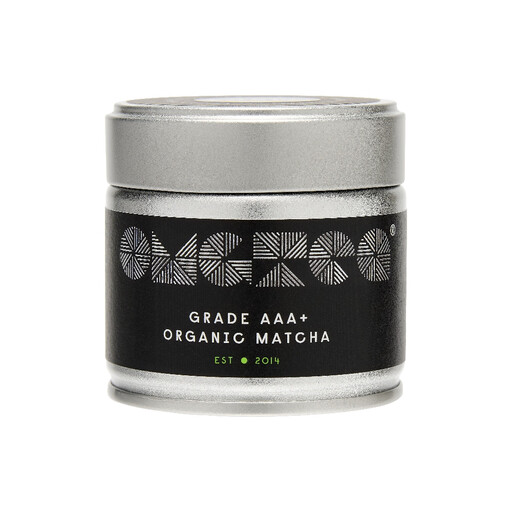 No image available
Consider this variant if you intend to prepare matcha chiefly with water. Check the pack’s organic certification, ingredients and serving directions; its preparation guidance includes sifting before whisking and refrigeration after opening.
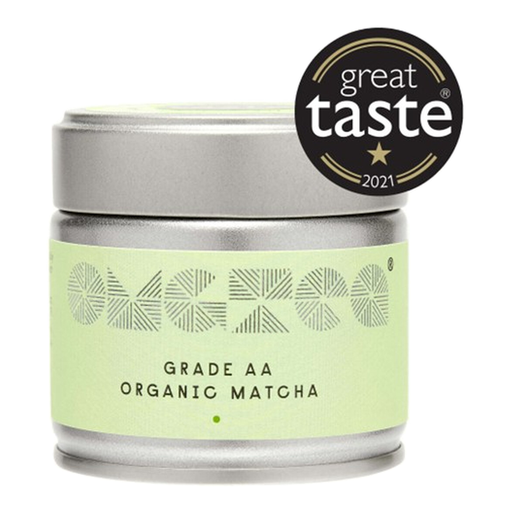 No image available
If you are choosing matcha for drinks or recipes, compare this separate AA powder with the gift set’s contents. Check the pack for certification, ingredients and serving directions before making your first cup.
Look for an organic claim on the matcha product itself and check its certification details and ingredients. Under the UK organic food labelling rules described by the Department for Environment, Food & Rural Affairs, food labelled organic must meet production and certification requirements, with at least 95% of its agricultural ingredients organic; a claim about origin or general sustainability is not the same thing.
No. Ceremonial terminology describes a seller’s positioning for preparation or flavour, while organic is a separate regulated food-labelling claim in the UK. Check both on the exact product.
Choose by what you will make: Clearspring positions its organic Premium Grade for drinking and home baking, while Clearspring and JING Tea position their ceremonial products for plain preparation. If you expect mainly lattes or recipes, compare powders recommended for mixing before choosing a product chiefly on its ceremonial description.
Follow the directions on the pack you buy. Clearspring’s powder guidance uses 1g, while JING Tea’s ceremonial product advises 1.5g per 160ml cup, so their serving instructions are not interchangeable.
Yes. Matcha is consumed as ground leaf, and the amount of powder used matters when considering caffeine. Check the chosen product’s serving directions and physical pack for current ingredients and allergen information; Waitrose advises that recipes and allergen details can change.