Home-to-office latte makers
If you prepare a drink before leaving or have time to mix one at work, single-ingredient powder lets you measure the matcha and add your choice of milk.


Choose certified-organic, single-ingredient powder if you make a regular matcha latte and want to control the portion and milk. Ceremonial matcha is worth considering if you mainly drink it with water and value its origin and cultivar details; sticks save measuring on travel days, but check each flavour’s ingredients and the exact product’s organic certification rather than assuming every sachet is pure organic matcha.
Where you prepare your drink matters as much as whether you prefer matcha with milk or water.
If you prepare a drink before leaving or have time to mix one at work, single-ingredient powder lets you measure the matcha and add your choice of milk.
If you usually drink matcha with water, origin, cultivar and the maker’s preparation guidance may matter more to your choice than latte convenience.
Pre-portioned sticks avoid measuring loose powder. Check whether the particular stick contains only matcha or is a flavoured latte mix.
Decide first whether you will drink matcha mostly with milk or water, then check the exact product’s organic details, ingredients and preparation instructions.
Choose when: You can mix your drink before leaving and want to set the powder and milk amounts yourself.
Consider: Loose powder needs measuring and mixing, which may be awkward during a journey.
Choose when: You mainly drink matcha plain and want to consider a product’s origin and cultivar.
Consider: The grade name alone does not tell you how well a powder will suit your usual drink.
Choose when: A portion you can take to work matters more than adjusting the amount each time.
Consider: Some flavoured sticks contain sugar and flavourings; check organic certification for the exact pack if that is essential to you.
| Priority | What to check | Your needs |
|---|---|---|
| Organic status | Check the exact product label for its organic claim and approved control-body details. UK Defra’s organic food labelling guidance describes certification requirements for products and suppliers. | I want certified-organic matcha, not a choice based on green packaging or a general brand claim. |
| Grade and use | Compare the maker’s intended use, ingredients and preparation directions. JING Tea notes that matcha grade terms are not strictly regulated. | If I usually add milk, I want a powder that suits mixed drinks; if I drink it with water, origin and cultivar may matter more to me. |
| Portability and ingredients | Check whether you need a spoon and mixing equipment, or can use a portioned stick. Read the ingredients for each flavour: Waitrose lists coconut sugar and flavourings in flavoured PerfectTed variety sticks. | On office days, I may prefer less measuring, but I do not want to mistake a sweetened mix for plain matcha. |
| Caffeine and serving | Use the caffeine figure and portion size stated for the product you choose, then account for other caffeinated drinks. Clearspring estimates approximately 32mg per 1g of its dry Premium Grade powder; Tesco lists 43mg per 5g serving for PerfectTed’s 30g powder. | I want to know how much powder goes into my morning drink rather than assume every matcha and coffee serving has the same caffeine content. |
A green pack or sustainability wording does not establish the certification of a particular matcha product.
Check the exact pack’s organic claim and control-body details. UK Defra’s organic food labelling guidance sets out certification requirements for organic claims.
If your weekday drink contains milk or strong flavourings, the features you value in matcha prepared with water may matter less to that routine. JING Tea also notes that grade terms are not strictly regulated.
Compare ingredients, intended use, pack size and preparation guidance for the drink you actually make.
Waitrose lists coconut sugar and flavourings in flavoured PerfectTed variety sticks, whereas its Original stick is listed as matcha green tea alone.
Read the ingredients for the exact flavour if you want an unsweetened, single-ingredient powder.
Product caffeine figures use different serving sizes: Clearspring estimates approximately 32mg for 1g of its dry powder, while Tesco lists 43mg for a 5g serving of PerfectTed powder. Those figures do not describe every prepared matcha drink.
Follow your chosen product’s serving information and include other caffeinated drinks when considering your daily total.
These product-line examples illustrate different formats; check the details of the exact pack you intend to buy.
Its organic Japanese Premium Grade powder is positioned for drinking and home baking, and the brand also offers portioned matcha shots.
Its 30g organic ceremonial matcha is aimed at people interested in drinking matcha with water and considering cultivar details.
Its Tesco-listed 30g powder and Waitrose-listed variety sticks illustrate the difference between pure powder and a portable flavoured mix.
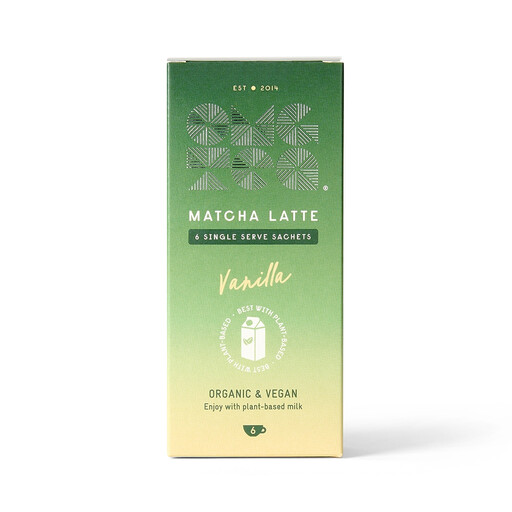
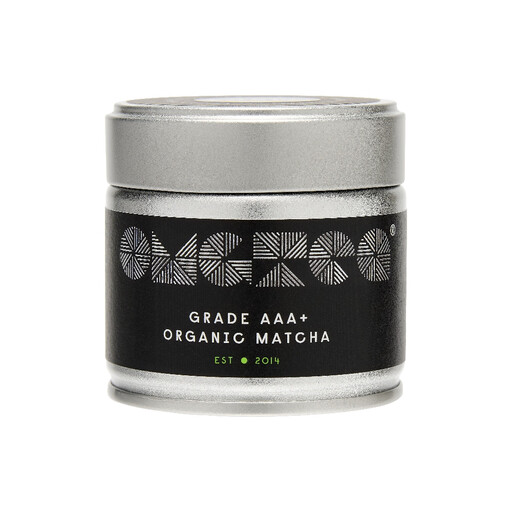
These options cover a portioned vanilla latte mix for travel and a loose matcha powder for preparing a drink before leaving. Check the exact pack’s organic certification if certified organic matcha is your requirement.
 No image available
Six portioned sachets suit a drink made at work without measuring loose powder. This is a sweetened vanilla latte mix rather than single-ingredient matcha; if certified organic matcha or a specific caffeine amount matters to you, check those details for the exact pack.
 No image available
This loose powder suits someone preparing matcha before leaving rather than carrying a portioned latte mix. Its product guidance calls for sifting before whisking and refrigeration after opening; check the exact pack’s organic control-body details if certification is essential to your choice.
Check the organic claim and control-body details for the exact product, including on the pack you receive. UK Defra’s organic food labelling guidance says organic claims depend on compliance with organic production rules and certification of the product and suppliers by an approved control body.
No: choose for the drink you make rather than by grade name alone. JING Tea describes ceremonial matcha as intended for drinking with water and notes that grade terms are not strictly regulated; Clearspring positions its Premium Grade powder for drinking and home baking.
Start with the instructions for your particular product. Clearspring suggests 1g of its Premium Grade powder mixed with 30ml hot water before adding a drink of choice; JING Tea specifies 1.5g for a 160ml cup, while Waitrose’s PerfectTed variety-stick instructions use one stick with 200ml milk.
No. Waitrose lists matcha green tea alone for the Original stick in its PerfectTed variety pack, but its flavoured sticks include coconut sugar and flavourings. Check the ingredients of the exact flavour you plan to drink.
Include matcha in your caffeine total rather than treating it as caffeine-free. NHS guidance for pregnancy says not to exceed 200mg of caffeine a day from all sources; check your product’s serving information and speak to your midwife or clinician about individual circumstances.