Someone who specifically wants organic matcha
Check for an explicit organic claim on the current product or pack. Grade, Japanese origin and descriptions of how the tea is processed answer different questions; none establishes that it is organic.


For a Mother’s Day gift, start with a powder explicitly described as organic and check whether its ingredients are matcha alone; ceremonial and premium grades do not establish organic status. If the recipient usually whisks matcha with water, consider a ceremonial powder positioned for plain drinking. For lattes or baking, a pure organic powder described for those uses may be more practical; check caffeine suitability and preparation guidance before choosing.
Check for an explicit organic claim on the current product or pack. Grade, Japanese origin and descriptions of how the tea is processed answer different questions; none establishes that it is organic.
A ceremonial powder may suit this routine. Clearspring and JING Tea position their ceremonial products for plain drinking, although their flavour descriptions are the brands’ own, not independent taste comparisons.
Look for a pure organic powder described for mixed drinks or recipes. Clearspring positions its Premium Grade for drinking and home baking; check the ingredients if the intended gift is matcha itself rather than a sweetened blend.
Decide how the recipient will use the powder, then check the organic wording, ingredients and preparation details on the particular product.
| Priority | What to check | Your needs |
|---|---|---|
| Organic claim | Look for an explicit organic claim on the current listing or pack. If certification details matter to the gift decision, check the current pack for them; grade and origin are not substitutes. | I’m choosing organic matcha specifically, so I want the organic claim to be clear before considering flavour descriptions. |
| How it will be used | Check whether the maker positions the powder for plain whisked tea, lattes or recipes. Read the suggested powder quantity and preparation instructions. | If the recipient drinks matcha with water, I’ll consider a drinking-focused powder. For lattes or baking, I’ll look for uses that match their routine. |
| Ingredients | Read the full ingredient list. A single-ingredient matcha powder differs from a mix containing milk powders, sugar or a small proportion of matcha. | I’d like them to choose their own milk or sweetener, so a pure powder makes more sense than a prepared blend. |
| Caffeine and storage | Check serving information and any caffeine warning for the particular powder. Follow its pack instructions for storage after opening. | If caffeine is a consideration for the recipient, I’ll check the product details before gifting it. I also want them to know how to store the opened pack. |
These descriptions can tell you about a product’s grade or origin, but they do not establish organic status. Defra’s UK guidance addresses organic labelling separately.
Use an explicit current organic claim as the first filter, then compare grade, origin and the maker’s flavour description.
A blend can contain other ingredients and a small proportion of matcha, changing what the recipient can make with it. A Joybuy-listed matcha soy-milk powder, for example, lists 2.5% matcha alongside soybeans, malt syrup and sugar.
If the gift is meant to be pure matcha, check that the ingredient list identifies matcha alone.
Someone who mainly makes lattes or bakes may have more use for a powder positioned for those preparations; a plain-matcha drinker may prefer a drinking-focused product.
Choose by the recipient’s usual preparation rather than treating the grade name as a universal measure of suitability.
Organic matcha still contains caffeine, and storage directions can differ between products.
Check serving and caffeine information where relevant, and pass on the pack’s instructions for storing the powder after opening.
These brands offer useful points of comparison for matcha use and labelling; a brand’s presence here does not establish that every product it sells is organic.
Clearspring lists organic Japanese matcha in Ceremonial Grade and Premium Grade.
JING Tea lists a 30g Organic Ceremonial Grade Matcha from Kirishima, Japan.
Teapigs has a UK matcha category that includes tea and teaware.
These options include powders described for plain matcha, mixed drinks or recipes, plus a roasted hojicha-style alternative. Check the particular listing and pack against the recipient’s preferences.
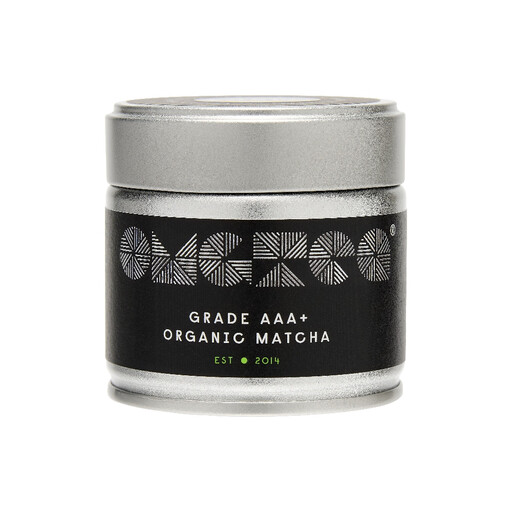 No image available
Consider this for a recipient who prepares matcha by whisking it with water. The listing identifies 100% organic matcha green tea powder and describes koicha and usucha preparation. It advises sifting before whisking and includes a caffeine warning; check the serving guidance.
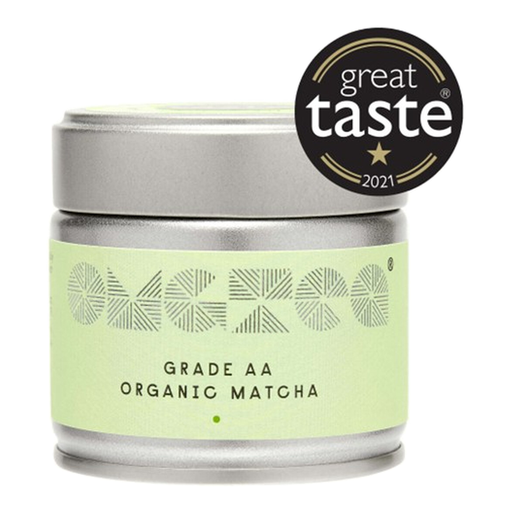 No image available
Its description names lattes, smoothies and baking, making those the uses to check against the recipient’s routine. The ingredient information identifies 100% organic matcha green tea. If caffeine is a consideration, check the current product and serving information.
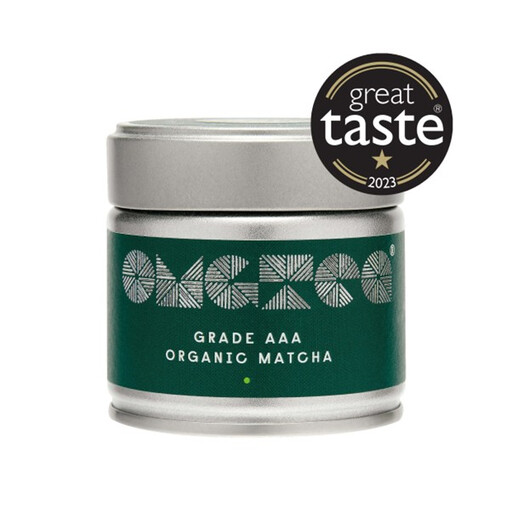 No image available
This powder is described for hot tea as well as smoothies and cooking. Its ingredient information states 100% organic matcha. If the gift is specifically for plain whisked tea, check its preparation guidance and grade description before choosing; also check serving information if caffeine matters.
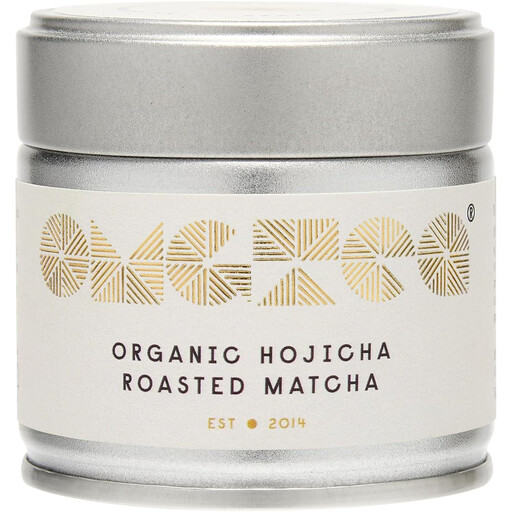 No image available
Consider this roasted hojicha-style option only if that distinction suits the recipient; it is not a straightforward substitute for conventional plain matcha. The ingredient information identifies 100% organic roasted matcha tea, and the description names lattes, smoothies and baking. Follow its preparation and after-opening storage directions.
Look for an explicit organic claim on the current product listing or pack, then read the ingredients. Defra’s UK organic-labelling guidance addresses certification of products marketed as organic; words such as ceremonial, premium and Japanese do not establish organic status.
Choose according to how the recipient will use it: Clearspring and JING Tea position their ceremonial products for drinking matcha plain, while Clearspring presents its Premium Grade for drinking and home baking. These are manufacturers’ use descriptions, not proof that one grade tastes better to everyone.
Yes, organic status does not mean caffeine-free. Check the particular product’s serving information and the recipient’s circumstances. For pregnancy, the NHS advises a limit of 200mg of caffeine a day from all sources, not just matcha.
Follow the instructions on the particular pack and reseal it after use. Storage guidance differs by product, so include the pack instructions when giving matcha as a gift.
Not necessarily: read the ingredients before buying. A Joybuy-listed matcha soy-milk powder contains soybeans, malt syrup, sugar and 2.5% matcha, so it is a blend rather than a single-ingredient matcha powder.