People making lattes or snacks at work
Choose a powder if you want to measure matcha into milk, water or a recipe. Check the ingredients for 100% matcha when a blend would not suit what you are making.


Choose 100% matcha powder if you want to mix it into an office drink or snack and have a way to measure and stir it. For a hot drink made with just a kettle and mug, a matcha-green-tea bag is simpler, but it may contain much less matcha than other tea leaves. If you mainly drink matcha plain, compare preparation instructions as well as ingredients, and check the certification details for any product marketed as organic.
The equipment you can use at work and what you plan to make matter more than the word ‘matcha’ on the front of a pack.
Choose a powder if you want to measure matcha into milk, water or a recipe. Check the ingredients for 100% matcha when a blend would not suit what you are making.
A powder with clear preparation instructions may suit a small whisked drink. JING Tea, for example, lists a 30g organic ceremonial matcha; the grade label alone does not tell you whether its preparation suits your office routine.
A tea bag avoids measuring and mixing powder. Check its ingredient percentages if you expect a pronounced matcha component: the Clearspring Matcha Sencha listed by Waitrose contains 97.5% sencha leaves and 2.5% matcha powder.
Start with the ingredients and preparation method, then compare any serving information on the amount you would actually use.
| Priority | What to check | Your needs |
|---|---|---|
| Ingredients and organic status | Read the full ingredient list, including matcha percentages in blends. Check the certification details on the pack or listing if an organic claim matters to you. | I want 100% matcha powder for recipes, rather than a green-tea blend that happens to contain matcha. |
| Preparation format | Check whether the product is a powder to measure and mix or a bag to infuse. For powder, read the stated amount and mixing instructions. | With only a kettle and mug, I would prefer a quick infusion. If I can mix powder, I want the option to use it in drinks or snacks. |
| Serving information | Compare caffeine figures only alongside the stated product and serving size. Tesco lists 43mg per 5g teaspoon serving for PerfectTed Organic Matcha Green Tea Powder; that figure does not describe a different powder or portion. | I want to know how much powder goes into my own drink, rather than assume every matcha serving uses the same amount. |
A tea bag may be predominantly another green tea. Waitrose lists Clearspring Organic Matcha Sencha as 97.5% sencha leaves and 2.5% matcha powder, so it is an infusion rather than a substitute for powder in a recipe.
Read the ingredients and any percentages. If pure matcha is the requirement, look for an ingredient list stating 100% matcha.
A figure stated per teaspoon cannot be read as the amount in every cup. Tesco’s figure of 43mg applies to a 5g serving of its listed PerfectTed powder.
Check the serving size beside each figure and measure the amount you intend to use before comparing products.
Powder needs measuring and mixing; a tea bag needs a mug and a way to heat water. Those differences matter in a shared kitchen with limited space or equipment.
Check the preparation instructions against what is available at work. If you want matcha in snacks as well as drinks, choose a powder rather than an infusion bag.
Tesco’s matcha category includes marketplace listings as well as grocery products, so the seller and fulfilment arrangements can differ between items.
For an office reorder, check the current seller, pack size and availability of the specific product before placing it.
These examples show why a product’s format and ingredient list are more useful than treating an entire brand or retailer as one kind of matcha.
Clearspring lists both an organic matcha powder and a separate Matcha Sencha tea-bag blend.
JING Tea lists a 30g organic ceremonial matcha aimed at preparing matcha as a drink.
Teapigs has a matcha category for shoppers considering a tea-brand option.
Waitrose lists Clearspring Organic Matcha Sencha as a 20-tea-bag product.
Tesco’s matcha category includes different formats and marketplace products.
M&S Food explains matcha as a fine powder made from ground green tea leaves.
These two powder products are options for preparing matcha at work: one is named as a gift set, while the other is presented for a plain matcha drink. Check each pack’s contents and organic certification details before choosing. Neither is a tea-bag option.
 Image unavailable
A powder option to consider for a measured workplace drink or snack. The title identifies a 30g gift set; check exactly what the set contains, how the matcha is prepared and the organic certification details on the pack.
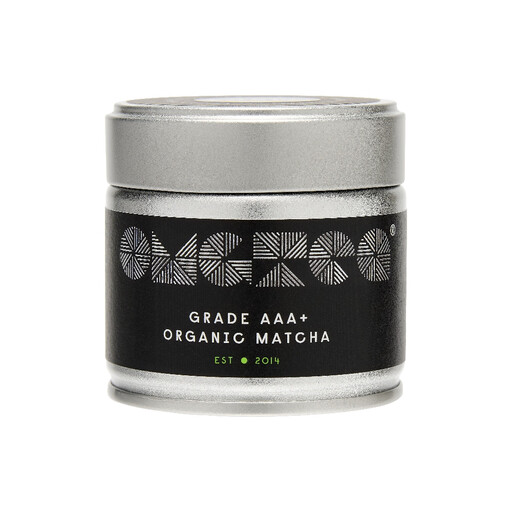 Image unavailable
A 30g powder option for someone planning a plain matcha drink at work. Check its preparation instructions and organic certification details on the pack; the AAA+ wording alone does not establish how it will suit your preferred drink.
Look for certification details on the specific pack or listing, then read the ingredient list separately. An organic claim and a 100% matcha ingredient list answer different questions: the first concerns how the product is produced, while the second tells you whether it is pure matcha or a blend.
No. Tea bags are infused, while powder is mixed into the drink or food. Waitrose lists Clearspring Organic Matcha Sencha bags as 97.5% sencha leaves and 2.5% matcha powder, so check the percentages if you want matcha rather than a blend.
For powder, follow the product’s measured preparation instructions and have a suitable way to mix it with liquid. A matcha-green-tea bag can be prepared with a mug and kettle, but it makes an infusion rather than a powder-based drink.
Compare the stated amount only for the named product and serving size. Tesco lists 43mg per 5g teaspoon serving for PerfectTed Organic Matcha Green Tea Powder; check the label and the quantity you use before applying any product figure to your own drink.