Who is this choice for?
Whether organic production or a straightforward unsalted snack matters more, the nutrition and ingredient information on the particular pack determines what you can compare.
Shoppers who prefer organic nuts
If organic production matters to you, look for a plainly labelled product, then check its total carbohydrate, ingredients, salt and serving information. An organic claim does not tell you how its carbohydrate fits your diabetes plan.
People choosing an unsalted snack
If your main aim is to avoid added salt, plain unsalted nuts are worth considering whether or not they are organic. Diabetes UK advises choosing unsalted nuts as a snack option; check the exact pack for other additions.
People counting carbohydrate
If you count carbohydrate or adjust insulin around food, use the pack’s total carbohydrate figure for the amount you plan to eat. This is particularly important when a nut mix also contains dried fruit or a coating.
What should you check on the pack?
Decide whether organic production is a requirement, then compare the nutrition and ingredients of the packs you would actually buy. The same checks apply to organic and non-organic nuts.
| Priority |
What to check |
Your needs |
| Total carbohydrate |
Find total carbohydrate, not just sugars. Check whether the figure is per 100g or per serving, and relate it to the amount you intend to eat. Diabetes UK advises using total carbohydrate on food labels. |
I need a figure I can use for my planned portion, particularly if a mix contains raisins, honey or a coating. |
| Salt and ingredients |
Check whether the nuts are described as unsalted, then read the salt figure and ingredient list for oils, flavourings or other additions. Diabetes UK advises choosing unsalted nuts. |
For a straightforward snack, I would start with plain unsalted nuts rather than assume every roasted or mixed pack has the same ingredients. |
| Organic label |
Check the organic description on the specific pack and read its ingredients and nutrition information separately. UK government guidance covers organic food labelling; the label does not establish a special blood-glucose benefit. |
Organic production matters to me, but I still need to compare what is in the pack and how much I plan to eat. |
| Allergens |
Identify the named nut types, peanuts and any precautionary allergen statement on the current pack. The Food Standards Agency distinguishes peanuts, which are legumes, from tree nuts. |
If I have a relevant allergy, I need to check every ingredient in a mixed pack rather than rely on its general name. |
Brand and retailer references
These examples illustrate different product types and labels, not a ranking or a claim that every product from a retailer has the same ingredients.
Tesco
Tesco Groceries lists organic almond kernels and an organic mixed-nut product.
- The almond listing offers a single-nut option; the mixed-nut listing names almonds, walnuts, hazelnuts, Brazil nuts and cashews.
- Check the current pack’s nutrition, salt and allergen information. An organic description does not answer those questions.
Sainsbury’s
Sainsbury’s Unsalted Mixed Nuts provide a non-organic comparison for shoppers focused on an unsalted mix.
- Sainsbury’s lists 0.9g carbohydrate and less than 0.01g salt per 25g serving for this specific product.
- Those values apply to the cited Unsalted Mixed Nuts, not to its mixed nuts and raisins product or other packs.
M&S
An Ocado listing identifies M&S Organic Walnuts as an organic walnut option.
- The listing gives shoppers a single-nut organic product to compare with organic mixes.
- Check the current ingredients, nutrition and allergen information for that pack before choosing it.
KP
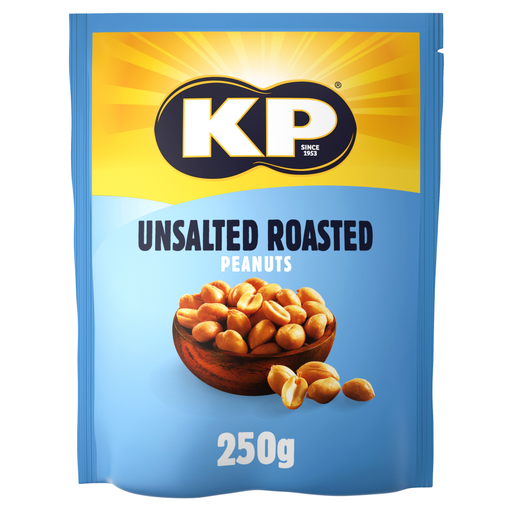
KP Unsalted Peanuts are listed by Tesco Groceries and Sainsbury’s as unsalted roasted peanuts.
- The unsalted description makes them relevant when avoiding added salt is the main shopping priority.
- They are a non-organic route; check the current pack’s portion, ingredients and allergen information.
Planters
Planters has salted and unsalted products in its wider peanut range; its salted-peanut product contains sea salt, according to Planters.
- Product descriptions distinguish salted from unsalted options, a useful starting point when comparing ingredients.
- A Planters brand name alone establishes neither organic status nor the nutrition of a particular pack.
Joybuy nut options
These options cover an unsalted roasted peanut product and walnut halves. Neither is presented here as an organic nut option; check each product’s current pack information against your intended use.
 No image available
KP Snacks Unsalted Roasted Peanuts 250g
An option to compare if you want unsalted roasted peanuts rather than organic nuts. Check the current pack for total carbohydrate, serving information and allergens; it contains peanuts.
View on Joybuy
 No image available
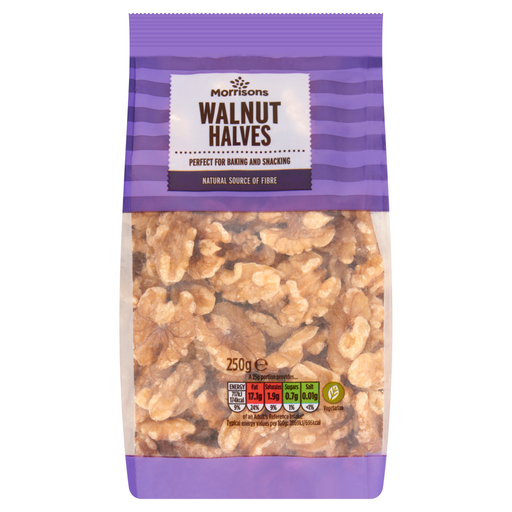
Morrisons Wholefoods Walnut Halves 250g
Walnut halves to assess if you want a single-nut product rather than a mix. Check the current preparation instructions before treating them as a ready-to-eat snack: the product description says they are not suitable for raw consumption. Use the current pack to assess nutrition and allergens.
View on Joybuy
Questions about choosing nuts
Does organic labelling make nuts suitable for someone managing diabetes?
No: organic labelling concerns production and does not establish a blood-glucose benefit. Diabetes UK advises paying attention to carbohydrate, so check total carbohydrate, the amount you intend to eat and the ingredients of the specific pack.
Should I check sugars or total carbohydrate?
Check total carbohydrate. Diabetes UK explains that it includes carbohydrates beyond sugars; use the nutrition panel’s per-100g or per-serving figure to assess the amount you plan to eat, especially for mixes containing dried fruit or coatings.
Why choose unsalted nuts rather than salted ones?
Diabetes UK advises choosing unsalted nuts as a snack option. An unsalted description helps narrow the choice, but you should still check the exact product’s ingredients, salt figure, total carbohydrate and serving information.
Can nuts be used as the immediate response to low blood glucose?
Do not rely on nuts for a rapid response. NHS guidance says that if blood glucose is below 4 mmol/L, you should eat or drink something that raises it quickly; follow your individual diabetes treatment plan for what to use and what to do next.
What should I check if I have a nut or peanut allergy?
Check the current pack for named ingredients and any precautionary allergen statement. The Food Standards Agency distinguishes peanuts from tree nuts, and a mixed pack can contain more than one type; do not judge it by the front-of-pack product name alone.


