Shoppers checking organic claims
If organic status matters to you, look for that wording on the exact pack. Then read the ingredients and nutrition panel: an organic claim does not tell you whether nuts are plain, salted or coated.


For organic nuts at elevenses, start with an explicit organic claim on the exact pack, then check the ingredients, seasoning and serving information. A mixed pack offers variety if its ingredients suit you; a single-nut pack makes the ingredients simpler to identify, but neither format removes the need to check allergen and cross-contact warnings.
If organic status matters to you, look for that wording on the exact pack. Then read the ingredients and nutrition panel: an organic claim does not tell you whether nuts are plain, salted or coated.
If you buy a larger bag for several elevenses breaks, put a serving into a bowl or container rather than eating from the bag. The British Heart Foundation uses a small handful, about 30 g, as a reference portion for nuts.
Read the ingredients and suitability warning on each exact pack, particularly when avoiding particular nuts, peanuts or sesame. A pack containing one named nut can still carry a warning about other allergens.
Check the organic claim first, then compare packs on the details that affect how you will eat and store them.
| Priority | What to check | Your needs |
|---|---|---|
| Organic status | Look for an explicit organic claim on the exact product. The Department for Environment, Food & Rural Affairs says UK organic labelling requires compliance with organic production rules and certification by an approved organic control body. | I want an organic claim I can identify on the pack, rather than relying on words such as “natural”. |
| Ingredients and seasoning | Compare the ingredient lists for mixed and single-nut packs. Check for salt, sweet coatings or other additions, and compare nutrition figures using the same per 100 g or per-serving basis. | For a plain elevenses snack, I want to know exactly which nuts and added ingredients are in the pack. |
| Serving size | Check the pack’s serving size and energy figure before portioning a larger bag. For nuts, the British Heart Foundation describes a small handful of about 30 g as a reference portion; energy varies by nut type. | A multi-serving bag is useful to me if I can put aside the amount I intend to eat and reseal the rest. |
| Allergens | Read the exact ingredients and any “not suitable for” statement. Check warnings about other nuts, peanuts or sesame even when the product names only one nut. | I need to know whether this particular pack contains an ingredient I avoid or carries a relevant cross-contact warning. |
| Pack and storage | Match the pack size to how often you eat it. Read the storage and after-opening instructions; Marks & Spencer says its Organic Almonds should be eaten within one week of opening. | If I snack on nuts occasionally, I want a pack I can finish within its stated after-opening period. |
Organic status does not tell you whether a nut snack is plain, salted or coated. Those details change what you are comparing at elevenses.
Once you have checked the organic claim, read the ingredients and compare salt and other nutrition figures on a consistent basis.
A multi-serving pack makes it harder to tell how much you have eaten. The British Heart Foundation gives about 30 g as a small-handful reference for nuts and notes that energy varies by type.
Put the serving you want into a bowl or container, then close the pack.
Marks & Spencer says its Organic Almonds are not suitable for people with peanut or sesame allergy. Sainsbury's gives warnings about other nuts and sesame on its SO Organic mixed nuts and Brazil nuts.
Check the current ingredients and suitability statement on the exact pack, even if you have bought a similar product before.
A pack intended for several snacks still needs to be stored as directed. Marks & Spencer instructs shoppers to eat its Organic Almonds within one week of opening.
Choose a pack size that fits how often you will use it, and follow its storage and after-opening instructions.
These retailer ranges provide examples of what to compare on an exact product label; suitability depends on the particular pack.
Sainsbury's lists both a 300 g organic mixed-nut pack and a 200 g organic Brazil-nut pack.
Marks & Spencer lists organic almonds, cashews and walnuts in its natural-nuts range.
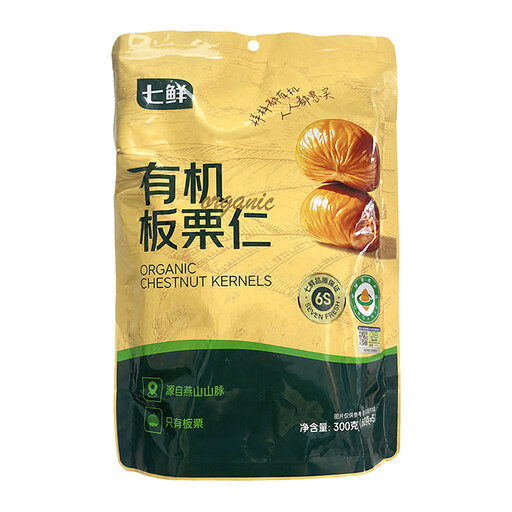
This chestnut-kernel option offers a different elevenses format from the mixed nuts and almonds discussed above. Check the exact pack against your organic, ingredient and allergen requirements.
 No image available
The 300g chestnut-kernel pack is an option to portion for elevenses. Check its organic claim, ingredients, serving information and allergen statement on the exact pack before choosing it.
Look for an explicit organic claim on the exact pack. The Department for Environment, Food & Rural Affairs says products labelled or marketed as organic must meet applicable organic production rules, with the product and suppliers certified by an approved organic control body.
No. Check the ingredient list to see whether the nuts are salted, seasoned or coated, then use the nutrition panel to compare products on the same per 100 g or per-serving basis.
The British Heart Foundation uses a small handful, about 30 g, as a reference portion for nuts and says that amount can contain 180–225 kcal depending on the nut type. Check the exact product’s serving information and put the amount you choose into a bowl rather than eating from a larger bag.
Not necessarily. Marks & Spencer states that its Organic Almonds are not suitable for people with peanut or sesame allergy. Read the ingredients and suitability warning on the exact pack; a single-nut ingredient list does not settle cross-contact concerns.
Follow that pack’s storage and after-opening instructions. For example, Marks & Spencer says to keep its Organic Almonds cool and dry, away from sunlight, and eat them within one week of opening.