Older shoppers choosing an everyday drink
An organic oat drink may be wanted for tea, cereal or cold drinks. If it replaces dairy, the shopper also needs to consider nutrients separately from the organic label.


Choose an organic oat drink if organic sourcing is the priority, then match the carton to everyday drinks or coffee service. If it will replace dairy in someone’s routine, also consider their wider nutrient intake: a UK SACN assessment says plant-based drinks labelled organic cannot be fortified with nutrients. Where a shop supplies a care setting, check each product against residents’ recorded dietary needs and allergen procedures.
An organic oat drink may be wanted for tea, cereal or cold drinks. If it replaces dairy, the shopper also needs to consider nutrients separately from the organic label.
Where drinks are supplied in a care setting, product labels and substitutions need checking against recorded allergies, intolerances and other dietary requirements.
A refreshment counter may want a barista-labelled organic oat drink for coffee, rather than choosing every carton on that basis.
Decide whether the drink is chiefly an organic preference, a replacement for dairy or a coffee-service purchase; then check the exact carton against that use.
| Priority | What to check | Your needs |
|---|---|---|
| Organic or fortified | Check the organic designation and nutrition panel separately. A UK SACN assessment says plant-based drinks labelled organic cannot be fortified; added nutrients vary between other drinks. | I want an organic drink, but if it replaces dairy regularly, I also need to consider where nutrients such as calcium will come from. |
| Allergens and gluten | Read the current ingredient and precautionary allergen statements. Alpro describes its Organic Oat drink as gluten free but says it may contain other cereals containing gluten; Minor Figures states that its Organic Barista Oat may contain gluten. | If I am buying for someone with a documented allergy or intolerance, the exact carton must fit their requirements. |
| Everyday use and storage | Check whether the carton is listed as UHT, then follow its unopened and after-opening storage instructions. Sainsbury’s lists Oatly Organic Oat Drink Long Life 1L as UHT. | For tea and cereal, I need a carton that fits how the shop stores, opens and uses its stock. |
| Coffee service | Check whether the product is intended for coffee and compare its ingredients, nutrition panel and allergens with an everyday carton. Minor Figures positions its Organic Barista Oat for coffee. | A barista-labelled drink matters to me if the shop serves coffee; it need not determine the choice for every other use. |
The UK SACN assessment says nutrient content varies between plant-based drinks and that those labelled organic cannot be fortified. That distinction matters when a drink takes the place of dairy in someone’s routine.
Check organic status and added nutrients as separate questions. For someone with specific dietary needs, consider their wider diet with an appropriate health professional.
Gluten and precautionary statements differ between products. In a care home, Food Standards Agency guidance also calls for known allergies and intolerances to be reflected in safe-food processes.
Check the exact pack against the person’s documented requirements, including when substituting a familiar product.
A coffee-oriented product and an everyday UHT drink answer different practical needs; a barista label alone does not establish that a carton suits every customer.
Start with the drinks the shop actually serves, then check the relevant carton’s nutrition, allergens and storage instructions.
Listings help identify products, but the carton being supplied is the one customers and staff need to assess.
Before ordering or serving, confirm its organic designation, ingredients, allergens, nutrition information and storage instructions.
These references illustrate everyday organic drinks, coffee-oriented cartons and a fortified alternative; they do not establish what a particular shop has in stock.
Oatly Organic Oat Drink is listed by Sainsbury’s as a UHT organic oat drink.
Alpro describes its Organic Oat drink as a four-ingredient option.
Minor Figures positions Organic Barista Oat for coffee use.
Tesco’s oat-drink category lists several organic products, including Oatly Organic and Minor Figures Organic Barista.
Sainsbury’s lists Oatly Organic Oat Drink Long Life 1L as an organic UHT drink.
M&S provides a comparison when added nutrients take priority over an organic label.
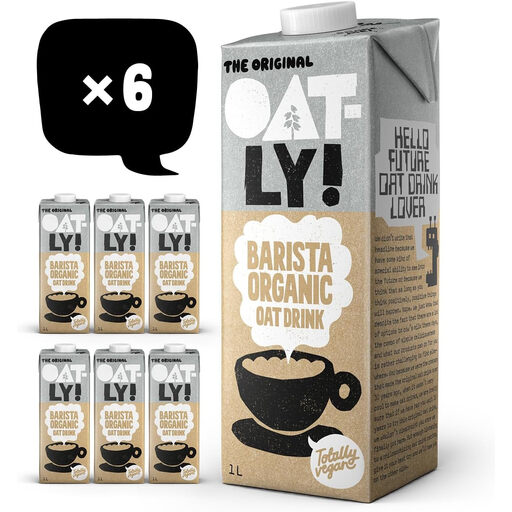
For coffee service, this selection focuses on a barista-labelled oat drink in a 6x1L pack.
 No image available
The barista-labelled 6x1L pack fits a shop considering an oat drink for coffee service. Check the current carton’s organic designation, allergen statements and unopened storage instructions before stocking it.
Not automatically. A UK SACN assessment says plant-based drinks vary in nutrient content and those labelled organic cannot be fortified. If dairy is being replaced, consider the person’s wider diet rather than relying on the organic label; seek appropriate professional advice for specific dietary needs.
Compare them when added nutrients are part of the reason for replacing dairy. The NHS lists plant-based drinks with added calcium as a calcium source, while the exact nutrients in a drink must be checked on its label. An individual’s dietary requirements still matter.
Check the exact product rather than deciding from “oat” or “organic”. Alpro describes its Organic Oat drink as gluten free but says it may contain other cereals containing gluten; Minor Figures says its Organic Barista Oat may contain gluten. Match the current pack statement to the person’s requirements.
Use each resident’s recorded dietary requirements when selecting and serving drinks. Food Standards Agency guidance for institutional caterers says care-home dietary needs are set out in a care record and calls for processes to provide safe food for people with known allergies or intolerances. Check substitutions against both the record and the current pack.
A barista carton is a use-specific choice, not a requirement for every drink. Minor Figures positions its Organic Barista Oat for coffee, whereas Sainsbury’s lists Oatly Organic Oat Drink as a UHT product. Choose according to the shop’s uses, then compare the labels before treating the cartons as interchangeable.