Care-home catering teams offering dairy-free choice
An organic oat drink may be used for cereal, drinks, cooking or baking. The team needs a product whose current label and handling instructions fit the menu and the residents being served.


An organic oat drink can be an everyday dairy-free menu choice when its allergens, storage instructions and nutrition information fit the service and the residents using it. If a drink needs to contribute particular nutrients, compare its declaration with each resident’s assessed plan rather than treating organic status as a substitute for fortification or prescribed nutrition support.
An organic oat drink may be used for cereal, drinks, cooking or baking. The team needs a product whose current label and handling instructions fit the menu and the residents being served.
When an oat drink could replace dairy or make a meaningful contribution to someone’s intake, its declared nutrients need to be considered alongside that resident’s plan. The Care Quality Commission’s guidance for regulated services in England requires providers to assess nutritional needs and provide food and drink that meets them.
These teams need to distinguish a gluten-free claim from suitability for someone with an oat allergy. For a resident with a swallowing plan, they also need to follow the specified drink consistency rather than assume an ordinary oat drink is suitable as served.
Start with the purpose of the drink in the menu and any individual care-plan requirements, then check the exact carton for ingredients, allergens and handling instructions.
| Priority | What to check | Your needs |
|---|---|---|
| Nutrition-plan fit | Read energy and protein per 100 ml and any listed added nutrients. If the drink has a nutritional role in a resident’s plan, compare the declaration with that plan; Tesco Groceries lists added calcium, iodine and vitamins in its non-organic Oat Drink, but a fortified retail drink is not automatically prescribed nutrition support. | I need to know whether this drink is simply a menu choice or is expected to contribute specific nutrients for a resident. |
| Organic status | Check the current organic designation, ingredient list and certification information. The Department for Environment, Food & Rural Affairs says organic labelling in Great Britain depends on organic-production rules and approved certification; Northern Ireland has distinct labelling requirements. | If the home specifies organic food, I want the purchased carton to meet that requirement—not just to have a short ingredient list or a plant-based description. |
| Allergens and consistency | Match the current allergen declaration to each resident’s documented needs. The Food Standards Agency distinguishes gluten-free oats from oat-allergy safety; where modified fluids are prescribed, follow the resident’s specified consistency. | A gluten-free label alone does not answer my question about oat allergy. For someone with a swallowing plan, I also need to know how the drink may be served. |
| Service and storage | Check whether the exact product is intended for table use or hot-drink preparation, its unopened storage instructions and its directions after opening. Tesco Groceries lists approximately five days after opening for Oatly Organic Long Life; Sainsbury’s lists four days for Plenish Organic Long Life. | Our ordering and opened-carton routine need to work with how quickly we use the drink, whether it goes into cereal or coffee. |
An organic designation does not establish that an oat drink provides the nutrients expected from dairy, a fortified drink or a resident’s nutrition support. Oatly describes its Organic Oat Drink as unfortified, while Tesco Groceries lists added nutrients in its separate non-organic Oat Drink.
Use the nutrition declaration and the resident’s assessed plan to decide what role the drink can have. Refer questions about an individual nutrition-support plan to the relevant healthcare professional.
The Food Standards Agency says oats remain an allergen even when a food meets the conditions for a gluten-free claim. A gluten-free carton therefore does not establish suitability for a resident with an oat allergy.
Check the exact product’s current ingredient and allergen declaration against the resident’s documented requirements.
A resident who needs modified fluids may have an individual consistency requirement. The Medicines and Healthcare products Regulatory Agency says thickener choice should reflect the person’s swallowing difficulty, required consistency and other clinical considerations.
Follow the resident-specific recommendation and the instructions for the prescribed preparation; do not decide the consistency from the oat drink’s appearance.
Storage directions vary by product. For example, Tesco Groceries gives approximately five days after opening for Oatly Organic Long Life, while Sainsbury’s gives four days for Plenish Organic Long Life.
Check the current carton before setting storage and date-labelling procedures, and choose a pack format that fits the home’s likely use.
Cartons that cannot be used within their stated opened life add stock-rotation work and may result in waste.
These references illustrate different products and purchasing checks; a retailer listing or brand range does not establish that every variant has the same ingredients or instructions.
Oatly Organic Long Life 1L is a separate product from its Organic Barista drink. Oatly lists water, 10% organic oats and sea salt for the Long Life version.
Alpro Organic Oat is an organic oat-drink option for general dairy-free use.
Minor Figures positions its Organic Barista Oat drink for coffee preparation and describes the microfoam it produces.
Tesco Groceries lists Oatly Organic Long Life and also provides product information for its separate, non-organic Tesco Oat Drink.
Sainsbury’s lists Plenish Organic Long Life Oat Drink, whose ingredient information identifies organic gluten-free oats.
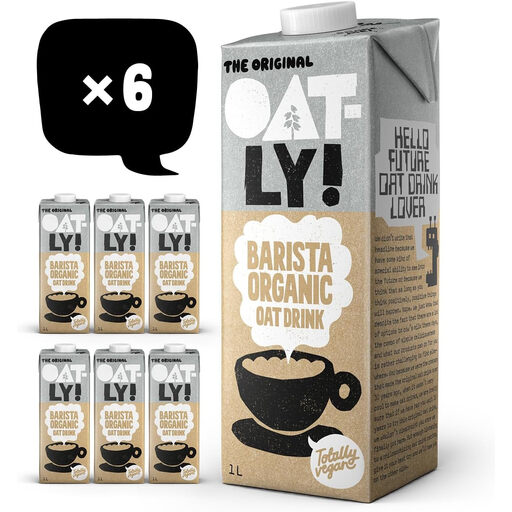
This option is an organic barista oat drink for a care home considering coffee or other hot-drink service. Check its carton and each resident’s requirements before treating it as a general dining or nutritional substitute.
 No image available
This barista oat drink is described for coffee preparation, baking and cooking, making it a product to consider when hot-drink service is the reason for buying.
The Joybuy product description lists an organic oat base, organic rapeseed oil, sea salt and potassium carbonate. Check the current carton for certification details, allergens and storage instructions, and assess its nutrition information against any resident-specific plan.
No. The Department for Environment, Food & Rural Affairs says organic labelling in Great Britain requires compliance with organic-production rules and approved certification. Northern Ireland has distinct requirements: its Department of Agriculture, Environment and Rural Affairs says pre-packed foods labelled organic must contain at least 95% organic ingredients, and organic food produced there must carry the EU organic logo. Check the carton and the rules for the home’s location.
Not automatically. The Care Quality Commission requires regulated providers in England to assess residents’ nutritional needs and provide food and drink that meets them. Compare the exact oat drink’s declared nutrients with the individual plan; an organic choice does not by itself provide the added nutrients listed in a fortified drink or replace prescribed nutrition support.
A gluten-free claim does not establish that. The Food Standards Agency says oats must still be identified as an allergen even in gluten-free food. Match the current carton’s allergen declaration to the resident’s documented requirements.
Follow that resident’s individual swallowing and fluid-consistency recommendation. The Medicines and Healthcare products Regulatory Agency says thickener choice depends on the required consistency and clinical considerations; the drink’s ordinary texture is not a substitute for the prescribed preparation.
Follow the exact carton’s instructions. Tesco Groceries says to refrigerate Oatly Organic Long Life at a maximum of 8°C and use it within approximately five days after opening; Sainsbury’s says to refrigerate Plenish Organic Long Life and consume it within four days. Do not apply one product’s directions to another.