For a child aged 1 or over, an organic oat drink may fit occasional snack preparation, but an organic label does not tell you whether it supplies nutrients needed from a regular dairy alternative. For that role, the NHS advises an unsweetened, calcium-fortified alternative as part of a balanced diet. Oat drink must not replace breast milk or first infant formula before age 1, and the exact carton and nursery or school policy matter when allergies are involved.
Who is choosing?
Parents considering organic ingredients
If your child is aged 1 or over and oat drink is an occasional ingredient in porridge or a snack, compare the ingredient list with the nutritional role you expect the drink to play. Organic status does not establish fortification.
Families using a regular dairy alternative
When oat drink is used regularly instead of dairy milk, check whether it is unsweetened and calcium-fortified. The NHS gives that advice for milk alternatives from age 1 as part of a balanced diet; a child’s wider diet and individual dietary needs still matter.
People packing nursery or school snacks
Check the particular carton against the child’s dietary requirements and the setting’s allergy policy. UK allergen guidance includes oats among cereals containing gluten, while suitability warnings can differ between oat drinks.
What should you check?
Organic for occasional recipes
Consider it when: organic ingredients matter for an occasional snack or recipe, rather than a drink relied on as a regular dairy alternative.
Trade-off: Oatly says its Organic Oat Drink is unfortified, so its organic status does not provide a reason to rely on it for calcium or added vitamins.
Fortified for regular use
Consider it when: a child aged 1 or over regularly has a dairy alternative and you are following the NHS advice to choose an unsweetened, calcium-fortified option.
Trade-off: fortification does not establish organic status or settle whether a particular product meets a child’s age guidance and dietary requirements.
| Priority | What to check | Your needs |
|---|
| Age and role |
Check the child’s age and the carton’s age guidance. The NHS says first infant formula is the only suitable alternative to breast milk in the first 12 months; from age 1, its advice on oat alternatives specifies unsweetened and calcium-fortified products. |
If I’m choosing a drink to replace regular milk feeds, I need to assess that role separately from using a little oat drink in a snack recipe. |
| Fortification |
Read the nutrition panel for calcium and any listed iodine or vitamins, and check whether the drink is unsweetened. Compare the exact product: Oatly describes its Organic Oat Drink as unfortified, while its standard Oat Drink is fortified. |
I want to know what a regularly used dairy alternative contributes, rather than assuming every oat drink has the same added nutrients. |
| Organic ingredients |
Look for an organic claim on the exact carton, then read its ingredients and nutrition panel. Organic describes how a qualifying product is produced; it does not specify its calcium content. |
For occasional cooking, organic ingredients may be my priority. If the drink will also be used regularly instead of dairy milk, I need to check fortification separately. |
| Allergens |
Read the current ingredients, allergen emphasis, precautionary wording and suitability statements. UK allergen guidance lists oats among cereals containing gluten; M&S also labels its Semi Oat Drink unsuitable for people with milk or wheat allergy. |
Before packing a nursery snack, I need a carton that meets this child’s requirements and the setting’s policy—not an assumption based on the words ‘plant-based’. |
Mistakes to avoid
-
Treating organic as a substitute for fortification
An organic claim does not establish calcium or vitamin content. Oatly describes its Organic Oat Drink as unfortified, an important distinction if oat drink is used regularly instead of dairy milk.
Decide whether you need an occasional recipe ingredient or a regular dairy alternative. For the latter, check the exact pack for unsweetened status and calcium fortification in line with NHS advice for children aged 1 or over.
-
Replacing infant formula with oat drink
The NHS says first infant formula is the only suitable alternative to breast milk during the first 12 months. Oat drink is not a substitute for either.
For a child under 1, do not use oat drink in place of breast milk or first infant formula; seek individual professional advice about feeding concerns.
-
Assuming plant-based means suitable for every allergy
Oats require attention on UK allergen labels, and product-specific warnings differ. M&S labels its Semi Oat Drink unsuitable for people with milk or wheat allergy, despite its plant-based description.
Read the current carton’s ingredients and suitability statements, then follow the child’s individual allergy plan and nursery or school policy.
-
Relying on an online toddler age claim
Alpro’s UK page uses both ‘1-3+’ and ‘3+’ wording for Oat Growing Up Drink, so those descriptions do not give a consistent product-specific age answer.
Check the age statement on the carton you intend to buy before choosing it for a child.
Relevant brand references
Oatly
Oatly lists both an organic oat drink and a separately formulated standard Oat Drink.
- Its Organic Oat Drink lists water, organic oats and sea salt.
- Oatly describes that organic product as unfortified; its standard Oat Drink, rather than the organic one, is described as fortified with calcium, iodine and vitamins.
Alpro
Alpro has an Oat Growing Up Drink alongside its general oat drinks.
- The Alpro UK product page lists calcium, vitamin D, iron and iodine for Oat Growing Up Drink.
- The page uses conflicting ‘1-3+’ and ‘3+’ age wording. Check the current carton; do not assume this product is organic.
Minor Figures
Minor Figures presents its Organic Barista Oat primarily as a coffee-oriented oat drink.
- Its listed ingredients include organic oats and organic rapeseed oil.
- Its product information warns that it may contain gluten; check its nutrition panel rather than assuming it provides the fortification sought in a regular dairy alternative.
M&S
M&S lists oat drinks with different fortification and suitability statements.
- Its Semi Oat Drink lists added calcium, iodine, vitamin B12 and vitamin D.
- M&S says its Only 3 Ingredients Oat Drink is unfortified and not recommended as a dairy replacement for children under 36 months. Its Semi Oat Drink is labelled unsuitable for people with milk or wheat allergy.
Joybuy oat drinks to compare
These options cover an organic barista oat drink to consider for recipes and a Growing Up oat drink with listed added nutrients. Neither listing alone settles suitability for a particular child: check the current carton’s age guidance, nutrition and allergen information.
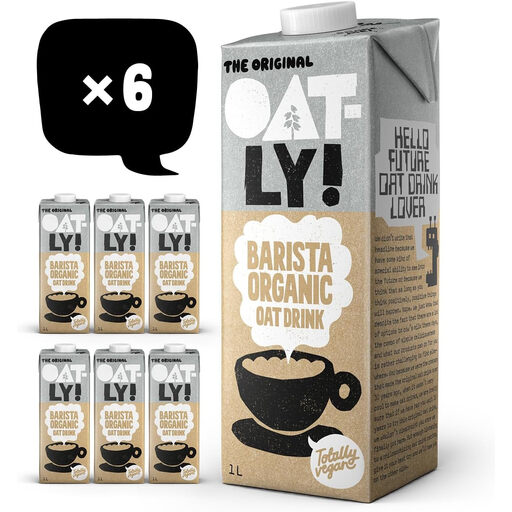 Image unavailable
Oatly Organic Barista Oat Drink, 6 × 1L
The listing describes this organic barista oat drink for uses including cooking and baking, which makes its intended use worth comparing with an occasional snack recipe. Check the current pack for age guidance and its nutrition panel before using it as a regular dairy alternative; oats are listed as an allergen.
View on Joybuy
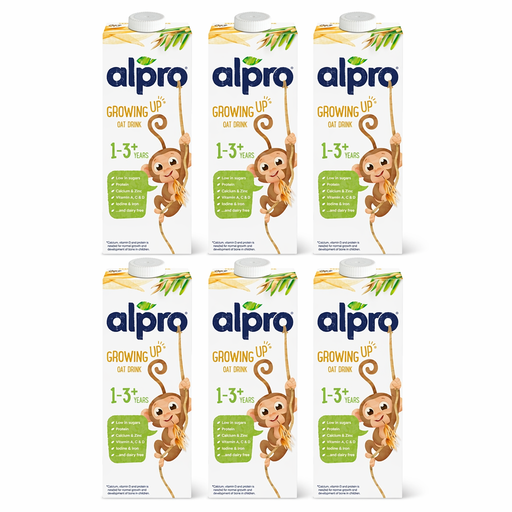 Image unavailable
Alpro Oat Growing Up Drink, six-pack
This Growing Up oat drink lists calcium, vitamin D, iron and iodine, making its nutrition panel relevant when comparing regular dairy alternatives. Check the current carton for its age statement and whether it is unsweetened; Alpro’s online age wording is inconsistent. Check the pack’s allergen information and organic status if either affects your choice.
View on Joybuy
Questions about toddler snack time
Can oat drink replace formula before a child turns one?
No. The NHS says first infant formula is the only suitable alternative to breast milk in the first 12 months. Do not substitute an oat drink for breast milk or first infant formula.
Can a child aged 1 or over have oat drink at snack time?
The NHS says an unsweetened, calcium-fortified oat alternative can be given from age 1 as part of a balanced diet. If it is used regularly instead of dairy milk, consider the child’s wider diet and any individual dietary requirements as well as the carton’s nutrition information.
Does an organic oat drink contain added calcium?
Not necessarily. Oatly describes its Organic Oat Drink as unfortified, while its standard Oat Drink is fortified. Check the exact product’s nutrition panel rather than using its organic claim to judge calcium content.
Is a plant-based oat drink suitable for a child with milk allergy?
Do not assume so. M&S labels its plant-based Semi Oat Drink unsuitable for people with milk allergy. Read the particular carton’s ingredients and suitability statements, and follow the child’s individual allergy guidance and nursery or school policy.


