For porridge, sauces or other soft meals, choose an oat drink labelled organic on the exact carton and check that its stated uses suit your recipes; a barista drink is more relevant when coffee texture matters too. UK organic plant-based drinks cannot be fortified with nutrients, according to the Office for Health Improvement and Disparities, so check the wider diet if the drink regularly replaces dairy. If easy-chew meals are part of a prescribed swallowing plan, follow its specified food and fluid textures rather than assuming an ordinary oat drink is suitable.
Who is choosing oat milk for soft meals?
Home cooks choosing organic ingredients
If you make porridge, blended soups, sauces or baking recipes, look for an organic-labelled carton with ingredients and stated uses that fit what you cook. Oatly describes cooking and baking uses for its Organic Oat Drink; Alpro suggests recipes and overnight oats for its Organic Oat drink.
People regularly replacing dairy milk
Organic status and nutrient fortification are separate considerations. The Office for Health Improvement and Disparities states that UK plant-based drinks labelled organic cannot be fortified, so compare the nutrition label and consider what the rest of the diet provides.
People following a texture-modified plan
If easy-chew meals relate to a swallowing difficulty, the required food texture and fluid thickness matter more than a drink’s everyday description. NHS England advises using International Dysphagia Diet Standardisation Initiative (IDDSI) terminology rather than imprecise terms such as “soft diet”.
What should you check before choosing?
Start with the organic claim and intended recipe, then check the nutrition and allergen labels. A prescribed texture requirement needs its own check before the drink is used.
| Priority |
What to check |
Your needs |
| Organic status |
Check the organic wording and certification details on the exact carton. The UK Department for Environment, Food & Rural Affairs says organic food labelling requires compliance with production rules, at least 95% organic agricultural ingredients and certification by an approved control body. |
I want an organic product, not just a plant-based drink with a short ingredient list. |
| Meal use |
Check whether the maker describes cooking or recipe use. Oatly states cooking and baking uses for Oat Drink Organic; Alpro suggests recipes and overnight oats for Organic Oat. Minor Figures positions its Organic Barista Oat around coffee preparation. |
Porridge, sauces and blended meals are my main uses; coffee foam may matter less to me. |
| Nutrition |
Read the exact carton’s protein and nutrient declarations. The Office for Health Improvement and Disparities states that UK organic plant-based drinks cannot be fortified; a fortified non-organic drink is a different option if added nutrients matter more than organic status. |
If this regularly replaces dairy milk, I need to consider what nutrients my other foods and drinks provide. |
| Allergens |
Read the current oat, gluten and may-contain statements. The Food Standards Agency says a gluten-free claim concerns gluten content, while oats must still be identified as an allergen. |
I need to check the particular carton against my oat-allergy or gluten-related requirements, rather than relying on its organic claim. |
| Required texture |
For a prescribed texture-modified diet, check the specified IDDSI food and fluid levels and preparation instructions. NHS England warns against relying on imprecise terms such as “soft diet”. |
A pourable drink is not automatically the fluid thickness I have been advised to use. |
Common buying mistakes
-
Assuming organic also means fortified
The Office for Health Improvement and Disparities states that UK organic plant-based drinks cannot be fortified. Choosing one as a regular dairy replacement therefore calls for a separate look at nutrient intake.
Compare the carton’s nutrition panel with the foods and drinks it would replace. If added nutrients are the priority and organic status is optional, compare clearly labelled fortified non-organic drinks instead.
-
Treating “easy chew” as a fluid-texture instruction
Food texture and drink thickness can be separate requirements in a swallowing plan. NHS England advises IDDSI terminology because vague descriptions can create safety risks.
If you have a prescribed texture-modified diet, follow the food and fluid levels and preparation instructions given by the clinician responsible for your plan.
-
Reading “gluten-free” as “free from oat allergens”
The Food Standards Agency distinguishes the gluten-free claim from oat-allergen labelling: oats remain an allergen even in a gluten-free product.
Check the exact carton for oats, other cereals and may-contain statements against your requirements.
-
Choosing a barista carton without checking its other uses
A maker’s description of coffee foam does not establish that a drink suits every meal recipe or a prescribed fluid texture.
Match stated cooking or recipe uses to the meals you prepare, then compare the ingredient, nutrition and allergen labels on the cartons you are considering.
Relevant oat-drink brands
These product examples illustrate different label and use considerations; the details apply to the named drinks, not every product from each brand.
Oatly
Oatly describes Oat Drink Organic as suitable for cooking and baking.
- Its listed ingredients are water, 10% organic oats and sea salt.
- As a UK organic plant-based drink, it cannot be fortified with nutrients.
Alpro
Alpro presents its Organic Oat drink for recipes and overnight oats.
- Alpro lists water, organic oats, organic sunflower oil and sea salt, and labels the drink gluten free.
- Gluten-free labelling does not make a product suitable for an oat allergy; check the exact pack’s allergen statements.
Minor Figures
Minor Figures describes Organic Barista Oat primarily in terms of coffee preparation and foam.
- Its listed ingredients include organic oats and organic rapeseed oil.
- The product information says it may contain gluten. A barista description does not establish suitability for a prescribed fluid thickness.
M&S
Two M&S oat drinks provide a comparison when deciding whether organic status or added nutrients matters more.
- Only 3 Ingredients Oat Drink lists water, oats and sea salt; Plant Kitchen Whole Oat Drink lists added calcium, iodine, vitamin D and vitamin B12.
- These named drinks are non-organic alternatives, not substitutes for checking an organic claim on the product you buy.
Joybuy oat drink options
This organic-labelled Oatly barista multipack is described for cooking and baking as well as hot drinks. Check the exact carton’s organic certification details if certification is essential to your choice.
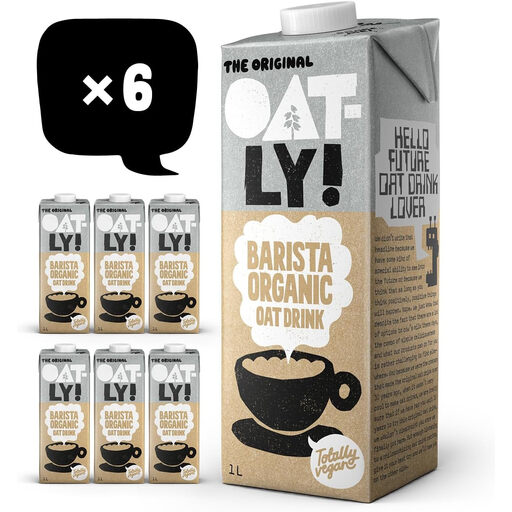 Image unavailable
Oatly Organic Barista Oat Drink 6x1L
Listed for cooking and baking as well as coffee and other hot drinks. The pack contains 6 x 1 L; check the carton’s certification details if you require an organic-certified drink.
If you follow a prescribed food or fluid-texture plan, do not assume that this pourable drink meets its requirements.
View on Joybuy
Questions about organic oat milk
How can I check whether an oat drink is organic?
Check the organic claim and certification details on the exact carton. The UK Department for Environment, Food & Rural Affairs says organic food labelling requires compliance with production rules, at least 95% organic agricultural ingredients and certification by an approved control body; “plant-based” alone does not establish organic status.
Can organic oat milk replace dairy milk nutritionally?
Do not assume their nutrient contents are equivalent. The Office for Health Improvement and Disparities states that UK organic plant-based drinks cannot be fortified and that nutrient content varies between plant-based drinks. If you replace dairy regularly, compare the exact labels and consider what nutrients the rest of the diet provides.
Is ordinary oat milk suitable for a prescribed thickened-fluid plan?
Do not assume that it meets the required thickness. NHS England advises using IDDSI food and fluid terminology rather than vague descriptions such as “soft diet”; follow the level and preparation instructions in your clinical plan.
Does gluten-free oat milk suit someone with an oat allergy?
A gluten-free claim does not establish oat-allergy suitability. The Food Standards Agency says oats must still be emphasised as an allergen even when the product is gluten free. Read the current ingredients and allergen statements on the exact carton.
Should I choose a barista oat drink for porridge and sauces?
Choose by the uses stated for the exact drink and the label details that matter to you, rather than assuming coffee-focused features improve meal recipes. Oatly describes cooking and baking uses for Oat Drink Organic, Alpro suggests recipes for Organic Oat, and Minor Figures describes Organic Barista Oat primarily around coffee texture.


