An organic oat drink is not automatically low FODMAP. If you use one during a low-FODMAP restriction phase, check the exact carton and the amount you pour: The IBS Dietitian reports general Monash testing for oat milk up to ½ cup (140 g), but that does not establish a suitable serving for a particular formulation. If oat drink regularly replaces milk, check its calcium content separately.
Who needs to check what?
People using oat drink in tea or coffee during restriction
A small pour calls for an amount check, not an assumption based on the organic label. The IBS Dietitian reports general Monash oat-milk testing up to ½ cup (140 g); that figure does not verify the FODMAP content of a particular UK carton.
Shoppers comparing ingredient lists
Sainsbury's lists water, organic gluten-free oats and sea salt for plain Plenish Organic Oat. Ocado describes Califia Farms Simple & Organic Oat as a three-ingredient drink without oils or gums. A shorter ingredient list makes formulations easier to compare, but does not establish FODMAP suitability.
People regularly replacing milk with a plant drink
Organic status and calcium fortification are separate checks. Monash advises looking for at least 120 mg calcium per 100 ml in a calcium-fortified plant milk; compare the nutrition panels of the drinks you are considering.
What to check before choosing
Start with the exact drink and the amount you intend to use, then compare ingredients and nutrition for your usual purpose.
| Priority |
What to check |
Your needs |
| FODMAP evidence and portion |
Look for testing or certification covering the exact product and serving. Measure the amount you pour; The IBS Dietitian reports general Monash oat-milk testing up to ½ cup (140 g), not a result for every recipe. |
I use oat drink in tea or coffee and need to consider that pour within my low-FODMAP plan, rather than treating the whole carton as suitable. |
| Calcium fortification |
Read calcium per 100 ml on the nutrition panel. Monash advises checking for at least 120 mg per 100 ml when choosing a calcium-fortified plant milk. |
If this regularly replaces milk, I want to know whether it meets the calcium benchmark as well as my preference for organic ingredients. |
| Recipe and intended use |
Compare the ingredients of the exact plain, barista or other variant. Check for additions such as oils or coconut cream if those differences matter to you; a recipe comparison is not a FODMAP test. |
For coffee, I may want a barista formulation. If a short ingredient list matters more, I can compare plain drinks without assuming either type has the same FODMAP content. |
| Alternatives to oat drink |
Consider whether dairy needs excluding. Monash identifies lactose-free dairy as an option for people who tolerate dairy, while the NHS says a dietitian may recommend a low-FODMAP diet for IBS. |
I would rather assess a suitable milk alternative than rule out dairy solely because I am considering a low-FODMAP diet. |
Assumptions to avoid
-
Reading organic or dairy-free as low FODMAP
Those labels describe different characteristics; neither gives a tested FODMAP amount. Monash Low FODMAP Certification, by contrast, is based on product testing.
Check for evidence covering the exact drink and serving rather than using its organic, vegan or sugar wording as a substitute.
-
Pouring oat drink without considering the amount
The IBS Dietitian reports that general Monash testing places oat milk at up to ½ cup (140 g) for a low-FODMAP serving, with higher amounts affected by fructans and galactooligosaccharides. Monash also notes that FODMAPs can add up across foods.
Measure the amount used in a drink or meal and discuss how general serving guidance applies to your restriction plan with a dietitian.
-
Choosing organic without checking calcium
An organic claim does not tell you how much calcium a drink contains. Monash advises checking for at least 120 mg per 100 ml in a calcium-fortified plant milk.
If oat drink replaces milk regularly, read its nutrition panel and consider fortification separately from organic status.
-
Treating plain and barista recipes as interchangeable
Sainsbury's lists three ingredients for plain Plenish Organic Oat, while Ocado lists coconut cream in Plenish Organic Oat Barista. A conclusion about one formulation cannot simply be transferred to the other.
Check the current label of the exact variant you intend to use, particularly when switching between plain and barista cartons.
Organic oat-drink brand examples
These examples describe particular listed formulations, not every drink made by each brand or a ranking of their FODMAP suitability.
Oatly
Tesco lists Oatly Organic Chilled with water, 10% organic oats, rapeseed oil and sea salt.
- Its listed ingredients let shoppers identify the added oil in this chilled formulation.
- Sainsbury's presents this organic drink as an alternative to a fortified oat drink. Check its nutrition panel if calcium fortification matters; do not assume these details apply to Oatly Barista.
Alpro
Tesco lists Alpro Organic No Sugars Oat Drink as a UHT drink with 0 g sugars per 100 ml.
- The per-100 ml sugar value offers a stated nutrition-label comparison.
- A zero-sugars value does not establish a low-FODMAP serving for this drink.
Plenish
Plenish has distinct plain, Zero Sugar and Barista organic oat-drink formulations in the cited retailer listings.
- Sainsbury's lists water, 10% organic gluten-free oats and sea salt for plain Organic Oat. Tesco lists plant-based calcium among the Zero Sugar variant's ingredients.
- Ocado lists coconut cream in the Barista variant. Check each variant separately rather than transferring ingredient or FODMAP assumptions between them.
Califia Farms
Ocado describes Califia Farms Simple & Organic Oat as a drink made with oats, water and sea salt.
- The listing states that this formulation is made without oils or gums.
- An ingredient list alone cannot establish its FODMAP content or a suitable serving.
Rude Health
Ocado lists spring water, 11% organic gluten-free oats, organic cold-pressed sunflower oil and sea salt for Rude Health Organic Oat Drink.
- The listing identifies both the oat proportion and the added oil for this formulation.
- Shoppers seeking a drink without added oil should compare another recipe; these ingredients do not establish low-FODMAP suitability.
Joybuy oat-drink option
This organic barista oat drink is an option to consider for coffee use, not a product-level low-FODMAP recommendation. Check the exact carton and your intended serving before using it during a restriction phase.
 No image available
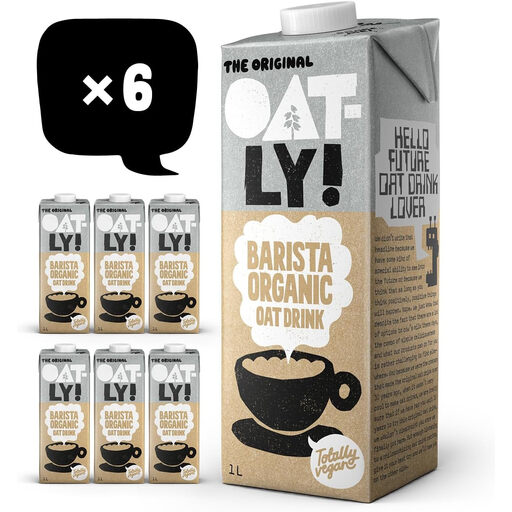
Oatly Organic Barista Oat Drink 6x1L
A barista oat drink to consider for coffee, supplied as six 1L cartons. Its organic label does not establish a low-FODMAP serving for this formulation. If you use it regularly instead of milk, check calcium per 100 ml on the carton.
View on Joybuy
Questions about oat drink and low FODMAP
Does organic oat drink count as low FODMAP?
Not solely because it is organic. An organic label does not specify FODMAP content; Monash says its Low FODMAP Certification is based on laboratory testing of a product. Check evidence for the exact drink and serving rather than relying on the organic label.
Can I use any amount of oat drink during a low-FODMAP restriction phase?
Do not assume so. The IBS Dietitian reports general Monash testing that places oat milk at up to ½ cup (140 g) for a low-FODMAP serving, with higher amounts affected by fructans and galactooligosaccharides. This is not a tested serving for every organic oat-drink formulation.
What if oat drink is my regular replacement for milk?
Check its calcium content as well as its ingredients and serving. Monash advises looking for at least 120 mg calcium per 100 ml when choosing a calcium-fortified plant milk; organic status alone does not answer that nutrition-label question.
Must I avoid dairy to follow a low-FODMAP diet?
Not necessarily. Monash identifies lactose-free dairy as an option for people who tolerate dairy. Whether you need a restriction phase or a particular milk alternative is a separate question to discuss with a dietitian.
Who can help me decide whether to follow a low-FODMAP diet?
A dietitian can help assess whether it is appropriate for you. The NHS says a dietitian may recommend a low-FODMAP diet for IBS; seek professional advice rather than assuming that changing oat-drink brands will address bowel symptoms.


