Who is this for?

Carbohydrate-counting pasta buyers

If you plan meals around a carbohydrate amount, check the portion you will use and whether the label describes dry or cooked pasta. Diabetes UK notes that both carbohydrate type and amount matter in diabetes management; an organic claim does not replace those checks.

Organic-and-wholegrain shoppers

If you want both attributes, look for an organic claim and a wholewheat or wholegrain ingredient description on the same product. Tesco lists organic wholewheat spaghetti separately from organic spaghetti made with durum wheat semolina.

Convenience-meal planners

If you use a ready-made sauce, check its carbohydrate, sugars and salt for the amount you pour. Dolmio, for example, gives nutrition figures per portion for its Low Fat Bolognese Sauce; the pasta label describes only part of that meal.

What to check when buying

Start with the part of the pasta meal that drives your choice, then compare labels using the portion and measurement basis you will actually use.

Concern What to check Who this matters to
Carbohydrate and portion Check carbohydrate per stated serving and whether the figures refer to dry or cooked pasta. When I plan a pasta portion around a carbohydrate amount, I need to know which weight the label describes. About 31% of consumers put carbohydrate and portion planning first.
Wholegrain and organic attributes Look for both an organic claim and wholewheat or wholegrain ingredients; compare fibre on the nutrition panel. If I want organic sourcing without giving up a wholegrain pasta format, I need both attributes on the same pack. For about 25% of consumers, that combination is the primary concern.
Sauce or tinned accompaniment Read carbohydrate, sugars and salt per portion, then account for the amount used. When a ready-made sauce is part of my meal, its label matters alongside the pasta's. Roughly 25% of consumers prioritise the accompaniment's nutrition.
Meaning of organic Check that the organic claim applies to the pasta product, then read its ingredients and nutrition information separately. If organic sourcing is my deciding requirement, I want to establish what the product claim covers. About 19% of consumers make verification of that claim their first priority.

Buying pitfalls

  • Reading “organic” as a carbohydrate claim

    An organic label addresses production and labelling conditions, not the pasta's carbohydrate content or how a particular portion fits a meal plan. Diabetes UK emphasises carbohydrate type and amount when discussing diabetes management.

    Use the organic claim for your sourcing preference, then read carbohydrate, fibre and serving information independently.

  • Comparing dry and cooked weights directly

    Pasta gains water during cooking, so nutrition stated per 100g dry pasta cannot be compared directly with figures per 100g cooked pasta. Sainsbury's states that 90g of its uncooked Wholewheat Fusilli weighs 200g when cooked.

    Compare products on the same dry or cooked basis, using a pack's conversion when one is supplied.

  • Checking the pasta but not the sauce

    A jarred or tinned accompaniment contributes its own carbohydrate, sugars and salt. A “no added sugar” description does not mean a sauce contains no carbohydrate.

    Read the sauce's per-portion figures and relate them to the amount going into the meal.

  • Relying only on an online listing

    The pack in hand is the relevant place to confirm its current ingredients, allergen statement, nutrition information and organic claim.

    Check those details before cooking, particularly if an ingredient or allergen affects what you can use.

Brands for reference

Tesco

Its listed pasta range provides examples for comparing organic and wholewheat as separate attributes.

  • Tesco describes Organic Wholewheat Spaghetti as made from organic durum wholewheat semolina.
  • Its Organic Spaghetti is a separate durum wheat semolina product; the word “organic” alone does not identify a wholewheat format.

Sainsbury's

Its Wholewheat Fusilli is a reference for shoppers comparing portion information on wholewheat pasta.

  • Sainsbury's gives a conversion of 90g uncooked pasta to 200g cooked for the named product.
  • That product is a wholewheat example, not an organic option on the basis of the cited listing.

Barilla

Its Whole Wheat Spaghetti offers a named wholewheat format to compare by its own label.

  • Barilla provides carbohydrate and fibre figures for Whole Wheat Spaghetti.
  • Those product-specific details do not establish that other Barilla pasta is wholewheat or organic.

M&S

Its listings illustrate why an organic claim and a wholewheat ingredient description need separate checks.

  • M&S lists Daylesford Organic Spaghetti made with organic wholewheat durum flour.
  • Its Organic Italian Fusilli lists organic durum wheat semolina instead; check each product's ingredients and fibre figure rather than treating the two as equivalent.

Dolmio

Its sauces are relevant when choosing a ready-made accompaniment for pasta.

  • Dolmio lists 7.5g carbohydrate, 4.1g sugars and 0.75g salt per 112g portion of its Low Fat Bolognese Sauce.
  • The brand's “No Added Sugar” range name does not replace a check of the full label and the amount used.

Wholewheat pasta options on Joybuy

These Morrisons fusilli listings are options for shoppers considering wholewheat pasta without making an organic claim a requirement. If organic sourcing is essential, confirm the claim on the product pack before choosing.
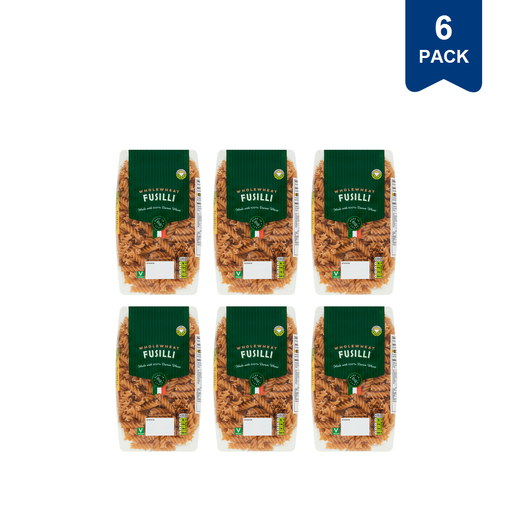
Morrisons Wholewheat Fusilli 500g, listed as six packs

Morrisons Wholewheat Fusilli 500g (6 Packs)

Consider this listing if you want wholewheat fusilli in a multipack format. Confirm the total bundle quantity before ordering, and use the current pack's carbohydrate and serving information when planning a portion.

View on Joybuy
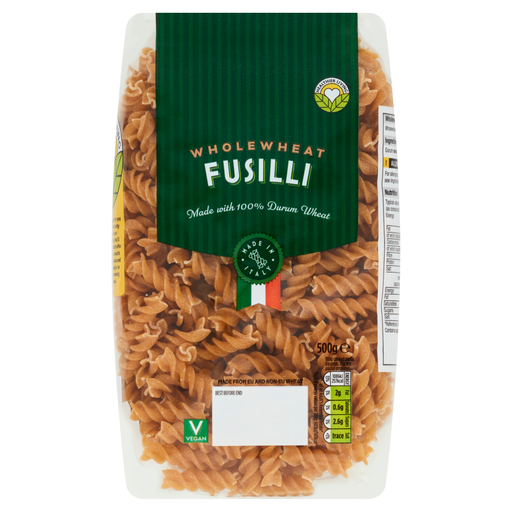
Morrisons Wholewheat Fusilli 500g

Morrisons Wholewheat Fusilli 500g

Consider this 500g listing if you want a wholewheat fusilli option rather than the listed multipack. Check the current nutrition panel for carbohydrate and fibre, and confirm any organic requirement against the pack's labelling.

View on Joybuy

Questions about pasta and labels

Is organic pasta automatically a better choice for a diabetes-friendly meal?

No: an organic claim describes how a food meets organic production and labelling rules, not its carbohydrate content. Diabetes UK advises considering carbohydrate type and amount, so compare the pasta's label and your intended portion whether or not it is organic.

Should I choose wholewheat pasta?

Wholewheat is an option if a wholegrain format and fibre matter to you. The NHS identifies wholewheat pasta as a fibre-containing choice, but you still need to check the carbohydrate figure and portion against your own meal plan.

How can I compare dry and cooked pasta figures?

Check which weight each nutrition panel uses and compare on the same basis. If the pack provides a conversion, use it for that product: Sainsbury's states that 90g of its Wholewheat Fusilli uncooked weighs 200g cooked.

What does “organic” mean on UK pasta packaging?

For a food product to carry an organic label, the Department for Environment, Food & Rural Affairs says at least 95% of its agricultural ingredients must be organic and the applicable organic labelling rules must be met. Check that the claim applies to the pasta itself; read its nutrition and ingredient information separately.

Does the sauce need checking if the pasta is organic or wholewheat?

Yes. Check carbohydrate, sugars and salt for the amount of sauce you intend to use. Dolmio lists these figures per 112g portion for its Low Fat Bolognese Sauce, so a different amount calls for a corresponding reading of the label.