What matters when buying?
For a quick pasta dinner, settle the organic requirement first, then compare the work needed to prepare the sauce and how much of the pack you will use.
| Concern |
What to check |
Who this matters to |
| Organic status |
Look for an organic claim on the exact product label, rather than relying on the brand or retailer range. |
If organic production is my deciding requirement, a familiar brand name or tomato-based recipe is not enough. About 33% of consumers put the exact sauce’s organic status first. |
| Preparation |
Check whether the sauce needs hob heating or can be stirred through hot pasta, and read its serving guidance. |
On a busy evening, I want to know how many steps stand between cooked pasta and dinner. Roughly 33% of consumers make preparation effort their primary concern. |
| Label fit |
Read the current ingredients, allergens and dietary claims; compare salt using the stated per-100g and per-serving figures. |
When several people share a meal, I need a sauce whose label fits their dietary requirements. About 20% of consumers prioritise ingredient, allergen or nutrition-label fit. |
| Pack and leftovers |
Match the net weight and servings to your meal, then check refrigeration and use-after-opening instructions. |
If I will use only part of a jar tonight, I need a realistic plan for the rest. Around 14% of consumers put pack size and leftover use first. |
Joybuy pasta sauce selection
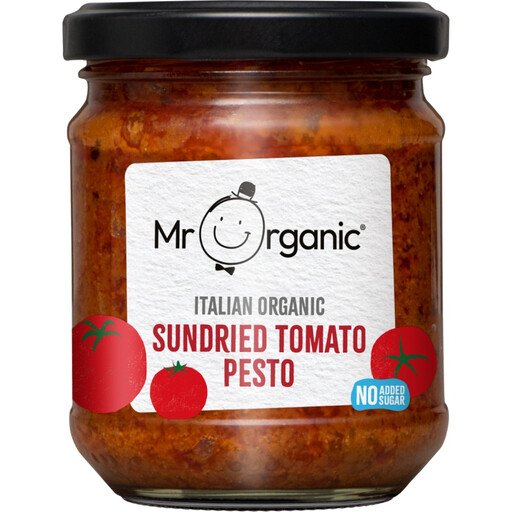
This sundried-tomato pesto is a pasta option if you want a different sauce style from a conventional tomato-and-basil jar. If an organic claim is essential, check the current pack before choosing it.
 No image available
Mr Organic Italian Organic Sundried Tomato Pesto 190g
Consider this 190g sundried-tomato pesto if that flavour suits your pasta dinner. If organic status or dietary suitability is decisive, check the current pack’s organic claim, certification details, ingredients and allergens; also read its preparation and opened-pack instructions before planning the meal.
View on Joybuy
Common questions
How can I check whether a pasta sauce is organic?
Look for the organic claim on the exact product and check its current label. Department for Environment, Food & Rural Affairs guidance says food described as organic must meet the applicable production rules and that the product and suppliers must be certified by an approved organic control body.
Does organic pasta sauce necessarily contain less salt?
No: the organic claim does not specify a salt level. Sainsbury's lists 0.43g of salt per 100g and 0.76g per half-jar serving for its named SO Organic tomato-and-basil sauce; use the current nutrition panel when comparing it with another product.
Is a stir-in sauce the quickest organic option?
A stir-in instruction may save a saucepan step, but it does not confirm an organic claim. Napolina says its Stir-In Sauces can be stirred through hot pasta without simmering, while Sainsbury's lists 4–5 minutes of gentle hob heating for its named SO Organic sauce. Check both the preparation directions and organic claim on the product you choose.
How long can I keep an opened jar?
Follow the instruction on your exact jar. Sainsbury's says to refrigerate its SO Organic tomato-and-basil sauce and use it within three days of opening; the M&S listing gives five days after opening for the named Daylesford tomato-and-basil sauce, also refrigerated.
Is an organic tomato sauce automatically vegan or suitable for an allergy?
No. M&S marks its named Daylesford organic tomato-and-basil sauce as vegan, but that claim cannot be applied to other sauces. Check the current ingredients, allergen declaration and dietary claims on the exact product.


