
24/7 Customer Support

Free returns

Same-day & Next-day Delivery

Quality Guaranteed

Unlock Your Welcome Offers: FREE Delivery | Up to 80% OFF | Free 30-day JoyPlus trial
Download the APP
Finding a truly authentic and delicious organic pesto can feel like a challenge. The supermarket aisle presents a wall of green jars, all promising Italian flavour, but the labels often tell a different story. For those with specific dietary needs, such as a vegan or dairy-free lifestyle, the search becomes even more complex.
As a Joybuy Product Recommendation Officer, my role is to help you navigate these choices. This guide cuts through the marketing jargon to offer clear, practical advice on selecting an organic pesto that suits your taste and dietary requirements, whether you're stirring it through pasta or looking for a new kitchen staple.
Before we look at specific products, here are a few key things to consider when you're choosing an organic pesto sauce.
The quality of a pesto lies in its ingredients. A traditional organic basil pesto should feature basil as a primary ingredient, followed by an oil (like sunflower or olive oil), nuts (typically pine nuts or cashews) and cheese. However, many modern recipes offer excellent alternatives. If you're looking for a vegan pesto or a dairy free pesto, check for ingredients like tofu, which can be used to create a creamy texture without any milk products.
When a product is certified organic in the UK and EU, it means it has been produced to high standards of environmental and animal welfare. For pesto, this means the basil, tomatoes and other plant-based ingredients are grown without the use of synthetic pesticides and fertilisers, offering a more natural choice for your meals.
While classic basil pesto is a firm favourite, don't overlook other varieties. A sundried tomato pesto offers a rich, sweet and tangy flavour that works beautifully with pasta, as a base for pizza, or spread on bruschetta. Deciding between the fresh, herby taste of basil and the deep flavour of sundried tomato will help narrow down your options.
Here are a few standout organic pesto options that cater to different tastes and dietary needs.
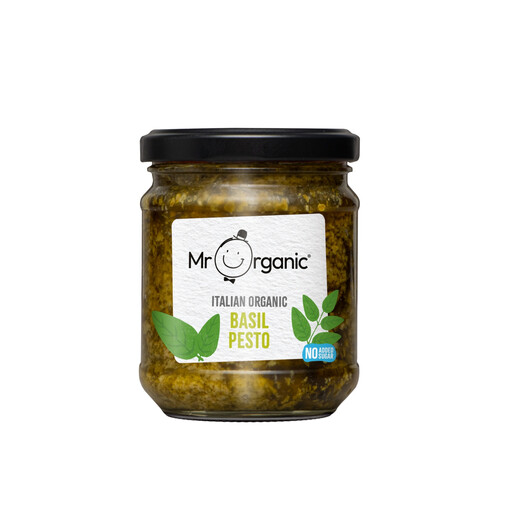
Why It Stands Out: This pesto is crafted in Italy and delivers a fragrant, classic basil flavour using a completely plant-based recipe. With basil listed as 31.2% of the ingredients, its fresh, aromatic character is prominent. The use of tofu and cashew nuts creates a satisfyingly creamy texture without any dairy.
Pros:
Who is it for? This is an excellent choice for anyone following a vegan diet or with a dairy intolerance who doesn't want to compromise on the authentic taste of a classic Italian pesto sauce.
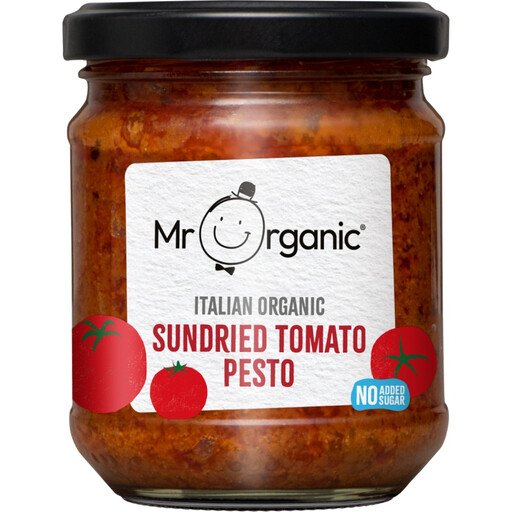
Why It Stands Out: This sundried tomato pesto offers a rich and flavourful alternative to the traditional basil version. Made with rehydrated sun-dried tomatoes, creamy tofu and a blend of herbs, it provides a deep, savoury taste. Notably, this recipe is nut-free, making it a suitable option for those with nut allergies.
Pros:
Who is it for? This pesto is ideal for health-conscious individuals looking for a flavourful, plant-based sauce, especially those who need to avoid nuts, dairy or gluten.
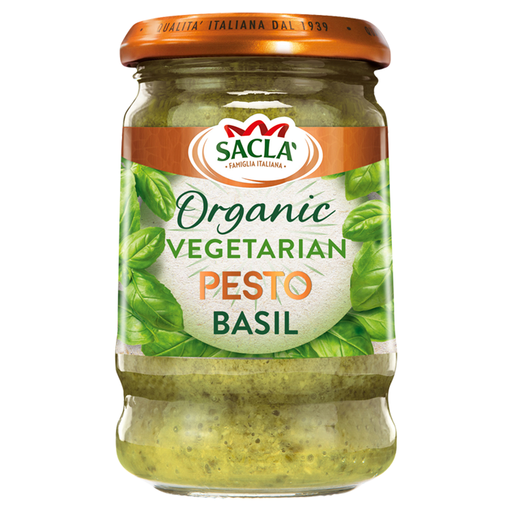
Why It Stands Out: For those who enjoy the traditional cheesy flavour of pesto, this organic option from Sacla is a strong contender. It is an authentic Italian recipe made with a high concentration of Italian basil (37%) and includes medium-fat hard cheese. It is approved by the Vegetarian Society, confirming it is free from animal rennet.
Pros:
Who is it for? This vegetarian pesto is perfect for those who are not avoiding dairy and want an organic pesto that stays true to the classic, cheese-inclusive Italian recipe.
These recommendations cover some of the most popular needs, but the world of organic sauces is vast. If you're searching for a different flavour, a larger jar size, or simply want to see what else is available, you can find more choices in our curated collection.
[Explore our full range of Organic Sauces here](https://www.joybuy.co.uk/explore/organic-sauce/wLM9kvRD)
No, not all pesto is vegetarian. Traditional pesto alla Genovese is made with Parmigiano-Reggiano or Pecorino cheese, which often contains animal rennet. To ensure a product is suitable for vegetarians, always look for a "vegetarian" label or a certification from an organisation like the Vegetarian Society.
Pesto is incredibly versatile. Beyond being a classic sauce for pesto for pasta, you can use it as a pizza base, a spread in sandwiches and wraps, a dressing for salads, a flavour-booster for roasted vegetables, or stirred into soups and stews for added depth.
Once opened, pesto should be kept in the fridge. To help it last longer, you can pour a thin layer of olive oil over the surface before sealing the jar. Always check the product label for specific storage instructions, as the shelf life can vary from a few days to a couple of weeks.