What should you check?
Decide whether organic certification or a particular snack format is essential, then compare the amount you will actually eat with the demands of the training occasion.
Organic ready-to-eat popcorn
Consider it when: you want an organic claim and a bag you can take without preparing it.
Trade-off: certification concerns production, not the bag’s carbohydrate content or its suitability for a particular run.
Organic kernels
Consider them when: you can prepare popcorn ahead and want to choose the added ingredients yourself.
Trade-off: preparation and portion planning take time, and the finished snack depends on what you add.
Conventional popcorn
Consider it when: a clearly labelled portion matters more to you than certified-organic sourcing.
Trade-off: a useful nutrition panel does not make a product organic or make one bag a complete fuelling plan.
| Priority | What to check | Your needs |
|---|
| Training occasion |
Read carbohydrate per portion, not just per 100g; consider the portion alongside other planned food. After intense or prolonged exercise, UK Sports Institute guidance calls for a carbohydrate- and protein-rich snack and fluids. |
I want to know what this bag contributes to my planned snack, rather than assume it covers a long run or recovery on its own. |
| Organic status |
Check the current organic claim and certification information for the product. Department for Environment, Food & Rural Affairs guidance says an organic food claim requires, among other conditions, at least 95% organic agricultural ingredients and certification of the product and its suppliers. |
If organic sourcing is important to me, I want to confirm that claim separately from the popcorn’s nutrition. |
| Flavour and portion |
Compare carbohydrate, sugars, fibre and salt for the exact flavour and amount you will eat. For example, Sainsbury’s lists 17g carbohydrate and 3.8g fibre per 30g pack of Propercorn Sweet & Salty; DDC Foods Ltd lists 0.3g sugars and 0.8g salt per 100g of Metcalfe’s Sea Salt. |
A sweet or savoury name alone will not tell me how the portion fits the food I have planned around training. |
| Ingredients and eating |
Read the current ingredient and allergen information, and look for unpopped-kernel warnings. Tesco’s Tyrrells Sweet & Salt listing warns that unpopped kernels may be present. |
Before a key run, I would rather try an unfamiliar snack during ordinary training and check the pack I will actually eat. |
Brand and retailer references
These examples help distinguish labelled conventional popcorn from places to look for organic formats; a brand name alone does not establish that a particular pack is organic.
Propercorn
A ready-to-eat option for comparing the nutrition of a specific flavour and pack size.
- Sainsbury’s lists 17g carbohydrate and 3.8g fibre per 30g Sweet & Salty pack.
- Those figures describe that pack, not every Propercorn flavour, and do not establish an organic claim.
Metcalfe’s
Its cited sea-salt and sweet-and-salt products illustrate why the exact flavour matters.
- DDC Foods Ltd lists 49.4g carbohydrate, 0.3g sugars and 14.1g fibre per 100g of the Sea Salt product; its Sweet 'N' Salt listing gives 60.9g carbohydrate and 11.1g sugars per 100g.
- Both cited distributor listings state “Organic No”. The figures are per 100g, not per small bag.
Tyrrells
The cited Sweet & Salt bag offers a clearly stated small portion for label comparisons.
- Tesco lists 13.0g carbohydrate, 4.0g sugars and 0.4g salt per 23g pack.
- The Tesco listing warns that unpopped kernels may be present and does not establish that this product is organic.
Tesco
A retailer reference for finding both ready-to-eat popcorn and kernels, rather than a popcorn brand recommendation.
- Its popcorn category lists Trafo Organic Sea Salted Popcorn and Minton & Donello Organic Popcorn Kernels.
- Check the individual product’s current label for its ingredients, nutrition and organic details before choosing it.
Popcorn options on Joybuy
These are conventional popcorn options for comparing ready-to-eat pack sizes with a microwave-preparation format. If certified-organic sourcing is essential, check the organic claim on the particular product rather than treating these options as organic alternatives.
 No image available
Butterkist Sweet & Salted Popcorn 100g
A ready-to-eat larger bag if you prefer to decide your own serving. Check the carbohydrate for the amount you pour and look out for unpopped kernels; the product is not presented as certified organic.
 No image available
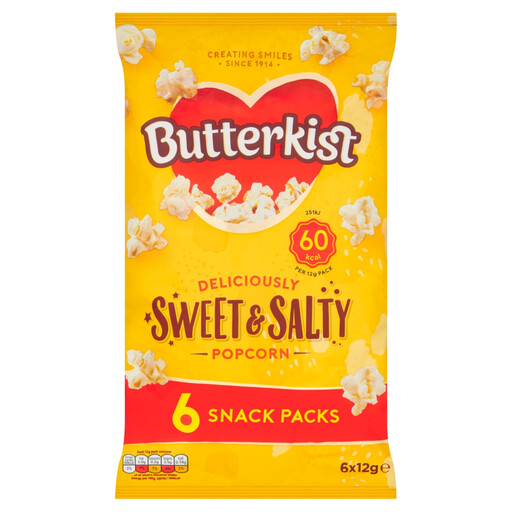
Butterkist Sweet & Salty Popcorn 6 x 12g
The six small bags suit carrying a pre-portioned snack. Consider one bag as a small part of your planned food, check the current label, and watch for unpopped kernels. This product is not presented as certified organic.
 No image available
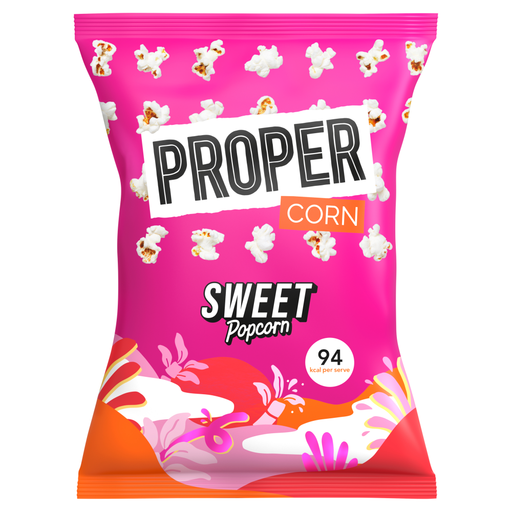
Propercorn Sweet Popcorn 90g
A ready-to-eat sweet popcorn in a larger bag. Use the current label and the portion you intend to eat when comparing it with smaller packs; do not assume an organic claim or overlook possible unpopped kernels.
 No image available
Butterkist Sweet & Salted Microwave Popcorn 3 x 60g
This format needs microwave preparation rather than being ready to eat. Follow the pack’s preparation instructions, compare nutrition for the prepared amount you eat, and take care around unpopped kernels. It is not presented as certified organic.
 No image available
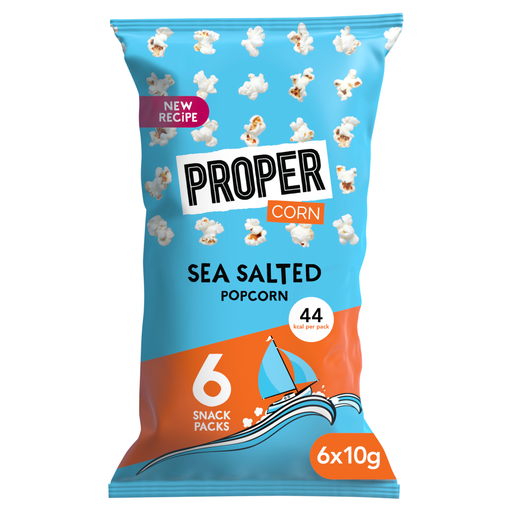
Propercorn Lightly Sea Salted Popcorn 6 x 10g
The individual bags are easy to carry, but a 10g bag is a small snack: Joybuy’s listing states 5.7g carbohydrate, 1.1g fibre and 0.11g salt per bag. Check the current pack’s allergen information; this product is not presented as certified organic.
Common questions
Does organic popcorn make better marathon fuel?
An organic claim does not establish a popcorn portion’s fuelling value. UK organic rules address production and certification; compare carbohydrate per portion and the rest of the nutrition panel separately, then consider how the snack fits your training-day food.
How do I check an organic popcorn claim in the UK?
Read the current product label and its organic certification information. Department for Environment, Food & Rural Affairs guidance says an organic food claim is permitted only under the applicable production and ingredient rules, including at least 95% organic agricultural ingredients and certification of the product and suppliers.
Should I choose sweet or sea-salted popcorn?
Choose using the exact serving’s nutrition and ingredients, not the flavour name alone. Sainsbury’s lists 17g carbohydrate and 3.4g sugars in a 30g Propercorn Sweet & Salty pack; DDC Foods Ltd lists 0.3g sugars and 0.8g salt per 100g of Metcalfe’s Sea Salt. Those are different serving bases, so compare the amount you would actually eat.
Is popcorn enough after a long run?
Do not assume a popcorn bag covers recovery on its own. UK Sports Institute guidance gives a general guideline of a carbohydrate- and protein-rich snack with fluids after intense or prolonged exercise, followed by a meal; consider popcorn in the context of the other food and drink you have planned.
What should I check before eating popcorn around training?
Check the current pack for ingredients, allergens and unpopped-kernel warnings, and be careful when chewing. Tesco’s Tyrrells listing warns that unpopped kernels may be present; trying an unfamiliar snack during ordinary training also lets you assess whether you want it on a more demanding day.


