Coeliac shoppers who prefer organic food
Start with an explicit gluten-free claim, then check the organic wording and ingredients on the current pack. Coeliac UK notes that calling oats organic does not tell you whether they are gluten-free.


For coeliac shopping, choose a protein bar explicitly labelled gluten-free before considering whether it is organic: an organic claim does not establish its gluten content. Then check the exact flavour for oats and other ingredients that matter to you. Coeliac UK says most people with coeliac disease can tolerate gluten-free oats, but a small number are sensitive to avenin.
Start with an explicit gluten-free claim, then check the organic wording and ingredients on the current pack. Coeliac UK notes that calling oats organic does not tell you whether they are gluten-free.
Look for oats labelled gluten-free rather than relying on descriptions such as pure or organic. Coeliac UK says a small number of people with coeliac disease are sensitive to avenin in oats, even when the oats are gluten-free.
Compare protein per bar alongside the exact flavour’s ingredient and allergen information. A gluten-free claim does not tell you whether a recipe contains nuts, milk, soya or sweeteners.
Check the gluten-free claim first. Oats, organic wording and protein per bar can then help you choose between products that meet that initial requirement.
| Priority | What to check | Your needs |
|---|---|---|
| Gluten-free claim | Look for an explicit gluten-free label on the exact bar. The Food Standards Agency defines gluten-free as no more than 20 mg/kg of gluten in food sold to the final consumer; organic wording is a separate claim. | I need the bar’s gluten status to be clear before considering its other features. |
| Oats | If the bar contains oats, check that they are labelled gluten-free. Coeliac UK says organic oats alone do not establish this, and a small number of people with coeliac disease are sensitive to avenin. | If I include oats in my diet, I want to know both how they are labelled and whether oat bars suit me personally. |
| Organic claim | Check the current pack’s organic wording separately from its gluten-free claim. The Department for Environment, Food & Rural Affairs states that a food product labelled organic must have at least 95% organic agricultural ingredients. | Organic ingredients matter to me, but I do not want that preference to replace the gluten-free check. |
| Protein and recipe | Compare protein per bar using the stated serving size. Read the exact flavour’s ingredients and allergen declaration for nuts, milk, soya and any sweeteners relevant to your preferences. | I want to know what one bar provides without overlooking ingredients I need to avoid or would rather not choose. |
Organic terminology does not establish gluten status. Coeliac UK specifically warns that organic oats do not tell shoppers whether a product is gluten-free.
Use an explicit gluten-free claim as your first filter, then consider organic status separately.
Coeliac UK says most people with coeliac disease can tolerate gluten-free oats, but a small number are sensitive to avenin.
If gluten-free oats cause ongoing symptoms, seek individual advice from your healthcare professional before making oat bars a regular choice.
Gluten-free bars can still contain other ingredients you need to consider. The BodyMe, YuBi and Nature Valley examples differ in their use of nuts, soya, milk, oats and sweeteners.
Read the current ingredient and allergen information when changing flavour or pack.
BodyMe presents its Organic Vegan Protein Bars as a plant-based option made with organic ingredients and described by the brand as free from gluten, soy, dairy and whey.
The Joybuy listing describes YuBi Bar’s Classic Variety Box as using gluten-free oats and being made in a gluten-free and dairy-free facility.
Check Barebells bars flavour by flavour rather than treating the brand or its vegan range as uniformly gluten-free.
These examples follow a combined ordering: an organic-ingredient route with a manufacturer-stated gluten-free claim, a gluten-free-oat route, then a convenience route without an organic priority. The order is not an independent product test or a comparison of protein content on a common basis.
| Rank | Product | Main details | Why consider it | Platform |
|---|---|---|---|---|
| 1 | BodyMe Organic Vegan Protein Bars | BodyMe states 16g plant protein per bar and describes the bars as made with organic ingredients and free from gluten, soy and dairy. | This route combines the two claims a shopper may want to check. The gluten-free and organic wording should still be checked on the current pack; the listed recipes contain cashews. | BodyMe |
| 2 | YuBi Bar Classic Variety Box, 12 x 35g | The Joybuy listing states 10g plant protein per bar, gluten-free oats and production in a gluten-free and dairy-free facility. | An oat-based route for shoppers who include gluten-free oats. Check the current ingredients for soya and sweeteners, and consider individual oat tolerance. | Joybuy |
| 3 | Nature Valley Protein Peanut & Chocolate Bars, 4 x 40g | Tesco lists the bar as gluten-free with 10g protein per bar. The Joybuy product description lists peanuts, soya and milk. | A convenience route when organic ingredients are not a requirement; check the exact pack’s gluten-free wording and allergen information. | Tesco |
These options cover gluten-free-labelled Nature Valley bars and an oat-based Trek flapjack. Check each current pack for its gluten-free wording, ingredients and any organic claim important to your choice.
 No image available
A gluten-free-labelled option for shoppers comparing bars without an organic requirement. The pack contains four 40g bars; check its allergen information if milk, peanuts, soya or almonds matter to you.
 No image available
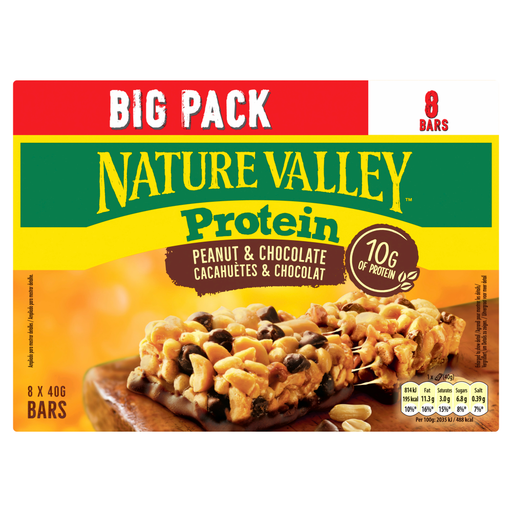
Another gluten-free-labelled option, this time in an eight-bar pack of 40g bars. Check the exact pack for milk, peanuts and soya, and for its precautionary nut wording.
 No image available
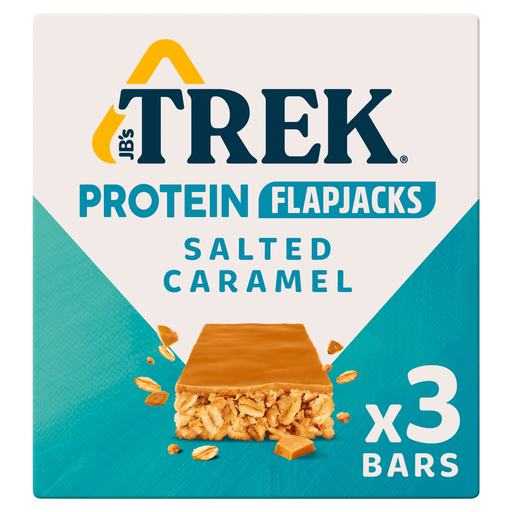
An oat-based choice for shoppers who include gluten-free oats. The pack contains three 50g flapjacks; check the gluten-free wording and soya information on the current pack. Coeliac UK notes that a small number of people with coeliac disease are sensitive to avenin in oats.
No. Coeliac UK says organic oats do not tell you whether a product is gluten-free. Organic labelling addresses a different requirement: the Department for Environment, Food & Rural Affairs states that at least 95% of a food product’s agricultural ingredients must be organic for it to be labelled organic. Look for an explicit gluten-free claim separately.
The Food Standards Agency defines gluten-free as no more than 20 mg/kg of gluten in food sold to the final consumer. That is the claim to check on the bar; an organic description does not replace it.
For coeliac shopping, consider oat bars only when the oats are labelled gluten-free. Coeliac UK says most people with coeliac disease can tolerate gluten-free oats, but a small number are sensitive to avenin. Seek individual advice from your healthcare professional if you have ongoing symptoms when including them.
Check the exact flavour’s ingredients and allergen declaration, as well as its protein amount per bar. The product examples differ: BodyMe lists cashews, YuBi lists soya and sweeteners, and the Nature Valley Peanut & Chocolate description lists peanuts, soya and milk.
No. Barebells states that its Vegan Caramel Choco Chip, Vegan Fudge Brownie and Vegan Caramel Peanut bars contain wheat protein and gluten. Check the specific flavour’s current label rather than relying on the brand name or a vegan description.