Carers looking for an organic packaged snack
Organic production may be a purchasing preference, but it is a separate question from whether a particular food, portion and texture suit a toddler.


For routine toddler snack time, start with age-appropriate foods such as fruit, plain unsweetened yoghurt or toast rather than choosing an adult protein bar for its protein, sugar or organic claim. An organic label concerns how a food is produced; before offering any packaged snack, check the exact product’s age guidance, ingredients, allergens and texture, as well as any nursery rules.
Organic production may be a purchasing preference, but it is a separate question from whether a particular food, portion and texture suit a toddler.
Protein-bar packaging can emphasise protein or sugar content. For toddler snack time, the more useful starting point is the child’s age and wider variety of foods, as described in NHS guidance.
The exact ingredients and allergen information matter, particularly when a child has an allergy. Check the nursery’s food policy before packing a snack that may contain restricted ingredients.
Choose the type of snack first, then assess any packaged option as a specific product rather than relying on a claim on the front of the pack.
When it fits: For regular snack time, NHS examples include fruit, plain unsweetened yoghurt, toast and crackers with suitable accompaniments.
Bear in mind: Some choices need preparation or careful packing; NHS guidance also cautions against relying only on high-fibre foods for young children.
When it fits: For convenience, if the exact product suits the child’s age, eating ability, dietary needs and nursery rules.
Bear in mind: Organic status does not answer those suitability questions. NHS Healthier Families advises aiming for no more than two packaged snacks a day for children.
When it fits: Do not make an adult protein bar the routine toddler-snack choice simply because it carries a protein or reduced-sugar claim.
Bear in mind: The Grenade, PhD, Myprotein and Barebells ranges described here are marketed around adult snacking or protein goals, not as routine toddler foods.
| Priority | What to check | Your needs |
|---|---|---|
| Age and variety | Check the product’s stated age range and serving guidance. Consider how the snack fits among the varied foods recommended by the NHS; do not use a protein claim alone as a reason to choose it. | I need a snack my child can manage that fits their usual meals and snacks, rather than an adult product chosen for its protein claim. |
| Packaged-food label | Read the ingredients and nutrition information on the exact pack. If traffic-light labelling is provided, use it to compare otherwise suitable products; check an organic claim separately. | For a convenient packaged snack, I want to compare what is actually in each option. NHS Healthier Families advises aiming for no more than two packaged snacks a day for children. |
| Allergens | Check the full ingredients list and emphasised allergens for the chosen flavour and pack. Where a child has an allergy or relevant history, follow their individual advice and check with a GP or health visitor when appropriate, as the NHS advises. | Before I offer a new variant, I need to know whether it contains an ingredient my child must avoid. |
| Texture and setting | Assess pieces and texture for the individual child and prepare food appropriately to minimise choking risk, as the Department for Education advises for young children. Confirm nursery food rules before packing it. | A snack that works at home may still need a different preparation or may not meet my nursery’s food policy. |
The Department for Environment, Food & Rural Affairs sets UK organic production, certification and labelling conditions. Those conditions do not establish whether a bar’s ingredients, texture or place in a toddler’s diet are appropriate.
Decide whether the snack type suits the child first. Then check the exact pack’s ingredients, nutrition information and allergens, treating organic status as a separate preference.
Grenade, PhD, Myprotein and Barebells describe protein-bar ranges in terms of protein intake, diet plans or portable adult snacking. That positioning is not evidence that a bar is a routine toddler snack.
For everyday snacks, consider the ordinary food examples in NHS toddler guidance. If a child has a medical nutrition concern, ask their GP, health visitor or paediatric dietitian rather than substituting a retail protein bar.
A sealed pack does not remove the need to check its ingredients. An ingredient permitted at home may also be restricted by a nursery’s food policy.
Read the current label when changing products or flavours, follow the child’s allergy plan and ask the nursery about its rules before packing the snack.
The NHS cautions that high-fibre foods can fill young children before they have eaten the energy and nutrients they need. A wholegrain or fibre claim therefore needs to be considered in the context of the child’s overall diet.
Keep variety and the child’s age in view rather than making a high-fibre snack the automatic choice.
These brands help explain why adult protein-bar claims should not be used as a shortcut when choosing a toddler snack; their inclusion does not indicate that their bars are intended for toddlers.
Grenade presents its protein-bar range around high-protein and low-sugar claims.
PhD describes its protein bars in the context of protein intake, diet plans and travel between work and the gym.
Myprotein markets a range of protein snacks for occasions such as desk breaks, travel and after the gym.
Barebells presents its UK protein bars using high-protein and no-added-sugar claims.
These are age-labelled packaged snacks to consider if convenience matters, rather than adult protein bars. If organic production is part of your decision, confirm the claim on the exact pack; in every case, check age guidance, ingredients, allergens and texture before offering the snack.
 No image available
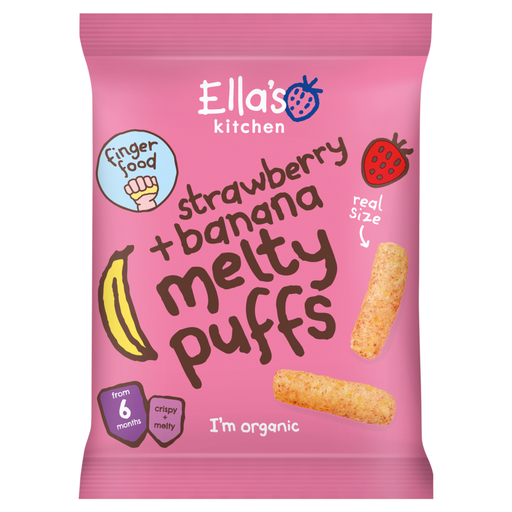
An organic, age-labelled puff snack for a child who can manage this format; the product name states 6+ months and 20g. Check the current pack for ingredients and allergens, and supervise the child while eating.
 No image available
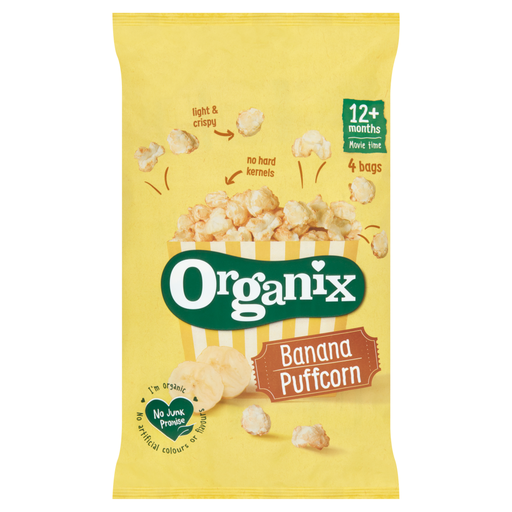
A puffcorn snack in four 10g packs, labelled for ages 12+ months. Check the exact pack’s ingredients, allergen information and organic status if that matters to you, and supervise eating.
 No image available
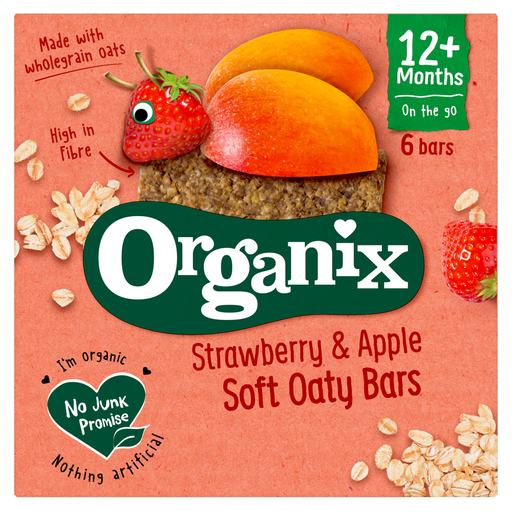
For shoppers who want a bar-shaped snack rather than an adult protein bar, this product is labelled for ages 12+ months and comes as six 23g bars. Check the exact pack’s ingredients, allergens, fibre information and organic status; the NHS cautions against relying only on high-fibre foods for young children.
 No image available
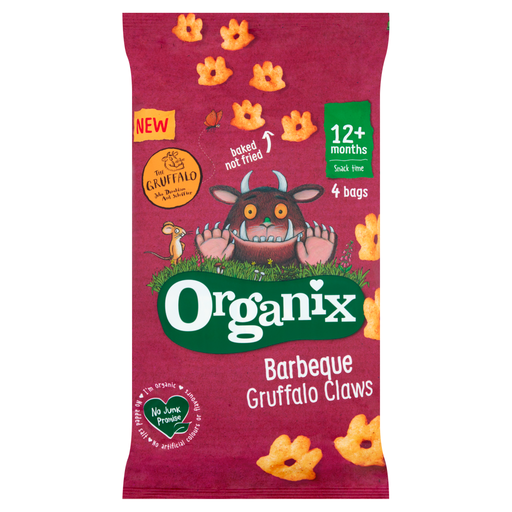
A savoury corn-puff option labelled for ages 12+ months, supplied as four 15g packs. Check the current ingredients and allergens, confirm any organic claim on the pack and consider whether the texture suits the child.
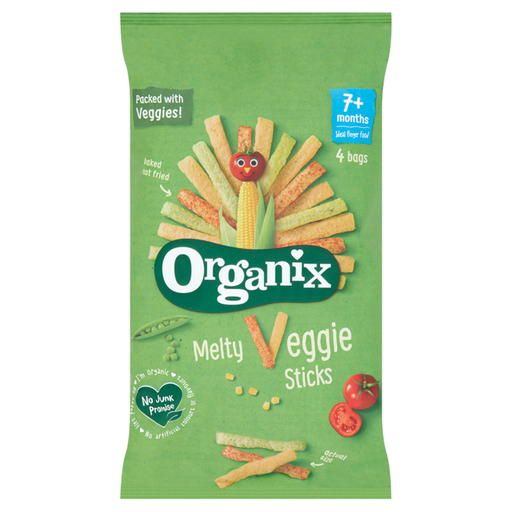 No image available
A veggie-stick snack labelled for ages 7+ months, in four 15g packs. Check the exact pack’s ingredients, allergens and organic status, and make sure the child is sitting and supervised while eating.
No. The Department for Environment, Food & Rural Affairs says UK organic food labelling is subject to production and certification rules, including a requirement that at least 95% of agricultural ingredients are organic. The claim does not establish age suitability, appropriate texture or whether the ingredients meet a child’s allergy needs.
Do not choose one as the routine option merely for its protein or reduced-sugar claim. NHS guidance recommends varied foods for toddlers and gives snack examples including fruit, plain unsweetened yoghurt and toast; the Grenade, PhD, Myprotein and Barebells ranges described here are marketed around adult protein snacking.
Read the full ingredients and emphasised allergen information on the exact pack and flavour, and follow the child’s allergy plan. The NHS advises particular care, and discussion with a GP or health visitor where appropriate, for children with an allergy, eczema or relevant family history.
Check the nursery’s food policy and the exact product’s ingredients before packing it. Some nurseries restrict nuts or peanuts, and an organic label does not override those rules or the child’s allergy plan.
It can help compare the nutrition information of packaged options that already suit the child’s age and dietary needs. NHS Healthier Families advises looking for more greens and ambers and cutting down on snacks showing reds; the label does not replace ingredient, allergen or texture checks.