Parents choosing school-age snacks
A plain organic rice cake may suit a child who likes a crunchy snack. Compare the salt and allergen information on the pack, and check the school’s arrangements if the snack will be taken in.


For a plain organic rice cake without added salt, consider Kallo Organic Unsalted; if a lightly salted version suits the child, Kallo Organic Lightly Salted is another option. Check the exact pack for ingredients and allergens before serving or packing it: organic and gluten-free wording does not settle every allergy concern, and school arrangements may also matter.
A plain organic rice cake may suit a child who likes a crunchy snack. Compare the salt and allergen information on the pack, and check the school’s arrangements if the snack will be taken in.
A toddler-format rice cake is a different choice from a full-size cake. Follow the age and serving advice for the exact product; Organix says little ones should sit down and be supervised when eating its Original Rice Cakes.
Look for gluten-free wording on the particular pack rather than assuming it applies to all rice cakes. Kallo’s named organic products carry that wording, but Kallo also warns of possible milk, sesame and soya cross-contact.
Start with the organic claim and the exact ingredient and allergen statements. Then compare nutrition on the same basis and choose a format that fits how the snack will be served.
| Priority | What to check | Your needs |
|---|---|---|
| Organic labelling | Check that the exact product is labelled organic, then read its ingredients. Defra’s UK guidance says organic food labelling depends on organic production rules, at least 95% organic agricultural ingredients and certification by an approved control body. | I want an organic rice cake, not one described only as natural. The ingredient list also helps me choose between plain and flavoured versions. |
| Allergens and school arrangements | Read the current ingredients, allergen and cross-contact statements. If the snack goes to school, check its allergy policy; Department for Education guidance concerns schools in England. | If I’m packing a snack for school, I need to know whether this particular product fits the child’s requirements and the school’s arrangements. |
| Salt, sugars and portion | Compare salt and sugars per 100g, then look at the amount you plan to serve. NHS food-label guidance uses 0.3g of salt or less and 5g of total sugars or less per 100g as its low-label thresholds. | A per-cake figure is useful, but I also want a consistent basis for comparing packs and a portion that reflects what will actually be served. |
| Snack format | Distinguish full-size plain cakes from toddler-oriented products. Follow any product-specific age, seating and supervision advice. | For a younger child, I’ll check the serving guidance. For a school-age child, I’ll choose a format that makes sense for their snack rather than relying on the organic claim alone. |
Kallo labels its named organic rice cakes gluten-free, and Tesco labels its Free From Wholegrain Rice Cakes wheat and gluten free. Those statements apply to the named products, not every rice cake.
Read the current label for the precise product and flavour, including any other allergen warnings.
Kallo says its Organic Unsalted and Organic Lightly Salted rice cakes may contain milk, sesame and soya. Organic status does not resolve those cross-contact concerns.
Check ingredients and allergen information separately, especially when buying a different variant or a redesigned pack.
Per-cake figures depend on the manufacturer’s serving size. They may not represent the amount offered at snack time.
Compare salt and sugars per 100g as well as the intended portion. The British Dietetic Association’s snack fact sheet gives two rice cakes with hummus or soft cheese as one serving idea; check whether any accompaniment fits the child’s requirements.
A toddler-positioned product has a different format and serving context from a full-size rice cake. Organix advises seating and supervision for little ones eating its Original Rice Cakes.
Choose the format with the child’s age and the product’s serving instructions in mind, not organic wording alone.
Kallo lists Organic Unsalted and Organic Lightly Salted wholegrain rice cakes as separate plain options.
Organix Original Rice Cakes are a toddler-positioned rice-cake option, distinct from its flavoured products.
Tesco Free From Wholegrain Rice Cakes offer a named wheat- and gluten-free option; they are not presented here as organic.
These options cover a lightly salted Kallo rice cake and an Organix apple-flavoured product marked for ages 7+ months. They serve different snack situations, so check each pack rather than treating them as equivalent plain organic cakes.
 No image available
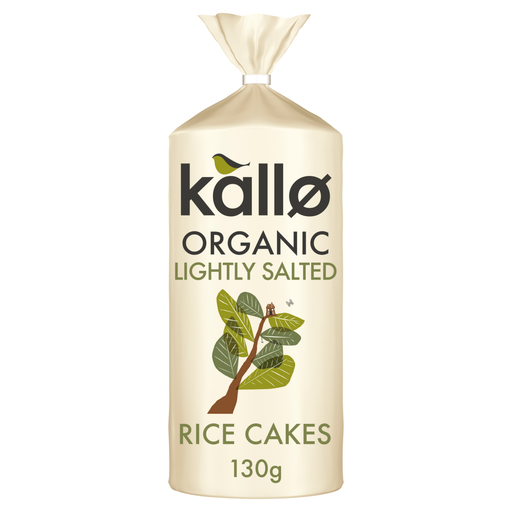
A plain organic option for a school-age snack when a lightly salted cake is wanted. Kallo lists organic wholegrain brown rice and sea salt for this variant and warns that it may contain milk, sesame and soya; check the current pack before serving or taking it to school.
 No image available
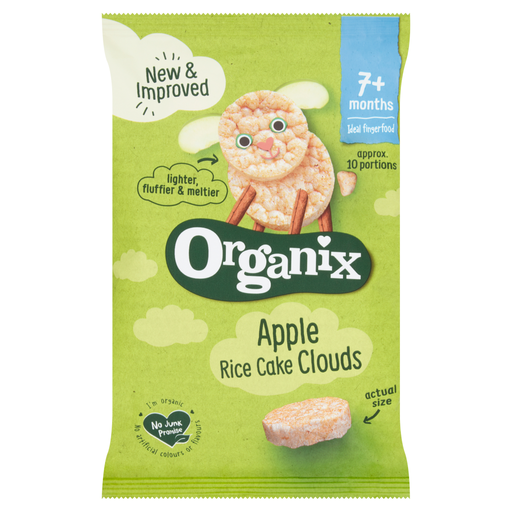
This apple-flavoured, 7+ months product is a toddler-format choice rather than the plain Organix Original Rice Cakes. Check its own ingredients, allergen information and serving instructions when choosing a snack for a younger child.
Look for organic labelling on the exact product rather than relying on words such as “natural”. Defra’s UK organic-food guidance says the claim depends on organic production rules, at least 95% organic agricultural ingredients and certification by an approved organic control body; the ingredient list tells you what else is in the cake.
Do not assume so: check the exact pack. Kallo labels its Organic Unsalted and Organic Lightly Salted products gluten-free, while Tesco labels its named Free From Wholegrain Rice Cakes wheat and gluten free. Both brands also give possible cross-contact warnings for other allergens on those product pages.
Check the product label and the school’s current allergy policy before packing them. Department for Education guidance says schools in England must publish an allergy safety policy setting out arrangements to reduce contact with known allergens; it does not establish a single list of permitted snacks for every school.
Compare salt and sugars per 100g, then check the portion you intend to serve. NHS food-label guidance defines low salt as 0.3g or less per 100g and low total sugars as 5g or less per 100g; a manufacturer’s portion may differ from the amount served.
Follow the advice for the particular product. Organix says little ones should be sitting down and supervised while eating its Original Rice Cakes; check the instructions on any different Organix product separately.