Shoppers building a savoury ploughman's lunch
A plain organic rice cake can serve as a crisp base for cheese, pickle or vegetables. Biona and Clearspring describe their plain organic cakes as suitable for savoury toppings.


Choose an organic unsalted or no-added-salt rice cake if you want the cheese, pickle or other toppings to determine the flavour. A lightly salted cake suits a lunch where you want some savoury flavour from the base itself. Check the exact pack for its organic claim and allergen statements: Kallo's organic variants, for example, warn that they may contain milk, sesame and soya.
A plain organic rice cake can serve as a crisp base for cheese, pickle or vegetables. Biona and Clearspring describe their plain organic cakes as suitable for savoury toppings.
An unsalted or no-added-salt cake leaves the flavour largely to the toppings. A lightly salted variant adds sea salt to the rice cake itself; it is a different choice when the toppings are mild.
An explicit gluten-free label does not answer every allergen question. Kallo labels its organic variants gluten free but also warns of possible milk, sesame and soya cross-contact, so check the current pack against the allergens relevant to you.
Start with the exact organic variant, then choose the salt level that works with your toppings. Check allergen statements and storage directions for that product before packing lunch.
| Priority | What to check | Your needs |
|---|---|---|
| Organic status | Check the exact variant's organic claim and certification information; do not rely on the brand name alone. The Department for Environment, Food & Rural Affairs says UK organic food labelling requires the product and its suppliers to be certified by an approved organic control body. | I'm choosing an organic product, so I want to confirm that the particular rice cakes in my basket carry that claim. |
| Salt and toppings | Compare an unsalted or no-added-salt wholegrain cake with a lightly salted one. For a savoury lunch, check that you have selected a plain variant rather than a sweet or coated product. | If my cheese or pickle supplies plenty of flavour, I'd choose a plain unsalted base. With milder toppings, I may prefer salt in the rice cake itself. |
| Gluten and allergens | Look for an explicit gluten-free claim if you need one, and read the separate ingredient and precautionary allergen statements. Kallo's organic variants warn of possible milk, sesame and soya cross-contact; Biona No Salt cautions against use by people with a sesame allergy. | A gluten-free label alone does not settle whether a cake is suitable for the food allergies I need to consider. |
| Keeping cakes crisp | Follow the chosen pack's storage directions after opening. Keep moist toppings separate from the rice cakes until serving. | For a packed lunch, I want the cakes to remain crisp enough to hold the toppings when I eat. |
Kallo sells organic and non-organic rice cakes, so the brand name alone does not identify the product you intend to buy.
Check the variant name, the on-pack organic claim and its certification information.
Kallo's organic rice cakes are labelled gluten free yet carry warnings about possible milk, sesame and soya cross-contact. The Food Standards Agency explains that precautionary allergen labelling communicates possible unintended allergen presence.
Read the current pack's ingredients and precautionary statements for any allergy that matters to you.
Fruit-flavoured or coated rice cakes serve a different purpose from a plain base for cheese, pickle or vegetables.
Check the full product name and choose the organic unsalted or lightly salted variant that matches your lunch.
Rice cakes that lose their crisp texture are less useful as a base for toppings.
Follow the pack's storage directions, use an airtight container after opening where directed, and add moist toppings at serving time.
Kallo offers both Organic Unsalted and Organic Lightly Salted wholegrain rice cakes, giving shoppers two salt-level choices for a savoury base.
Biona No Salt is a plain organic wholegrain rice cake that Biona presents for sweet or savoury toppings.
Clearspring Organic Rice Cakes – No Added Salt provide a plain brown-rice base for spreads and toppings.
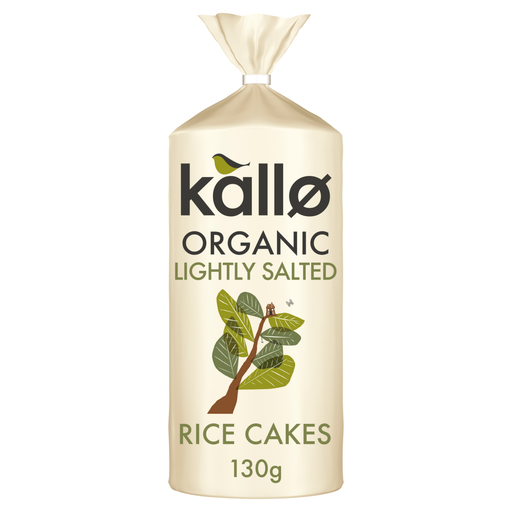
This lightly salted organic rice cake is an option for a ploughman's lunch when you want some savoury flavour from the base as well as the toppings.
 No image available
A lightly salted base to consider when serving mild cheese or vegetables. Kallo lists organic wholegrain brown rice and sea salt as ingredients. Its product information warns that the cakes may contain milk, sesame and soya; check the current pack if those allergens matter to you.
Check the organic claim and certification information for the exact variant, not just its brand. The Department for Environment, Food & Rural Affairs says UK food can be labelled organic only when the applicable organic-production rules are met and the product and its suppliers are certified by an approved organic control body.
Choose unsalted or no-added-salt cakes when you want strongly flavoured toppings to determine the taste; choose lightly salted cakes when you want the base itself to add a savoury note. Sainsbury's suggests cream cheese and tomato with Kallo Organic Lightly Salted Rice Cakes.
No. A gluten-free claim does not rule out other allergens or cross-contact warnings. Kallo's organic rice cakes warn that they may contain milk, sesame and soya, while Biona says its No Salt cakes are unsuitable for people with a sesame allergy because of manufacturing methods.
Follow the directions on your chosen pack. Ocado's listing for Kallo Organic Unsalted says to store it in a cool, dry place, keep it in an airtight container once opened and consume it within 14 days. For a packed lunch, carry moist toppings separately until serving.
They can provide a crisp base for toppings: Biona and Clearspring both describe their plain organic rice cakes as suitable with savoury toppings or spreads. If you are comparing them with bread for nutritional reasons, check the current nutrition labels and the portions you would actually serve rather than assuming they are equivalent.