Households prioritising organic food
An organic claim may be a deciding factor, but the exact bar still needs to fit the child’s portion, nutrition and allergen requirements.


An organic bar makes sense when organic production matters to your household, but the claim does not tell you its sugar content, allergen suitability or whether the portion fits your child. For after-school snacks, the NHS favours fruit and vegetables and advises no more than two packaged snacks a day; when choosing a bar, check its ingredients, nutrition label and age guidance.
An organic claim may be a deciding factor, but the exact bar still needs to fit the child’s portion, nutrition and allergen requirements.
A packaged bar is convenient to carry. It is worth considering what else the child has eaten that day: the NHS favours fruit and vegetables for children’s snacks and advises limiting packaged snacks.
Check each flavour’s ingredients and allergen warnings. An organic oat bar can contain gluten, while a bar chosen for a different dietary feature may contain nuts or other allergens.
Decide whether organic status is essential, then compare the exact packs on nutrition, allergens and age guidance. If a bar is not needed for convenience, fruit or vegetables are another after-school option favoured by the NHS.
| Priority | What to check | Your needs |
|---|---|---|
| Organic claim | Look for organic wording on the exact product, not just a brand or neighbouring flavour. GOV.UK’s UK organic-labelling rules require food labelled organic to have at least 95% organic agricultural ingredients, with the product and suppliers certified by an approved organic control body. | I want an organic product, rather than a bar described only as natural or plant-based. |
| Nutrition and portion | Compare sugars and other nutrition information for the bar the child would eat, as well as per 100g. Where shown, traffic-light colours indicate the labelled amounts of fat, saturates, sugars and salt; UK front-of-pack guidance describes green, amber and red as low, medium and high. | A bar needs to fit the occasion, not just carry an organic claim. The NHS advises no more than two packaged snacks a day for children. |
| Allergens | Read the exact pack’s ingredients and any “may contain” statement. Organix lists gluten and oats for its Apple & Orange Oaty Bars, with possible traces of tree nuts, soya and milk; other flavours and brands need their own checks. | For an allergy-managed household, I need to check the particular flavour before considering its organic or nutrition claims. |
| Age and format | Check the stated age guidance, bar size and eating instructions. A toddler-targeted oat bar and a fruit-and-nut or protein bar serve different preferences; a protein figure alone does not establish suitability for a child. | I want a portion and format that suit the child who will eat it, rather than choosing a bar because it is marketed for children or emphasises protein. |
Organic labelling addresses production requirements, not the amount of sugar in a bar or whether its portion suits a particular child. The NHS favours fruit and vegetables for children’s snacks.
Use organic status as one filter, then compare the nutrition panel for the portion eaten and consider whether a non-packaged snack fits the occasion.
Natural, plant-based, no added sugar and wholegrain describe different features. They do not establish that a particular bar meets the UK organic-labelling requirements described by GOV.UK.
If organic status matters, check the wording on the exact pack. Otherwise, choose according to the ingredient or dietary feature you need.
Organix’s Apple & Orange Oaty Bars contain gluten and oats and may contain tree nuts, soya and milk, according to Organix. They are positioned for toddlers, which does not make them the right portion or format for every older child.
Read the ingredients, precautionary allergen statement, age guidance and serving size on the pack you are buying; recheck them when the packaging changes.
TREK lists different protein amounts for its Protein Flapjacks and High Protein bars. Those figures do not show that either format is needed for every child’s after-school snack.
Consider the intended eater, portion and allergen information before treating protein content as the deciding feature.
These ranges illustrate different claims and bar formats; check the particular product rather than applying a range-wide description to every flavour.
Organix presents its Apple & Orange Oaty Bars as organic toddler oat bars, supplied as 23g bars.
nākd. describes its fruit-and-nut bars as containing no added sugar and as suitable for vegan, gluten-free, wheat-free and dairy-free diets.
TREK lists Protein Flapjacks with 9g plant-based protein and High Protein bars with 15g.
Nature Valley lists crunchy, protein and oat-based bar lines for shoppers comparing formats.
Eat Natural lists fruit-and-nut, vegan and protein-bar options for comparing ingredients and formats.
These Organix soft oat bars are child-focused options for an after-school bar shortlist. All carry 12+ months age guidance; compare the exact flavour’s organic wording, nutrition and allergens, and decide whether its portion suits an older child.
 No image available
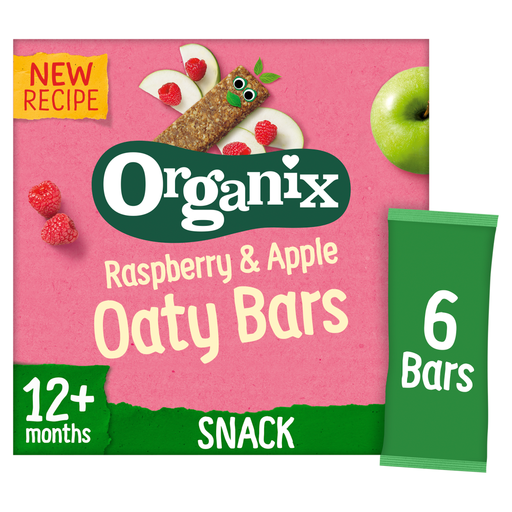
A 6 x 23g toddler-bar pack to consider when a small, portable oat bar fits the occasion. Check this flavour’s organic wording, nutrition panel and allergen statement before choosing it for a school-age child.
 No image available
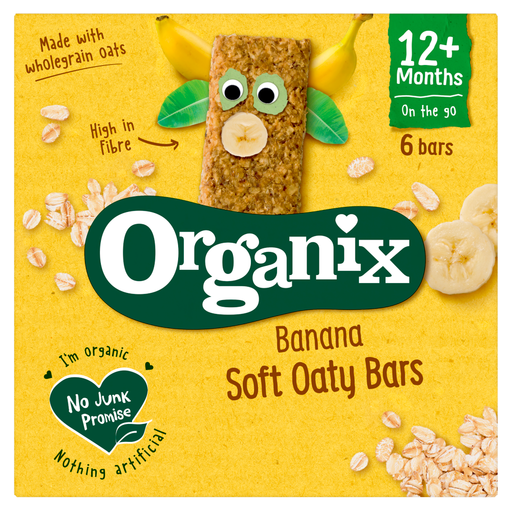
A 6 x 23g toddler-bar pack. Joybuy describes this exact Banana variant as made with organic wholegrain oats and banana; check the pack’s nutrition, allergen information and portion suitability for the child who will eat it.
 No image available
The named Blackcurrant variant is an organic soft oat snack in a 6 x 23g pack. Check its allergen statement and nutrition panel, and consider whether a toddler-positioned 23g bar fits an older child’s after-school snack.
 No image available
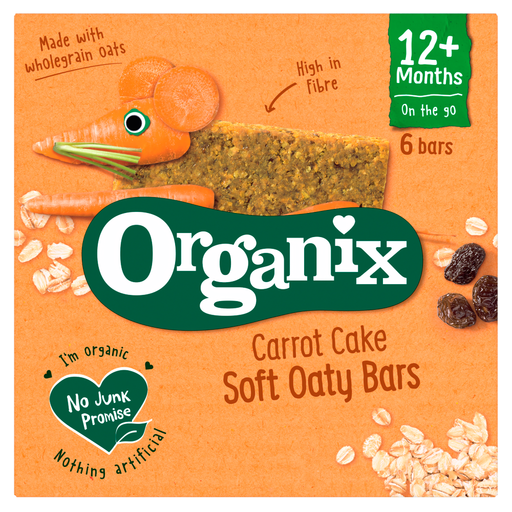
This Carrot Cake soft oat bar pack is labelled 138g in total and 12+ months. If organic status is your reason for choosing it, confirm the claim on this flavour’s pack alongside its per-bar nutrition, allergens and serving guidance.
 No image available
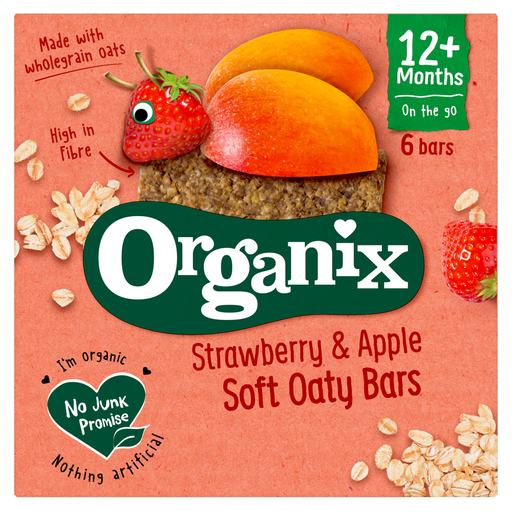
A 6 x 23g toddler-bar pack for comparing a Strawberry & Apple flavour with the other oat bars here. Check this exact pack’s organic claim, ingredients and allergen warnings, then assess whether its portion suits the child.
Look for organic wording on the exact product rather than relying on “natural” or “plant-based”. Under the UK food-labelling rules described by GOV.UK, food labelled organic must have at least 95% organic agricultural ingredients, and the product and suppliers must be certified by an approved organic control body.
No. Organic status does not establish the sugar content of a particular bar. Compare its nutrition information for the portion eaten and, where provided, the front-of-pack traffic-light indicators for sugars, fat, saturates and salt.
Not necessarily: check the portion, age guidance and ingredients against the child’s needs. For example, Organix positions its 23g Apple & Orange Oaty Bar for toddlers and states that it contains gluten and oats and may contain tree nuts, soya and milk.
Read the exact product’s ingredients and allergen statement, including any “may contain” warning, before considering its organic or nutrition claims. Allergen information can differ between flavours and bar formats.
The NHS favours fruit and vegetables for children’s snacks and advises aiming for no more than two packaged snacks a day. When a bar is convenient, consider the child’s other snacks that day and check the bar’s portion and nutrition label.