People managing a food allergy
Check each bar against the particular allergen you avoid. An organic, vegan or gluten-free claim does not replace reading the ingredients and any precautionary allergen statement.


Choose an organic snack bar only if its current ingredients, highlighted allergens and any precautionary warning fit the specific allergy being managed. As the Department for Environment, Food & Rural Affairs explains, UK organic labelling concerns production rules and certification; it does not mean a bar is allergen-free. Manufacturer-stated exclusions can help narrow the choice, but their scope varies by product and the current pack remains the check before eating or serving it.
Check each bar against the particular allergen you avoid. An organic, vegan or gluten-free claim does not replace reading the ingredients and any precautionary allergen statement.
Check the flavour and pack you intend to serve, even if you have bought the brand before. Recipes and allergen wording can change, and claims about one product need not apply to another.
Treat the organic claim and the allergen information as separate checks. Keep a bar on your shortlist only when its current label meets both requirements.
Start with the allergen you need to avoid, then assess the organic claim and any other dietary wording against that requirement.
| Priority | What to check | Your needs |
|---|---|---|
| Declared allergens | Read the current ingredients list and its highlighted allergens. The Food Standards Agency says prepacked food must list ingredients and emphasise allergens present. | I need to know whether this exact bar contains the allergen I avoid, not just whether its front label mentions my dietary preference. |
| Precautionary warnings | Check wording such as “may contain” against the individual allergy-management advice. Food Standards Agency research explains that these statements can signal possible unintended allergen presence. | A bar may have suitable ingredients but still carry a warning relevant to the person I am buying for. |
| Organic claim | Look for an organic claim on the exact product. The Department for Environment, Food & Rural Affairs says UK organic labelling depends on production rules and certification, not allergen exclusion. | If organic production matters to me, I want that claim as well as an allergen label that fits my needs. |
| Broad exclusion claims | Identify the exact product and allergens covered. FREEE Foods describes its Organic Chocolate Chip Oat Bar as made without the top 14 allergens; MadeGood describes its snacks as free from the top 9 common allergens. Those are different manufacturer-stated scopes. | When I need a broader exclusion, I can use a relevant claim to narrow the shortlist, then check the current pack for my specific allergen. |
| Other dietary labels | Do not use vegan or gluten-free wording in place of a check for another allergen. Inspect the ingredients and precautionary statement separately. | A vegan bar still needs checking for my milk or egg allergy, while a gluten-free bar still needs checking for any other allergen I avoid. |
Organic labelling addresses production and certification; it does not establish whether the bar contains an allergen or carries a relevant precautionary warning.
Check the organic claim if it matters to you, then make a separate decision using the current allergen information.
Those labels do not answer every allergy question. Nature Valley states that its gluten-free Protein Chocolate & Coffee bar contains peanut, soya and milk, and may contain tree nuts.
Match the exact allergy against the full ingredients list and any precautionary wording.
Ingredients and precautionary statements apply to individual products, not automatically to an entire brand range.
Check each flavour and pack variant separately, including when changing pack size.
Recipes can change. Nature Valley advises shoppers to check the pack because its products may be reformulated.
Use a listing to make a shortlist, then read the pack in hand before eating or serving the bar.
These examples describe particular products or manufacturer claims; they do not establish that every bar from a brand has the same ingredients or exclusions.
FREEE Foods describes its Organic Chocolate Chip Oat Bar as Soil Association certified and made without the top 14 allergens.
MadeGood Foods Europe says its snacks use organic ingredients, are free from the top 9 common allergens and are made in a dedicated nut-free facility.
Nakd describes its fruit-and-nut bars as gluten-, wheat- and dairy-free.
TREK labels its Original Oat bar vegan and gluten-free.
Nature Valley offers a gluten-free Protein Chocolate & Coffee bar.
Graze Honey Oat Boost is an oat-bar option with product-specific allergy information.
These Organix soft oat bars offer organic-labelled options to consider when buying snacks for children aged 12 months and over. Compare each flavour’s current allergen information with the allergy being managed; an organic name alone does not establish suitability.
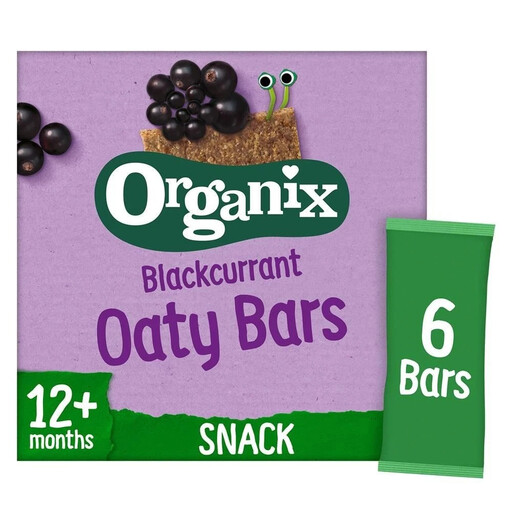 No image available
For a blackcurrant oat-bar option, check the current pack’s ingredients and any “may contain” statement for the allergens you need to avoid.
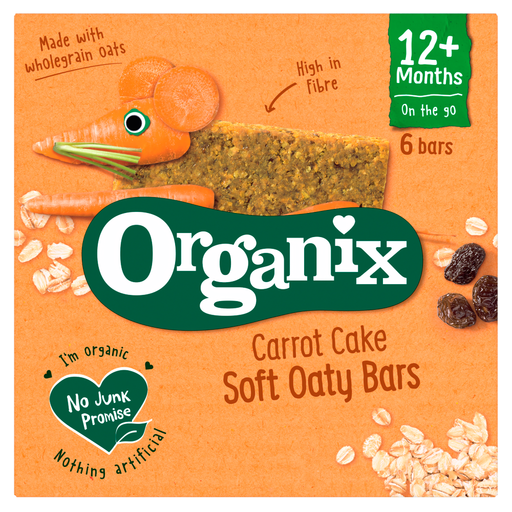 No image available
For the carrot cake flavour, read its own current ingredients and precautionary warnings rather than relying on another Organix bar’s label. Check the pack for the organic claim if that is a requirement.
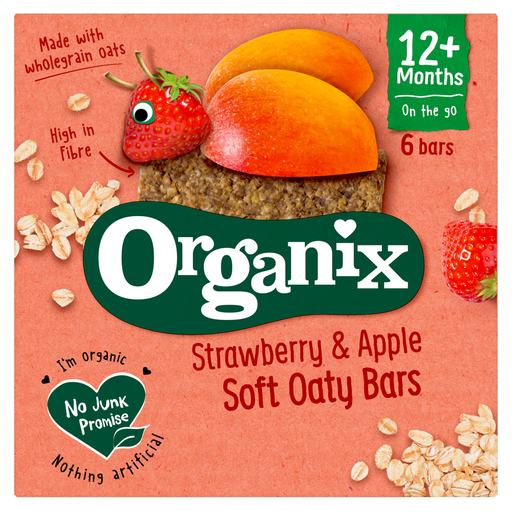 No image available
For the strawberry and apple flavour, assess the current pack’s allergen declaration and any “may contain” wording independently of its organic claim.
No. The Department for Environment, Food & Rural Affairs explains that UK organic labelling concerns production rules and certification, not whether a bar is free from a particular allergen. Check its current ingredients and any precautionary statement separately.
Read the full ingredients list and its highlighted allergens, then check any “may contain” wording against the allergy being managed. The Food Standards Agency distinguishes allergens present in ingredients from precautionary warnings about possible unintended presence.
No. Food Standards Agency research notes that cross-contact can matter for people with food hypersensitivities even when a product is labelled vegan. Check the bar’s allergen declaration and precautionary wording.
No. A gluten-free claim does not rule out a different allergen: Nature Valley says its gluten-free Protein Chocolate & Coffee bar contains peanut, soya and milk and may contain tree nuts. Check the exact bar for the allergen you avoid.
Its recipe or allergen wording may change. Nature Valley advises checking the pack because products may be reformulated; make that check again before eating or serving a familiar bar.