Organic-first organisers
If organic sourcing determines the selection, check the claim on each bar’s own pack. A range name or “natural” wording is not a substitute for a product-specific organic claim.


For an organic refreshment table, choose bars whose exact pack carries an organic claim, then check ingredients, allergens and portion size rather than treating “natural”, vegan or protein claims as equivalent. A general snack bar and a toddler-labelled oat bar serve different visitors: reserve toddler bars for their stated age group and follow the maker’s supervision advice. If you plan to sell or regularly supply food, check the applicable requirements with your local authority before the event.
If organic sourcing determines the selection, check the claim on each bar’s own pack. A range name or “natural” wording is not a substitute for a product-specific organic claim.
Keep general refreshments distinct from bars labelled for toddlers. Leave packaging available so visitors can read ingredients, allergens and age guidance before taking a bar.
Vegan, fruit-and-nut and protein bars offer different ingredients and formats. Check organic status separately if it matters to your selection, and read the allergen declaration on the exact product.
Start with the organic claim if that is your requirement, then compare the exact bars you intend to offer by their labels and intended age group.
| Priority | What to check | Your needs |
|---|---|---|
| Organic status | Check the organic wording on the exact pack or product page. UK organic food claims must meet organic production rules, according to the Department for Environment, Food & Rural Affairs; “natural” and vegan describe different attributes. | If I’m offering an organic-only selection, I need to identify which individual bars carry that claim. |
| Nutrition and portion | Compare sugars and saturated fat using the nutrition declaration, alongside the weight of each bar. Use per 100g figures for a like-for-like comparison and per-bar figures to understand the portion. | A smaller bar and a larger bar may look similar on the table; I want to compare what each portion contains rather than rely on fibre or protein wording. |
| Ingredients and allergens | Read each flavour’s ingredient and allergen statement, including any may-contain warnings. Keep the original packaging available when offering wrapped bars. | Visitors need to be able to check a bar for themselves before taking it, particularly if several varieties are on the table. |
| Intended age | Check whether a bar is a general snack or a toddler product. Follow the stated minimum age and any eating-supervision instructions. | If young children will be there, I need to distinguish their labelled options from refreshments offered to everyone else. |
| How food is supplied | Keep product names and ingredient information with the bars. If selling or regularly supplying food, ask the local authority which registration and labelling requirements apply to the activity. | I want visitors to know what they are choosing, and I need to check the applicable requirements before setting up a food-selling table. |
Plant-based, fruit-based and no-added-sugar descriptions do not establish a bar’s organic status. UK organic food claims are governed by organic production rules, according to the Department for Environment, Food & Rural Affairs.
For an organic-only selection, check the claim on each exact product and retain its wrapper.
Organic status, fibre and protein describe different aspects of a bar. Action on Sugar’s 2025 report found that 37% of the supermarket snack bars it assessed would be high in sugars under voluntary front-of-pack criteria; that finding does not describe every organic bar.
Compare the nutrition information and portion weight of the bars you are considering.
Once wrappers or outer packs are removed, visitors may be unable to identify a flavour’s ingredients or allergen warnings. UK government guidance on community and charity events addresses ingredient information for prepacked food.
Keep bars in their original packaging and make the relevant product information available beside them.
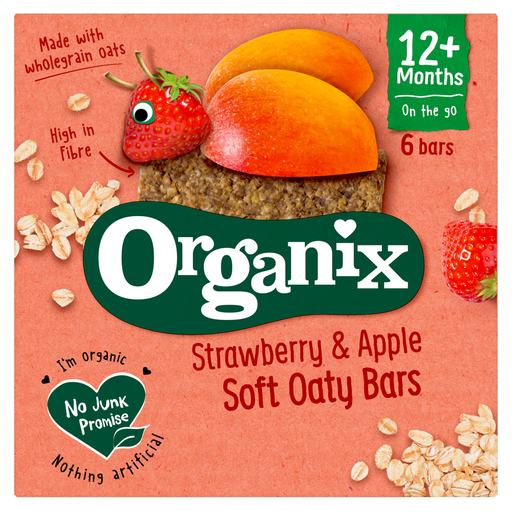
Organix positions its Strawberry & Apple Soft Oaty Bars for children aged 12 months and over and advises that young children sit down and are supervised while eating.
Show the age guidance and offer a separately identified general-refreshment option.
Organic status belongs to the exact product, not automatically to every bar made by a brand.
Its Just 5 Apricot & Almond bar is a 40g option for a general refreshment table; Equal Exchange identifies Soil Association and EU organic certification for this product.
Its Strawberry & Apple Soft Oaty Bars are an organic toddler product, labelled for children aged 12 months and over rather than a general all-age bar.
A fruit-and-nut bar range for shoppers considering the brand’s vegan and no-added-sugar descriptions.
A plant-based bar range for shoppers comparing protein amounts rather than choosing solely by organic status.
A range spanning fruit-and-nut and cereal-bar formats.
A snack range that uses ingredients including wholegrains, fruit and nuts.
A range of oat, nut and protein-bar formats for shoppers considering familiar wrapped snacks.
A wholegrain muesli brand to distinguish from an individually identified organic snack bar.
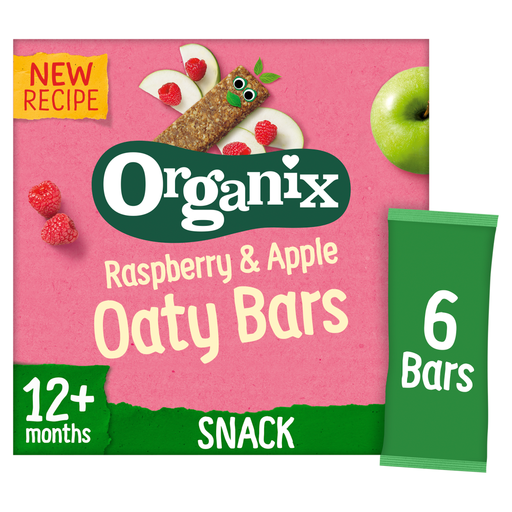
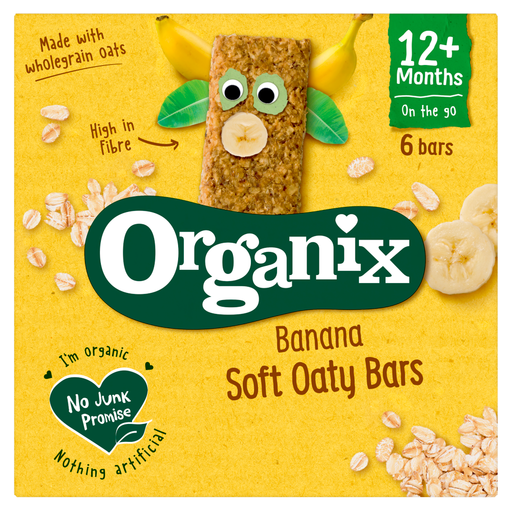
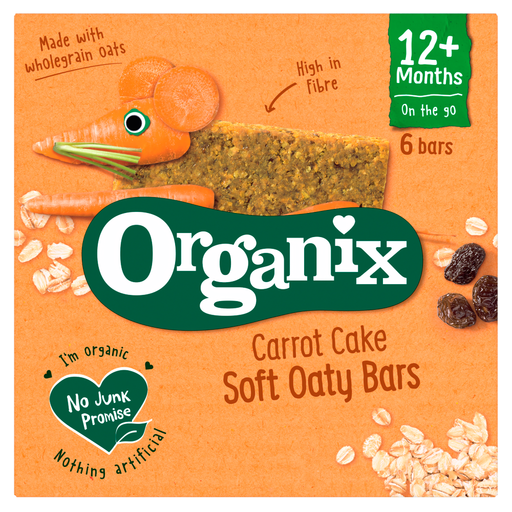
These Organix options are labelled for children aged 12 months and over. They address the toddler-refreshment part of a car boot sale table, not the choice of a general bar for every visitor.
 No image available
A toddler-labelled option for children aged 12 months and over. Check the organic claim and full allergen statement on this exact pack; its ingredients include oats. Follow the maker’s supervision advice when serving it.
 No image available
These banana bars are labelled for toddlers aged 12 months and over. The listed ingredients include oats; read the full allergen statement and organic wording on the pack, and supervise young children while they eat.
 No image available
The named organic blackcurrant bars are intended for toddlers aged 12 months and over. They contain oats and carry may-contain warnings for tree nuts, soya and milk; retain the pack for visitors to check and supervise young children while eating.
 No image available
This 138g pack is labelled for toddlers aged 12 months and over. Its bars contain oats and carry may-contain warnings for tree nuts, soya and milk. Check the pack’s organic wording and supervise young children while they eat.
 No image available
Organix describes these 23g bars as organic and intended for children aged 12 months and over. They contain oats/gluten and carry may-contain warnings for tree nuts, soya and milk; young children should sit down and be supervised while eating.
No. Those descriptions refer to different characteristics. The Department for Environment, Food & Rural Affairs says UK organic food claims must meet organic production rules, so check the organic claim on the exact bar you intend to offer.
Keep the original pack available so visitors can identify the bar, read its ingredients and check allergen warnings. If you prepare or repackage food for sale, ask the relevant local authority about the labelling requirements for your activity rather than assuming the original wrapper rules still apply.
Yes, if you plan to sell or regularly supply food, ask your local authority whether the activity requires registration. The applicable requirements depend on how the food is supplied and how regular and organised the activity is.
No. Organix labels its Strawberry & Apple Soft Oaty Bars for children aged 12 months and over and advises seated, supervised eating for young children. The bars contain oats/gluten and carry further allergen warnings, so they should not be presented as an all-age or allergen-free option.
No. Organic status and nutrition claims answer different questions. Compare the exact products’ ingredient lists, allergen statements, portion weights and nutrition declarations before deciding which bars fit your refreshment table.