Organic-first shoppers
If organic production is a requirement, check the claim and certification for the exact bar rather than treating words such as “natural” as equivalent.


If organic production is essential to your afternoon snack choice, start with an organic claim and certification for the exact bar: the UK Department for Environment, Food & Rural Affairs says products labelled organic must meet organic rules and be certified by an approved control body. Then compare nutrition per 100g and per bar, and check ingredients and allergens; an organic claim does not answer those separate questions.
If organic production is a requirement, check the claim and certification for the exact bar rather than treating words such as “natural” as equivalent.
For a bar to take out in the afternoon, compare its size and nutrition per bar, then check whether its storage instructions suit where you plan to keep it.
If you need a vegan or gluten-free product, or need to avoid an allergen, read the ingredients and allergen information for the exact flavour and pack.
Decide whether organic status is essential, then compare bars on the nutrition, dietary details and storage conditions that matter for your afternoon.
| Priority | What to check | Your needs |
|---|---|---|
| Organic status | Check the organic claim and certification details on the exact pack. The UK Department for Environment, Food & Rural Affairs says an organic-labelled product and its suppliers must be certified by an approved control body. | I want an organic bar, not simply one described as natural or plant-based. |
| Nutrition and portion | Compare sugars, saturated fat and salt per 100g, then look at energy and the other nutrients per bar. The NHS notes that nutrition information is given per 100g and sometimes per portion. | For my afternoon snack, I want to know what one bar contains as well as how different-sized bars compare. |
| Ingredients and allergens | Read the exact flavour’s ingredients, allergen statement and any relevant vegan or gluten-free claim. Do not apply one variant’s details to a whole range. | I need to check that this particular bar fits my dietary exclusions, regardless of its organic status. |
| Storage and portability | Check the storage instructions before keeping bars at a desk or carrying them for the afternoon. Ocado’s listing for Nourish Organic Coconutty Bars, for example, specifies freezer storage and refrigeration after removal. | A bar for my bag or desk needs storage conditions I can follow. |
Those descriptions do not establish organic certification. Organic labelling has separate UK requirements, according to the Department for Environment, Food & Rural Affairs.
If organic status is essential, check the exact product’s organic claim and certification before comparing its other features.
Bar sizes differ, so per-bar figures alone can obscure differences between products. The NHS says food labels provide nutrition information per 100g and sometimes per portion.
Use per-100g figures for a like-for-like comparison, then check the amount in the bar you would eat.
A vegan or gluten-free claim answers a specific dietary question; it does not replace the ingredients and allergen statement.
Check the current pack for each flavour, including any “may contain” wording relevant to you.
An organic bar may require chilled or frozen storage. Ocado’s listing for Nourish Organic Coconutty Bars says to keep them frozen and refrigerate them after removal from the freezer.
Check storage before choosing a bar for a commute, desk drawer or multipack.
A brand’s ingredients or dietary positioning does not establish that a particular bar is organic; check the exact product if organic status matters to you.
Graze is one option to examine if you prefer an oat-flapjack format for an afternoon snack.
Nature Valley is an oat-bar reference for shoppers comparing recipes and formats.
Alpen’s November 2021 product list included fruit-and-nut cereal bars.
Eat Natural has a gluten-free product selection for shoppers considering that particular dietary requirement.
Nakd is a fruit-bar reference for shoppers comparing ingredient lists.
TREK provides a protein-bar comparison for shoppers whose priority is different from organic status.
These Organix soft oaty bars are presented in toddler-oriented formats. If you are choosing one for an adult afternoon snack, check the exact pack’s organic claim, nutrition and allergens as well as whether its size suits you.
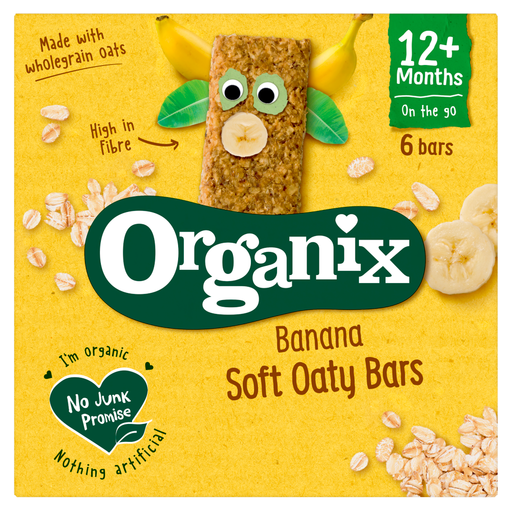 No image available
The 23g bar size may be relevant if you want a smaller afternoon portion; this product is labelled for children aged 12+ months. Check the pack for its organic claim, nutrition and oat-allergen information.
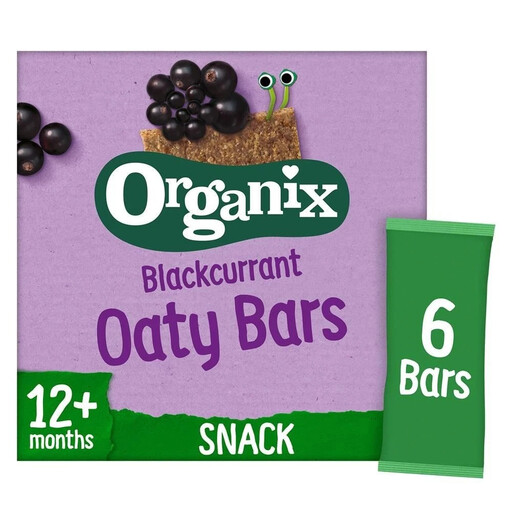 No image available
The product name states organic and specifies six 23g bars for children aged 12+ months. Confirm the certification and nutrition on the current pack, along with oat and precautionary allergen information.
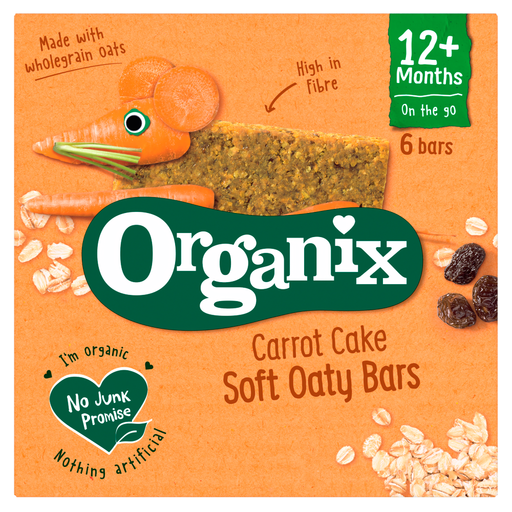 No image available
This 138g pack is labelled for children aged 12+ months. If considering it for an adult afternoon snack, check the individual bar size, organic certification, nutrition and allergen statement on the pack.
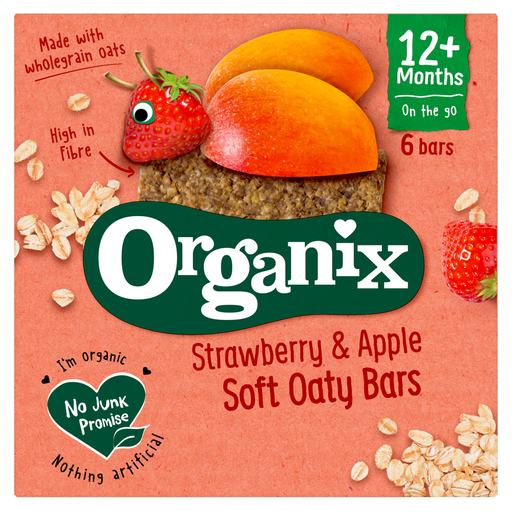 No image available
Six 23g bars offer a stated portion size to compare with other afternoon snacks, though this product is labelled for children aged 12+ months. Check its organic certification, nutrition and allergen wording on the current pack.
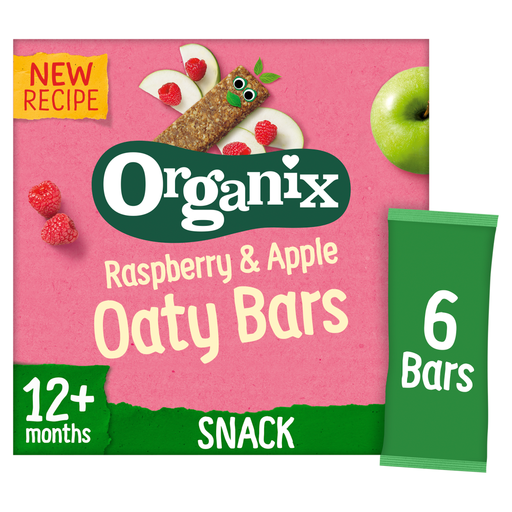 No image available
These six 23g bars are labelled for children aged 12+ months. Compare the pack’s sugars per 100g and per bar with other options, and check its organic claim and oat-allergen information.
Check the organic claim and certification information for the exact product. The UK Department for Environment, Food & Rural Affairs says food labelled organic must meet organic rules and that the product and its suppliers must be certified by an approved organic control body.
No. Organic status concerns production and labelling; compare the bar’s nutrition separately. Look at per-100g figures alongside the amount per bar, particularly when the bars differ in size.
Compare the nutrients relevant to your choice, such as sugars, saturated fat, salt, fibre and protein, using the same per-100g basis where figures are given. Then check the portion you would eat; the NHS notes that labels provide information per 100g and sometimes per portion.
No. Those claims do not replace the exact product’s ingredients and allergen statement. Check each flavour and any precautionary “may contain” wording against the ingredients you need to avoid.
Check the number and size of the bars, their nutrition and allergens, the best-before date and the storage instructions. Storage matters for portability: Ocado’s listing for Nourish Organic Coconutty Bars specifies freezer storage and refrigeration after removal from the freezer.