What should you check?
Start with the condition that matters most to you, then compare the exact bar and portion rather than treating one front-of-pack claim as a complete description.
| Priority | What to check | Your needs |
|---|
| Organic status |
Look for an organic claim and certification information on the exact pack. Defra’s UK guidance requires organic production and certification conditions to be met; “natural” is not the same claim. |
Organic production matters more to me than an ingredient-style description. |
| Nutrition per bar |
Compare the portion size, sugars, saturated fat, fibre and protein on each nutrition panel. Keep per-bar and per-100g figures distinct. |
I want to compare the portion I would have with coffee, not choose on the strength of a protein or fibre claim alone. |
| Portion and format |
Check the weight and number of bars in the pack, along with whether the format is practical to carry. Notice any age designation on a product. |
A bar needs to fit my commute and coffee break; a toddler-labelled portion may not be what I am looking for. |
| Ingredients and allergens |
Read the current ingredients, allergen and may-contain statements for the exact flavour. Check dietary claims on that product, not just the brand. |
If I need to avoid oats, nuts, peanuts, milk or soya, the individual pack declaration determines whether I can choose it. |
Brand and range references
These references describe particular listings or ranges, not the organic status or dietary suitability of every product carrying a brand name.
Freee
Ocado lists Freee Chocolate Chip and Apricot & Chia oat bars with organic and Soil Association information.
- Both listings describe the bars as vegan and gluten-free and give 4.7g and 4.6g fibre per 35g bar respectively.
- The listings give 6.9g and 8.0g sugars per bar respectively; both products contain oats.
Graze
Graze describes its Oat Boost flapjacks as wholegrain-oat bars.
- Graze calls the Oat Boost range high in fibre.
- Check the exact product’s organic information if certification is essential; the wholegrain description does not establish it.
Nature Valley
Nature Valley’s UK range includes crunchy, oat-based and protein bars.
- Its UK product range lists named protein-bar variants with 10g protein and 4g fibre.
- Check the chosen flavour’s organic claim and allergens separately, particularly for nut-based bars.
Eat Natural
Eat Natural offers fruit-and-nut bars alongside other bar formats.
- Its UK range identifies vegan and gluten-free options.
- Ingredients and dietary claims vary by product; check nut content and organic information on the exact pack.
nākd.
nākd. describes its fruit-and-nut bars as containing no added sugar, syrups or artificial ingredients.
- The brand describes these bars as vegan and free from gluten, wheat and dairy.
- No-added-sugar wording is not an organic claim; check the exact ingredients if nuts or peanuts are a concern.
TREK
TREK offers protein bars and flapjacks, including Original Oat.
- TREK lists 10g protein per 50g Original Oat bar.
- That bar lists 12g sugars per bar, contains soya and may contain peanuts, nuts and milk; check organic status separately.
Alpen
Alpen is a muesli brand; assess any snack bar bearing its name as an individual product.
- Check a current pack or product listing for the bar’s ingredients, nutrition and organic claim before comparing it with other bars.
Joybuy oat bar options
These Organix soft oaty bars are labelled for ages 12+ months. If you are choosing a bar for an adult commute, take that age designation and the stated pack size into account, and check the exact pack for organic certification, nutrition and allergens.
 No image available
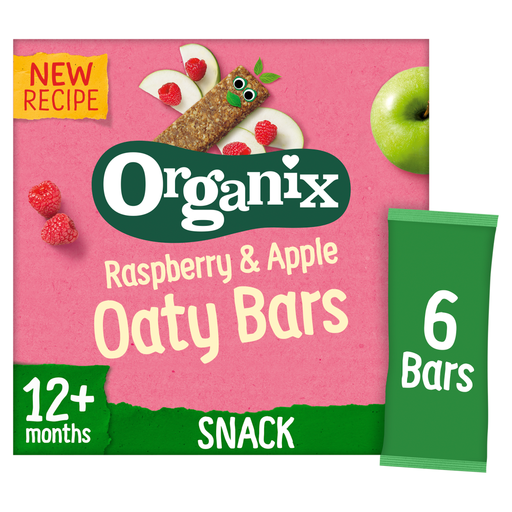
Organix Raspberry & Apple Soft Oaty Bars 12+ Months, 6 x 23g
The six 23g bars are labelled for toddlers aged 12+ months, so compare the portion with what you want for an adult coffee break. Check the current pack’s organic information and allergen declaration before choosing them.
 No image available
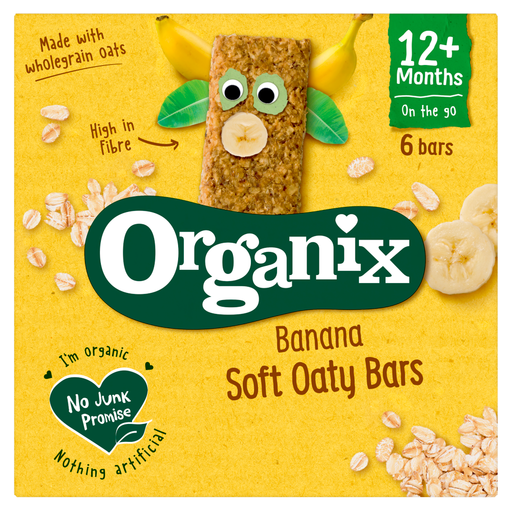
Organix Banana Soft Oaty Bars 12+ Months, 6 x 23g
This banana variant contains six 23g bars and carries a 12+ months age designation. For a commuter coffee break, check whether that portion suits you, then read the pack’s organic and allergen information.
 No image available
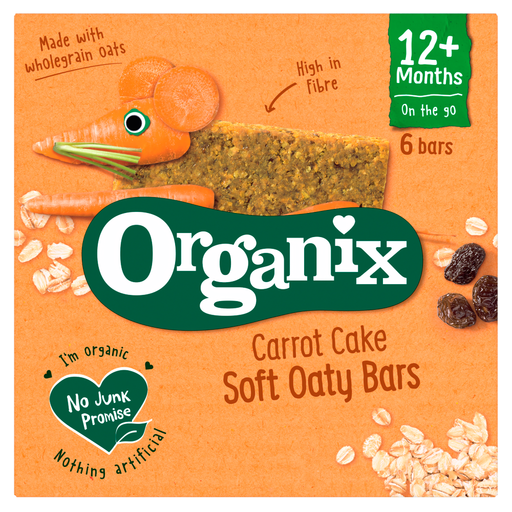
Organix Carrot Cake Soft Oaty Bars 12+ Months, 138g
This 138g pack is labelled for ages 12+ months rather than specifically for adult coffee breaks. Check the current pack for portion details and for its organic, ingredient and allergen declarations, including any precautionary warnings.
 No image available
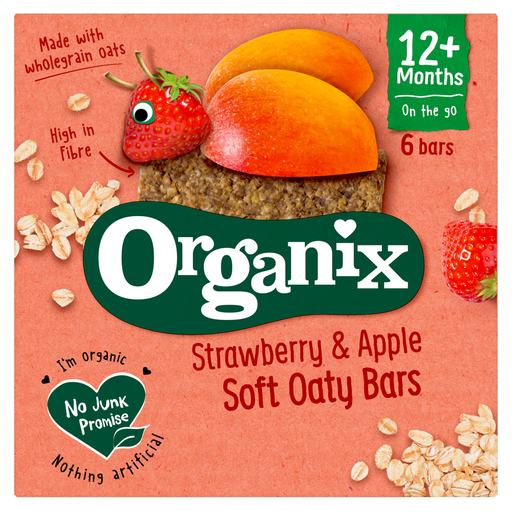
Organix Strawberry & Apple Soft Oaty Bars 12+ Months, 6 x 23g
The pack contains six 23g bars labelled for ages 12+ months. If considering one with commuter coffee, compare that portion with other bars and read the current organic and allergen declarations, including precautionary warnings.
Questions about organic snack bars
How can I check whether a snack bar is organic?
Check the organic claim and certification information on the exact pack. Defra’s UK organic food guidance says the applicable production and certification conditions must be met and at least 95% of a food product’s agricultural ingredients must be organic for it to be labelled organic.
Does “natural” or “no added sugar” mean organic?
No. Those descriptions do not establish the separate production and certification conditions for an organic claim under Defra’s UK guidance. Check each claim you care about on the particular bar.
Should I choose a protein bar with commuter coffee?
Choose by a stated protein amount if that is a feature you want, but assess the rest of the same bar’s label too. TREK lists 10g protein and 12g sugars per 50g Original Oat bar; it also lists soya and may-contain warnings for peanuts, nuts and milk.
Can a high-fibre snack bar also be high in sugars?
Yes. In Action on Salt and Sugar’s 2025 review of UK retail snack bars, 31% of bars carrying a high-fibre claim were also high in sugars under UK front-of-pack thresholds. Compare the fibre and sugars figures for the exact portion you plan to eat.
What should I check for allergens at a café or station?
Read the current ingredients and any may-contain statement for the particular bar. For food prepacked for direct sale, the Food Standards Agency and Food Standards Scotland describe UK requirements for the food name and a full ingredients list with the 14 regulated allergens emphasised; check the applicable label rather than assuming all café or station bars are packed in the same way.


