What should you check on the label?
Start with the claim that matters to you, then compare bars on the same nutrition basis and check the exact pack for dietary suitability.
| Priority | What to check | Your needs |
|---|
| Organic claim |
Look for product-specific organic information rather than relying on words such as “natural”. Department for Environment, Food & Rural Affairs guidance says food labelled organic must meet organic production rules and have at least 95% organic agricultural ingredients. |
Organic sourcing matters to me, so I want to confirm the claim on the bar I am buying. |
| Nutrition and portion |
Compare sugars, saturated fat and salt per 100g, then check the amount in one bar. Read the fibre figure separately; an organic, fibre or protein claim does not replace these figures. |
I want to know what one revision-break portion contains, especially when the bars are different sizes. |
| Ingredients and allergens |
Read the exact flavour’s ingredients, allergen declaration and any “may contain” statement. Check oats, nuts, milk and other ingredients relevant to your requirements. |
A bar may fit my preference for organic food but not my dietary restrictions, so the specific pack needs to meet both. |
| Type of bar |
For a fruit-and-nut bar, check the nuts and sugars listed; for a protein flapjack, compare protein alongside the rest of its nutrition panel. Confirm organic status separately if it is essential. |
If I care more about a particular ingredient or bar style than organic sourcing, I can compare conventional options without assuming their claims mean the same thing. |
Brands and product lines to consider
These examples illustrate different label checks; a brand’s wider range does not establish the organic or dietary status of every bar it makes.
FREEE by Doves Farm
Its Apricot Oat Bars with Chia provide a specific organic oat-bar example for comparing certification information, ingredients and per-bar nutrition.
- FREEE describes this product as organic and vegan, and lists 4.6g fibre and 8.0g sugars per 35g bar.
- The bar contains oats, and its ingredient list includes agave nectar. Check the exact pack against your dietary requirements.
Graze
Graze describes its Oat Boost flapjacks as made with wholegrain oats and high in fibre.
- An oat-flapjack line to compare when fibre is a priority.
- Check the particular product if you require an organic bar; wholegrain and organic are different claims.
Nature Valley
Nature Valley’s UK range includes cereal snack, protein, sweet-and-salty nut and crunchy bars.
- Its different bar types give you options to compare by ingredients and nutrition panel.
- Gluten-free options are identified in parts of the range; check the exact bar for gluten requirements and any organic claim.
nākd.
nākd. describes its fruit-and-nut bars as having no added sugar or syrups and as suitable for vegan diets.
- The brand describes these bars as gluten-, wheat- and dairy-free.
- Fruit-and-nut ingredients require an individual allergen check. No-added-sugar wording is not an organic claim or a substitute for the sugars figure.
Eat Natural
Eat Natural offers fruit-and-nut bars alongside protein, vegan and high-fibre options.
- The range allows comparison between different bar styles and stated dietary attributes.
- Ingredients and suitability vary by product. Check individual bars for nuts, milk ingredients and organic status.
TREK
TREK Cocoa Oat is a vegan oat flapjack with a stated 9g plant protein per 50g bar.
- Its per-bar protein figure can be compared with other bars on a consistent basis.
- TREK also lists 14g sugars and 5.0g saturated fat per bar, and says the product may contain peanuts, nuts and milk.
Alpen
Alpen is a familiar cereal-bar name, but the variety matters when checking a current option.
- Alpen’s FAQ identifies several Alpen and Alpen Light bar varieties as no longer being made. Check the current product rather than relying on an older variety name.
Snack-bar options on Joybuy
These options comprise four Organix soft oat-bar flavours labelled for ages 12 months and over, plus a Deliciously Ella nut-and-oat multipack. The Organix bars are marketed for toddlers, so their 23g portions need particular consideration if you are shopping for a student; check each product’s organic information, nutrition and allergens on the pack.
 No image available
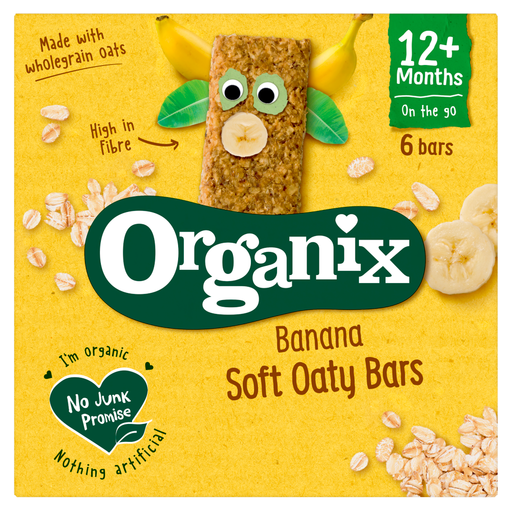
Organix Banana Soft Oaty Bars, 12+ months, 6 x 23g
A six-pack of 23g bars to assess by portion size when choosing a revision snack. The 12+ months label identifies a toddler product; check its organic information, nutrition and ingredients for the student who will eat it.
 No image available
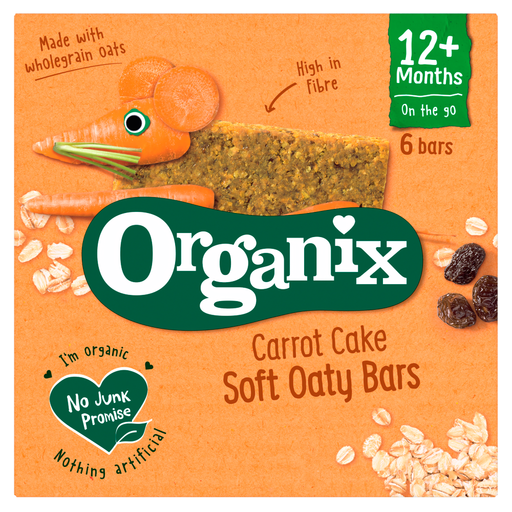
Organix Carrot Cake Soft Oaty Bars, 12+ months, 138g
This 138g pack is labelled for ages 12 months and over. For revision snacks, check the individual bar’s portion and nutrition figures as well as its organic and allergen information.
 No image available
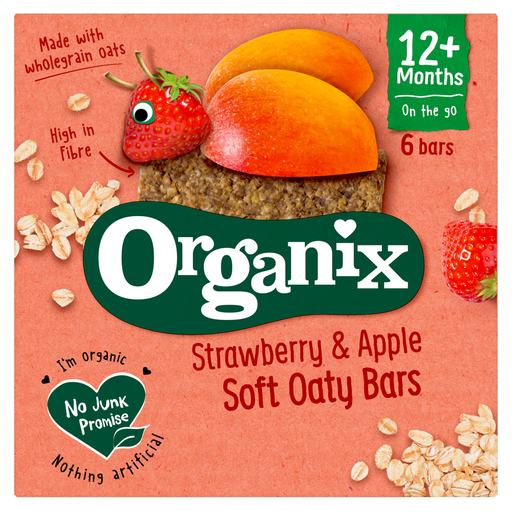
Organix Strawberry & Apple Soft Oaty Bars, 12+ months, 6 x 23g
The 23g bar size makes the per-bar nutrition figures relevant when comparing revision snacks. This six-pack is labelled for toddlers aged 12 months and over; check the exact flavour’s ingredients and organic information.
 No image available
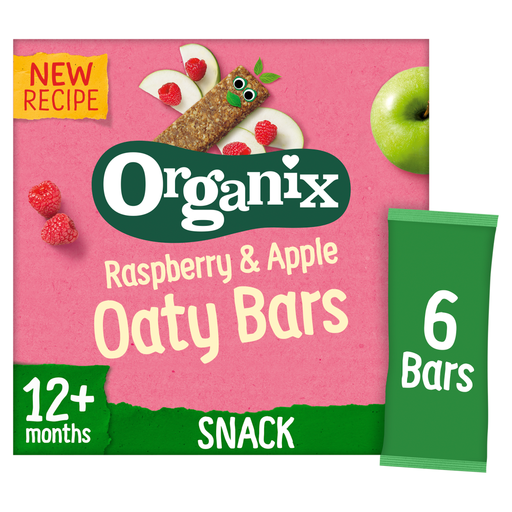
Organix Raspberry & Apple Soft Oaty Bars, 12+ months, 6 x 23g
This is another six-pack of 23g bars labelled for ages 12 months and over. Check its own nutrition, organic and allergen information rather than assuming it matches the other Organix flavours; check the ingredients if vegan suitability matters.
 No image available
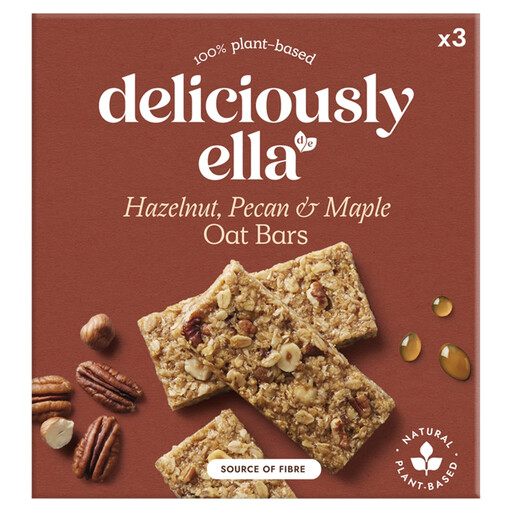
Deliciously Ella Hazelnut, Pecan & Maple Oat Bar Multipack, 150g
A 150g nut-and-oat multipack to compare if you are considering a conventional bar alongside organic-labelled options. Hazelnut and pecan are named in the product; check the full allergen statement, individual portion size and nutrition panel before choosing it.
Questions about organic revision snacks
What does “organic” mean on a snack bar?
Under Department for Environment, Food & Rural Affairs guidance on organic food labelling, food labelled organic must meet organic production rules and contain at least 95% organic agricultural ingredients. Check the specific bar’s organic information rather than treating “natural” as the same claim.
Is an organic bar automatically a better revision snack?
No. Organic labelling concerns how a food is produced, not the amount of sugars or saturated fat in one bar. Compare the portion and nutrition panel with the alternatives you would actually eat.
How should I compare bars of different sizes?
Use per 100g figures to compare their nutrition on the same basis, then check per-bar figures to see what one portion contains. Read sugars, saturated fat, salt and fibre alongside the ingredients and allergen statement.
Does organic mean gluten-free or nut-free?
No. Organic status does not establish either suitability. FREEE says its Apricot Oat Bars with Chia are made without gluten but contain oats; Lifefood’s Organic LIFEBAR Hazelnut Crunch contains hazelnut and may contain other nuts and sesame. Check the exact pack for your requirements.
Can I rely on an Alpen bar I used to buy?
Check the variety first. Alpen’s FAQ lists several Alpen and Alpen Light bars as no longer being made, so an older favourite should not be the basis of a snack plan without checking the current product listing.


