What should you check?
Start with any requirement you would not compromise on, such as an organic claim or allergen suitability. Then compare the nutrition per bar and consider what you will eat and drink after the session.
| Priority |
What to check |
Your needs |
| Organic status |
Look for an explicit organic claim on the exact pack or current listing. Check its certification information rather than relying on “natural” wording. |
If organic status is essential to me, I need to confirm it for the particular bar and flavour I intend to buy. UK organic labelling is subject to production, ingredient and certification conditions set out by the Department for Environment, Food & Rural Affairs. |
| Nutrition per bar |
Compare protein, carbohydrate and serving size together. For example, BodyMe states 16 g plant protein per 60 g bar for its organic vegan range; Ocado lists 15 g per 55 g TREK Choc Peanut bar and 7.7 g per 45 g nākd. Caramel bar. |
I want to know what one bar contributes after my session, rather than treating every bar labelled “protein” as equivalent. The named examples are different products with different serving sizes. |
| Food after exercise |
For intense or prolonged exercise, consider how a carbohydrate- and protein-rich snack fits alongside fluids and a subsequent meal. The UK Sports Institute advises a meal within two hours. |
If I cannot eat a meal straight away after a demanding session, a bar may be a convenient first snack, provided I also plan for fluids and the meal. |
| Ingredients and allergens |
Read the ingredient list and allergen statements for the exact flavour and pack. Check dietary claims separately from allergen information. |
Peanuts or other named ingredients may rule out a bar for me. Ocado’s listings identify peanuts and almonds in nākd. Caramel, and peanuts, sesame and soya in TREK Choc Peanut. |
| Format |
Check whether the item is a bar, flapjack or gel, as well as its pack and serving size. Compare nutrition using the serving you would actually consume. |
I may want something I can carry in a gym bag, but a gel is not a substitute for a snack bar merely because both are portable. |
Relevant brand references
These examples illustrate different bar styles and stated nutrition figures; a brand name does not establish the organic status or allergen profile of every product in its range.
BodyMe
An organic vegan protein-bar range to examine when both an organic claim and a stated protein figure matter.
- BodyMe states that its 60 g bars contain 16 g plant protein from three plant proteins.
- Confirm the organic claim, ingredients and allergens for the flavour you choose; the brand’s protein statement does not make a bar a complete post-exercise meal.
TREK
A protein-bar and flapjack reference when you are comparing nutrition per serving rather than selecting on an organic claim alone.
- Ocado lists 15 g plant protein per 55 g TREK Choc Peanut bar.
- That Choc Peanut listing identifies peanuts, sesame and soya. Check the exact TREK product separately for its nutrition, allergens and any organic claim.
nākd.
A fruit-and-nut bar reference for someone comparing a different format with protein-focused bars.
- Ocado lists 7.7 g protein per 45 g nākd. Caramel Protein Bar and presents that variant as vegan, gluten-free and dairy-free.
- The Caramel variant contains peanuts and almonds. Its figures and claims should not be applied to other nākd. flavours.
Nature Valley
A cereal-bar brand with protein variants for shoppers who prefer that bar format.
- Nature Valley UK lists Peanut & Chocolate and Salted Caramel Nut protein variants at 10 g protein and 4 g fibre per bar.
- Check the selected variant’s pack for its organic status, ingredients and allergens rather than extending the listed figures across the range.
Eat Natural
A fruit-and-nut bar range that includes protein bars and dietary variants.
- Eat Natural UK lists protein bars alongside gluten-free and vegan options.
- Those are range-level options, not claims that every bar has the same dietary suitability or an organic claim; check the exact pack.
Joybuy product options
These Joybuy options include TREK flapjacks, a nākd. bar and a Vilgain energy gel. The gel offers a different format from the snack bars in the main buying question. Check the exact product listing and pack for nutrition, allergens and any organic claim before choosing.
 No image available
TREK Salted Caramel Protein Flapjacks, 3 × 50 g
A flapjack option for carrying a bar after the gym. The pack contains three 50 g bars; check the per-bar nutrition, allergen panel and any organic claim for this Salted Caramel variant.
View on Joybuy
 No image available
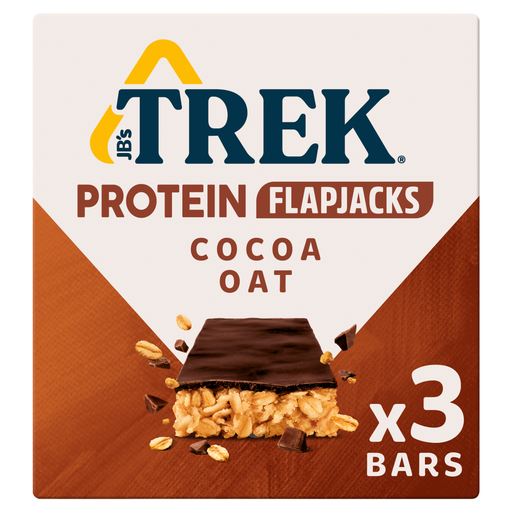
TREK Cocoa Oat Protein Flapjacks, 3 × 50 g
Another three-bar flapjack pack, in Cocoa Oat. Compare its own per-bar protein and carbohydrate figures with the Salted Caramel variant rather than assuming the flavours are nutritionally identical; check the pack for allergens and organic status.
View on Joybuy
 No image available
TREK High Protein Flapjack Cocoa Oat, 16 × 50 g
This Cocoa Oat flapjack comes in a 16-bar pack. If you are considering it for regular post-gym snacks, check the nutrition and allergen information for this exact variant and confirm whether it meets any organic requirement.
View on Joybuy
 No image available
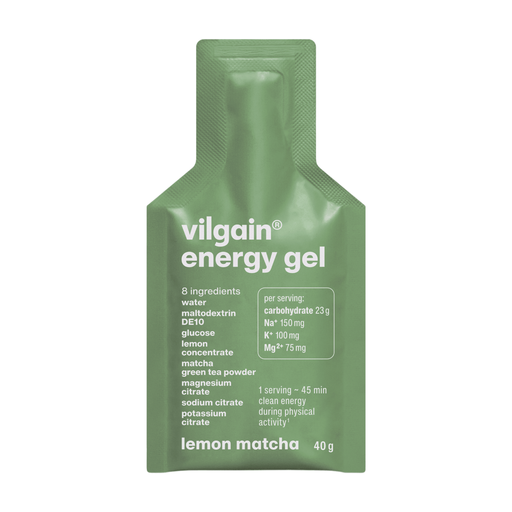
Vilgain Energy Gel Lemon Matcha, 40 g
This is a 40 g gel, not a snack bar. Consider the format separately from the bar options, and check its nutrition panel if you need a particular carbohydrate or protein contribution after exercise. Confirm any organic claim on the exact product.
View on Joybuy
 No image available
nākd. Peanut Delight, 4 × 35 g
A four-pack of 35 g Peanut Delight bars for a portable snack. Use the nutrition and ingredient information for Peanut Delight itself: figures for nākd. Caramel describe a different product. Check the peanut and other allergen information, as well as any organic claim, on the exact pack.
View on Joybuy
Questions about post-gym snack bars
Does organic mean a bar meets my needs after the gym?
No: organic status concerns how the food is produced and labelled, not its protein or carbohydrate contribution. Compare nutrition per bar. For intense or prolonged exercise, the UK Sports Institute advises a carbohydrate- and protein-rich snack with fluids, followed by a meal within two hours.
How do I check an organic claim on a UK snack bar?
Look for an explicit claim and certification information for the exact product, rather than treating “natural” as equivalent. The Department for Environment, Food & Rural Affairs’ UK guidance, dated 20 August 2025, says organic food labelling depends on specified production, ingredient and certification conditions.
Is a bar with about 8 g of protein enough after exercise?
Judge it alongside the session and what you will eat afterwards, rather than by one protein figure alone. Ocado lists 7.7 g protein per 45 g nākd. Caramel bar and 15 g per 55 g TREK Choc Peanut bar; both figures describe those exact products. After intense or prolonged exercise, the UK Sports Institute also advises carbohydrate, fluids and a subsequent meal.
Does a vegan protein bar avoid common allergens?
Not necessarily. Ocado’s nākd. Caramel listing names peanuts and almonds, while its TREK Choc Peanut listing names peanuts, sesame and soya. Read the ingredients and allergen statements on the exact bar you intend to buy.
Can a protein bar replace my meal after a demanding session?
A bar can serve as an initial snack when a meal is not immediately practical, but do not assume it replaces the meal. For intense or prolonged exercise, the UK Sports Institute advises a carbohydrate- and protein-rich snack with plenty of fluids as soon as possible, followed by a meal within two hours.


