Shoppers who want a certified-organic bar
If organic ingredients are the deciding factor, look beyond descriptions such as “natural”. Check that the exact bar is labelled organic and examine the certification information on its current pack.


Choose a bar explicitly labelled organic, and check its certification information if organic ingredients are essential to your movie-night snacks. Then compare the exact flavour’s allergens, dietary claims and nutrition per bar: an organic claim does not tell you how sweet a bar is or whether everyone you are serving can eat it.
If organic ingredients are the deciding factor, look beyond descriptions such as “natural”. Check that the exact bar is labelled organic and examine the certification information on its current pack.
An organic bar may also carry a gluten-free or vegan claim, but each claim applies to the specific product. Check the flavour’s ingredient list and allergen statement before sharing it.
If a particular nutrient or portion size matters more to you than organic certification, compare the figures per bar. A protein, wholegrain or natural-ingredient description does not establish that a product is organic.
Start with the organic claim if it is a firm requirement; use the exact pack’s dietary information and per-bar figures to narrow the choice for your guests and the occasion.
| Priority | What to check | Your needs |
|---|---|---|
| Organic status | Look for an explicit organic claim on the product and check its control-body or certification details on the current pack. Defra’s UK organic labelling guidance distinguishes regulated organic claims from general descriptions of ingredients. | I want the bar itself to be sold as organic, rather than choosing it because the ingredients sound natural. |
| Dietary fit and allergens | Check gluten-free or vegan wording for the exact flavour, then read its ingredients and any “may contain” statement. Pay particular attention to oats or cereals containing gluten, peanuts, tree nuts, soya and milk where relevant. | If I am putting bars out for other people, I need to know which exact packs meet their dietary requirements and which contain or may contain allergens. |
| Portion and nutrition | Compare the bar weight and the sugars, energy, protein or fibre figures for the portion you expect to serve. Check whether the label gives values per bar, per serving or per 100g before comparing products. | One bar each may suit our film-night plans, but I want to compare the actual portions rather than assume an organic or fruit-based bar has a particular sugar content. |
| Intended audience | Read the age guidance and pack size. Some individually portioned oat bars are marketed for children aged 12 months and over, which is a different starting point from choosing snacks for an adult gathering. | For a mixed-age movie night, I want portions that suit the people eating them, not just a flavour that sounds appealing. |
Those descriptions do not establish that a snack bar meets UK organic labelling requirements. Defra’s guidance sets separate production, ingredient and certification conditions for an organic claim.
If organic status matters, check the claim and control-body information for the exact product you intend to buy.
A bar can carry either claim and still contain other allergens or have a precautionary “may contain” statement. That matters when snacks are shared with someone who has an allergy.
Read the current ingredient list and allergen statement for each flavour before serving it.
Organic certification describes how a product meets organic requirements; it does not specify its sugars or energy per bar. Different bar sizes can also make front-of-pack impressions hard to compare.
Check the portion weight and nutrition declaration, then compare values on the same basis.
These ranges offer different starting points for comparing ingredients and dietary claims. A brand’s general positioning does not establish organic status for every bar it makes.
Graze describes snacks made with ingredients including wholegrains, fruit and nuts, and offers oat flapjacks.
Nature Valley UK lists Crunchy and Protein bars among its snack-bar ranges.
Alpen’s cited UK catalogue describes muesli, offering a bowl-style option for a film rather than a direct snack-bar comparison.
Eat Natural’s range includes fruit-and-nut combinations and bars with stated dietary or fibre claims.
Nakd describes its fruit-and-nut bars as made with fruit and nuts and no added sugar.
TREK offers protein bars and oat flapjacks; its Original Oat flapjack is described by the brand as vegan and gluten-free.
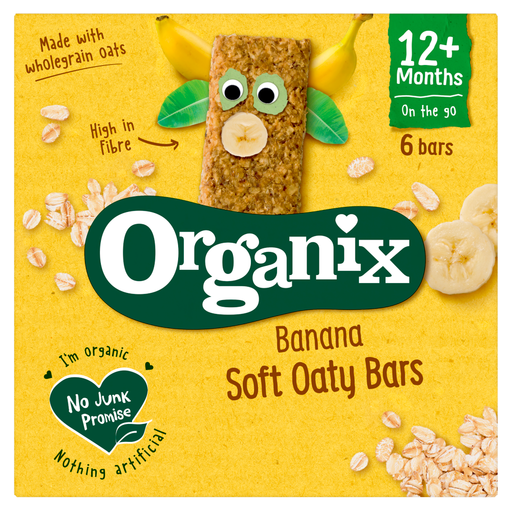
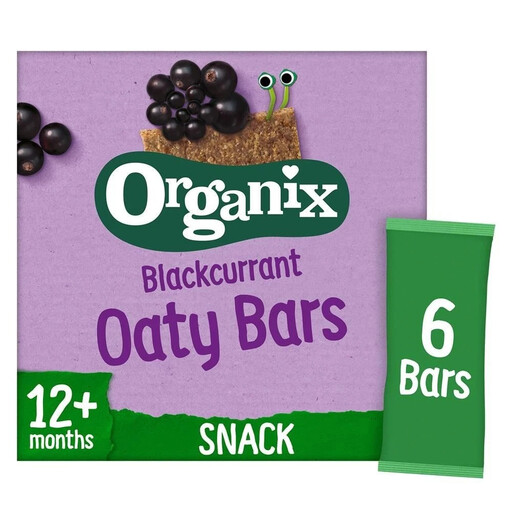
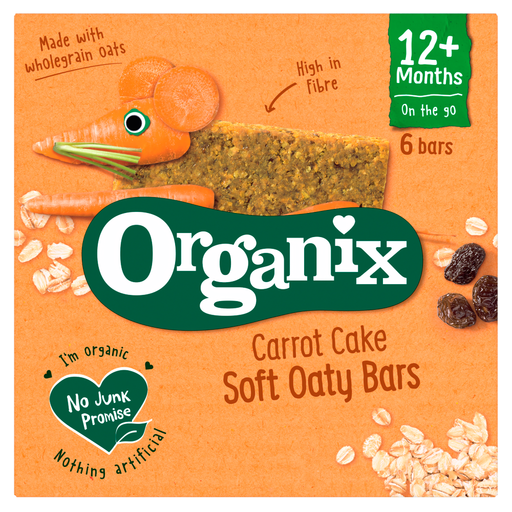
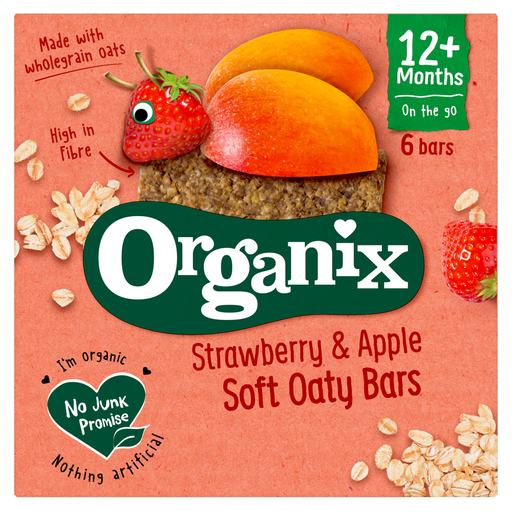
These Organix soft oat bars are labelled for children aged 12 months and over. They may be relevant to a movie night that includes young children; check each pack’s organic, dietary and allergen information against your requirements before choosing one.
 No image available
A banana-flavoured oat-bar option to consider when young children are joining movie night. The pack contains six 23g bars; check the current packaging for organic and dietary claims and its allergen statement.
 No image available
This blackcurrant oat bar is named as organic and marketed for children aged 12 months and over. The pack contains six 23g bars; check its current certification, dietary claims and allergen statement before serving.
 No image available
A carrot-cake-flavoured oat-bar option for a film night that includes young children. The listed pack weight is 138g; check the current pack for its organic and dietary claims, portion details and allergens.
 No image available
These strawberry-and-apple oat bars come as six 23g portions and are marketed for children aged 12 months and over. If organic certification, vegan suitability or allergen precautions matter, confirm the wording on the current pack.
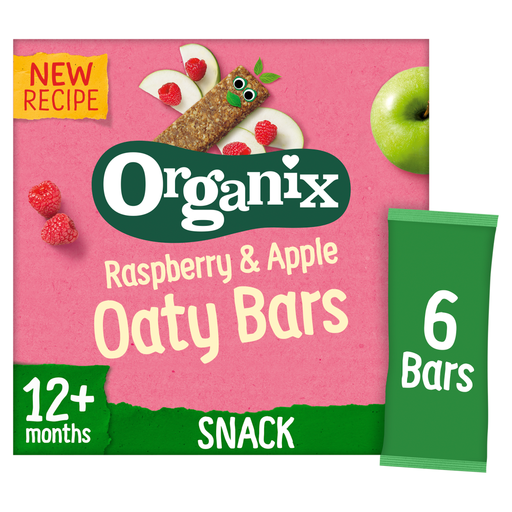 No image available
A raspberry-and-apple oat-bar option in a pack of six 23g bars, labelled for children aged 12 months and over. Check the current pack for an organic claim, vegan suitability if needed, and its full allergen statement.
Under Defra’s UK organic food labelling guidance, a product labelled organic must meet the applicable production rules, contain at least 95% organic agricultural ingredients and have the product and its suppliers certified by an approved organic control body. Check the current pack’s organic claim and certification information for the bar you are buying.
No. “Natural ingredients” describes a different feature and does not establish compliance with Defra’s organic labelling and certification requirements. Look for an organic claim on the exact bar rather than inferring one from its ingredient descriptions.
Read the ingredient list and allergen statement on every flavour you plan to serve, including any “may contain” wording. Cereals containing gluten, peanuts, tree nuts, soya and milk are particularly relevant to the snack-bar examples discussed here; a vegan or gluten-free claim does not replace those checks.
No. Organic certification is not a sugar claim. Compare the nutrition declaration for the portion you expect to eat, checking whether the figures are given per bar, per serving or per 100g.