Parents packing for younger children
A portable bar with clear age guidance and a suitable portion may fit a nursery or school bag. Check supervision instructions, allergens and the setting’s food policy on the exact product.


Choose a bar with an organic claim on the specific pack, then check its nutrition, portion size, allergens and age guidance before putting it in a school bag. A toddler fruit bar, a gluten-free oat bar and a vegan bar meet different needs; none becomes suitable for every child or school simply because it is organic.
A portable bar with clear age guidance and a suitable portion may fit a nursery or school bag. Check supervision instructions, allergens and the setting’s food policy on the exact product.
Look for both claims on the individual pack. An oat-based recipe alone does not establish its gluten status, and a gluten-free label does not settle questions about other allergens.
An organic vegan bar may suit this preference, but its ingredient list, sugars per bar and precautionary allergen statements still matter for a school-day snack.
Start with the organic claim and any school or allergy requirements. Then compare nutrition on the same basis and check the portion that will actually be packed.
| Priority | What to check | Your needs |
|---|---|---|
| Organic claim | Read the claim on the exact product, not just a highlighted ingredient. The Department for Environment, Food & Rural Affairs says products labelled organic require an approved organic control body and at least 95% organic agricultural ingredients. | I want the bar itself to be labelled organic, rather than relying on natural-sounding packaging. |
| Nutrition and portion | Compare sugars, saturated fat and salt per 100g across different bars. Use the per-bar figures and bar weight to see what one packed portion contains; NHS food-label guidance explains the distinction between per-100g and portion information. | A smaller bar may fit the snack break, but I also want to compare it fairly with larger bars. |
| Allergens and school policy | Read the ingredients and any ‘may contain’ statement on each pack. The Food Standards Agency explains that precautionary statements flag possible unintended allergen presence; also check the school’s own food policy. | I need a bar that fits the child’s allergy requirements and what their school permits. |
| Age and use | Check the stated minimum age, texture and any sitting or supervision instructions. Confirm that the portion and packaging work for the intended snack break. | For a younger child, I need to follow the product’s age and supervision guidance, not just its lunchbox description. |
Organic certification addresses how a product is produced; it does not tell you its sugars or saturated fat. Bars carrying the same organic claim can have different nutrition panels.
Check the organic claim, then compare sugars, saturated fat and salt per 100g and per bar.
A bar without nuts listed as an ingredient can still carry a precautionary nut statement. Organix Banana Soft Oaty Bars and the Equal Exchange Just 5 Date & Cocoa bar provide examples of products with such warnings.
Read both parts of the exact pack’s allergen information, and follow the child’s allergy plan and the school’s food policy.
The cited Organix fruit, Organix oat, Freee oat and Equal Exchange bars are 17g, 23g, 35g and 40g respectively. A per-bar figure alone does not compare equal quantities of food.
Compare the per-100g panels first, then check the figure for the portion you plan to pack.
An oat recipe or natural-looking pack does not establish an organic claim. Nature Valley’s cited Crunchy variety pack information does not identify that pack as organic.
For an organic shortlist, check the claim and control-body information on the particular bar or multipack.
These are references for comparing specific ranges and packs, not a list of brands whose every bar is organic or available on Joybuy.
Its cited organic range includes bars labelled for children aged 12 months and over, with oat and fruit options.
The cited Apricot & Chia Oat Bar is labelled organic, gluten-free, wheat-free and vegan.
The cited Just 5 Date & Cocoa Snack Bar is an organic vegan option in a 40g portion.
A reference point for comparing mainstream portable oat bars, rather than an assumed organic option.
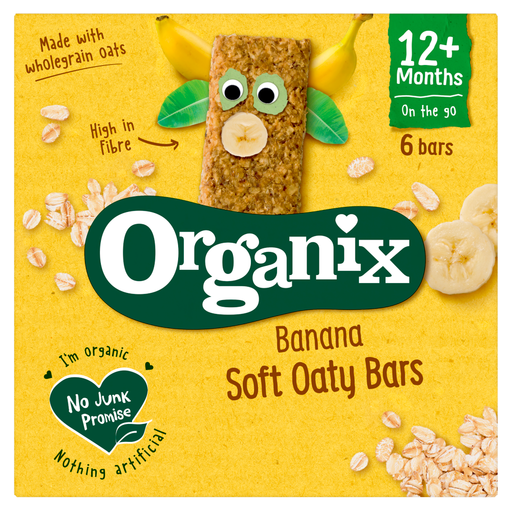
These Organix soft oaty bars are options to examine when packing for a younger child. Check the organic claim, nutrition and allergen statements on each exact pack; this selection does not represent the gluten-free and vegan bar types discussed above.
 No image available
A portion-sized oat bar to consider for a younger child. Organix lists 5.1g sugars and 3g fibre per 23g bar. It contains gluten and oats and carries a precautionary statement for tree nuts, soya and milk; check the pack and school policy.
 No image available
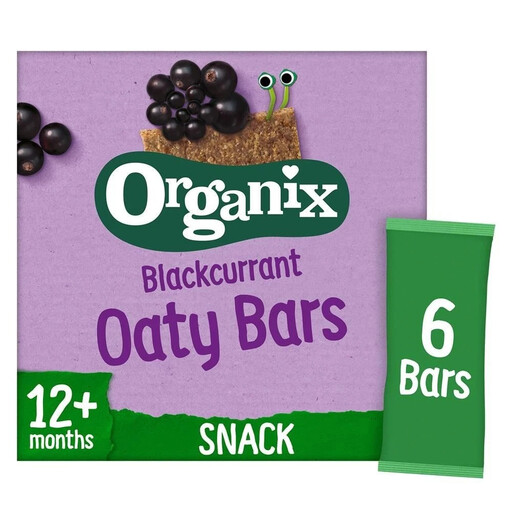
An organic blackcurrant oat-bar option for the stated age group. Check its oat ingredients and the exact pack’s precautionary allergen statement, as well as the school’s food policy.
 No image available
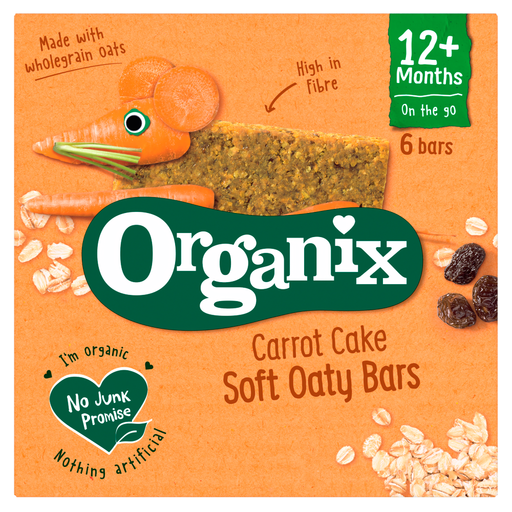
A soft oaty-bar option labelled for children aged 12 months and over. Before packing it, check the exact product’s organic marking, oat ingredients, allergen statement and portion information.
 No image available
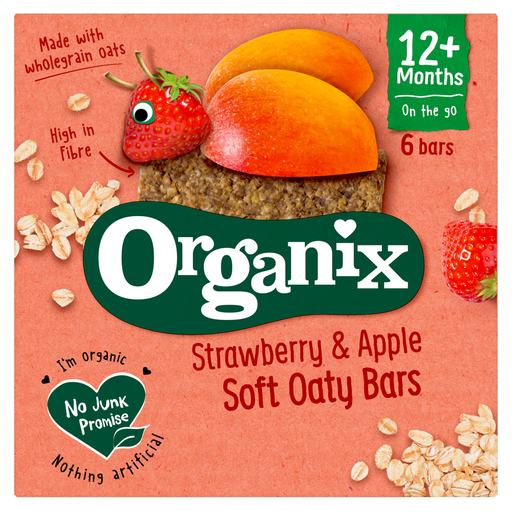
A strawberry-and-apple oat-bar variant in 23g portions. Check the organic claim and nutrition panel on this flavour, alongside its oat ingredients and precautionary allergen statement.
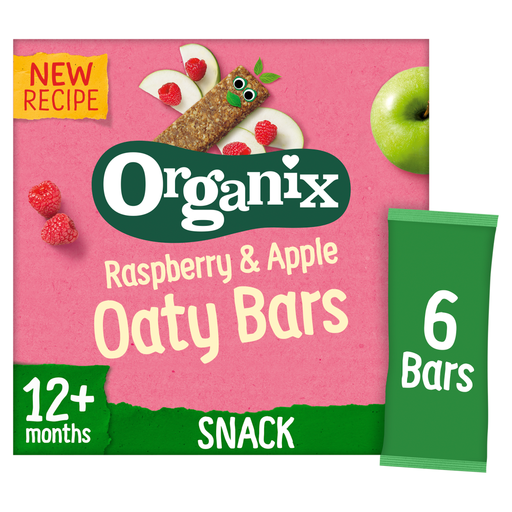 No image available
A raspberry-and-apple oat-bar variant for the stated age group. Compare this flavour’s per-100g and per-bar nutrition with other options, and read its exact-pack allergen and organic information before choosing it for school.
Look for an organic claim applying to the product itself. The Department for Environment, Food & Rural Affairs says food labelled organic must have at least 95% organic agricultural ingredients, with the product and its suppliers certified by an approved organic control body. An organic ingredient mentioned on a pack is not, by itself, an organic claim for the whole bar.
No: organic status does not establish a bar’s sugar content. Compare total sugars per 100g across bars of different sizes, then check sugars per bar for the portion being packed. NHS food-label guidance uses more than 22.5g total sugars per 100g as its high-sugars threshold.
Check both the ingredient declaration and any ‘may contain’ statement on the exact pack, then follow the school’s policy and the child’s allergy plan. The Food Standards Agency explains that precautionary statements indicate possible unintended allergen presence; organic, vegan and fruit-based descriptions do not cancel such warnings.
It may be an option, but check whether its portion, ingredients and school-policy compatibility suit the older child rather than choosing by the organic claim alone. For younger children, follow the stated age and safety instructions: Organix’s Banana & Date Fruit Bars are labelled 12 months+ and advise sitting down and supervision while eating.