Parents packing food for an outing
A bar can be convenient when the child meets its stated age and can manage its texture. For routine snacks, the NHS recommends fresh fruit and vegetables where practical.


For routine toddler snacks, choose fresh fruit or vegetables where practical; the NHS recommends them as a snack choice for children. A packaged organic bar can be convenient, but check its stated age, ingredients, allergens and texture, and supervise your child while they eat. If it contains dried fruit such as raisins, follow NHS advice to offer it with a meal rather than between meals because the sugar can cause tooth decay.
A bar can be convenient when the child meets its stated age and can manage its texture. For routine snacks, the NHS recommends fresh fruit and vegetables where practical.
An organic label addresses how a food is produced; it does not, by itself, tell you its sugars per serving or whether it fits a between-meal snack occasion. Check the exact product label as well.
Read the ingredients and any precautionary allergen statement on the exact pack. An organic or toddler-labelled bar can still contain oats or gluten, or carry a warning about possible allergen cross-contact.
Start with the eating occasion and the child’s age, then compare the ingredients and label of each bar you are considering.
| Priority | What to check | Your needs |
|---|---|---|
| Organic claim | Check the organic labelling on the exact product. Read its ingredients and sugars per serving separately; an organic claim is not a nutritional verdict. | I want organic ingredients, but I also need to know what is in the bar and when I plan to offer it. |
| Age and texture | Follow the pack’s minimum age statement. Consider the bar’s size, shape and texture alongside the child’s chewing skills; serve food while the child is seated and supervised. | For an outing, I need something my child is old enough to eat and can manage while sitting down. |
| Dried fruit | Look for raisins, dates and other dried fruit in the ingredients. The NHS advises offering dried fruit to toddlers with meals, rather than between meals, because its sugar can cause tooth decay. | If a bar contains dried fruit, I would plan to offer it with a meal instead of using it for frequent grazing. |
| Allergens | Read both the declared allergens and any ‘may contain’ statement on the current pack. Check again when changing product or flavour. | My child’s ingredient restrictions mean I need the label for this particular bar, not an assumption based on the brand or an organic claim. |
Organic labelling concerns production standards. It does not establish a bar’s sugars per serving or make it the appropriate choice for every snack occasion.
Check the age statement, ingredients, nutrition declaration and allergens alongside the organic label.
The NHS advises giving dried fruit, including raisins, to toddlers with meals rather than between meals because the sugar can cause tooth decay.
Check whether a bar contains raisins, dates or other dried fruit, and plan when to offer it accordingly.
The NHS advises considering food size, shape and texture when preventing choking. A soft texture does not remove the need to account for a child’s eating skills.
Follow the product’s age statement, and have the child seated and supervised while eating.
An organic claim does not tell you whether a bar contains allergens or carries a precautionary cross-contact warning. Organix’s Banana Soft Oaty Bars, for example, contain oats and gluten and may contain tree nuts, soya and milk, according to Organix.
Read the current pack’s ingredients and precautionary statements for the exact product and flavour.
Brand ranges differ, so use these references to narrow down which exact product labels to examine—not as a substitute for checking a pack.
Organix has toddler-labelled organic bars, including Banana Soft Oaty Bars for children aged 12+ months.
Nakd describes its range as fruit-and-nut bars rather than a toddler-specific range.
Graze makes a range of snacks using ingredients that, according to the brand, include wholegrains, fruit and nuts.
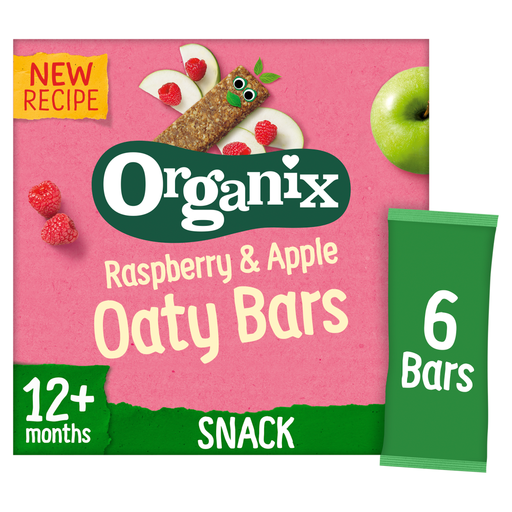
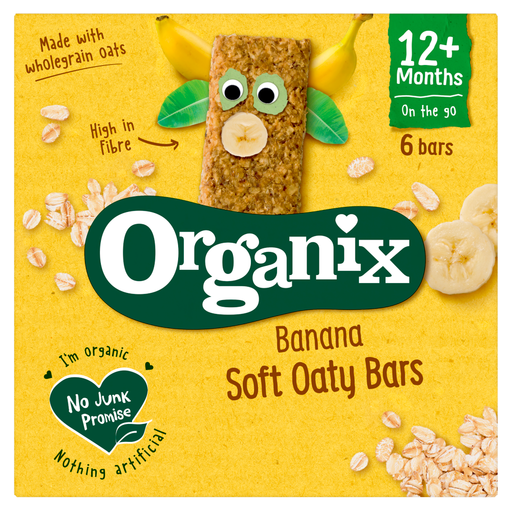
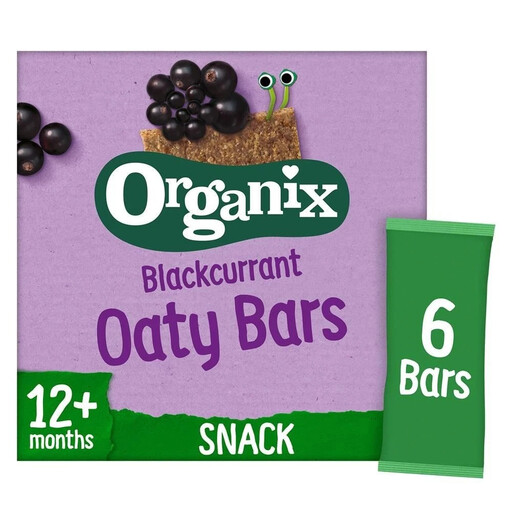
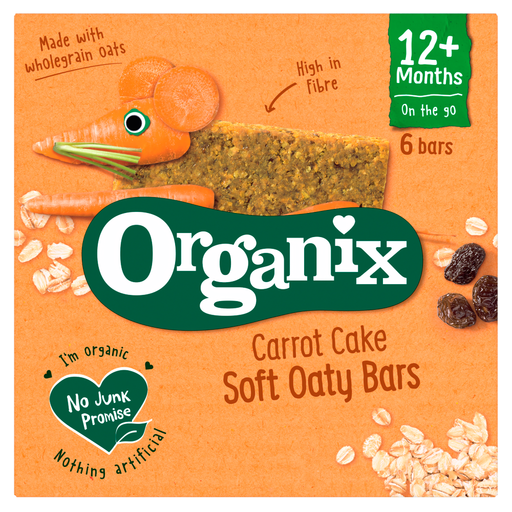
These Organix soft oat bar listings are labelled for children aged 12+ months. Compare each flavour’s current organic labelling, ingredients and allergen statements before choosing; a bar containing dried fruit calls for the NHS mealtime guidance above.
 No image available
A soft oat bar format for a child who meets the stated 12+ months age. Check this flavour’s current organic claim, ingredients, sugars per bar and allergen statements, and supervise eating.
 No image available
This soft oat bar is labelled for children aged 12+ months. Organix lists 5.1g sugars per 23g bar, raisins and oats/gluten, plus a precautionary statement for tree nuts, soya and milk. Because it contains raisins, follow NHS advice to offer dried fruit with meals rather than between meals; check the current pack and supervise eating.
 No image available
The listing names an organic soft oat bar for children aged 12+ months. Read the current pack for this flavour’s ingredients, sugars per bar and allergen statements before deciding when to offer it; supervise eating.
 No image available
A soft oat bar format labelled for children aged 12+ months, in a 138g pack. Check the exact pack’s organic labelling, ingredients, sugars per serving and allergen statements; have the child seated and supervised while eating.
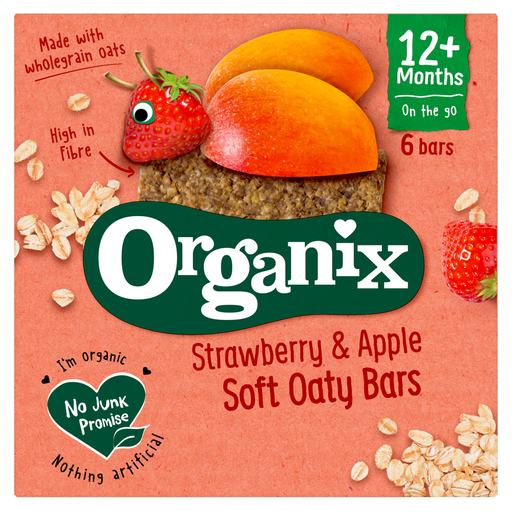 No image available
A soft oat bar format labelled for children aged 12+ months. Before packing this flavour for an outing, check its current organic labelling, dried-fruit ingredients, sugars per bar and allergen statements; supervise eating.
No. Organic labelling concerns how a food is produced, not whether it is suitable for every eating occasion. Check the bar’s age statement, ingredients and sugars per serving; for routine snacks, the NHS recommends fresh fruit and vegetables for children.
Offer dried fruit with a meal rather than as a snack between meals. The NHS gives this advice for toddlers because the sugar in dried fruit can cause tooth decay. Check the bar’s ingredients to see whether it contains raisins, dates or other dried fruit.
No. Follow the minimum age on the exact pack, then consider your child’s chewing skills and the food’s size, shape and texture. Have the child seated and supervised while eating; Organix Banana Soft Oaty Bars, for example, are labelled for children aged 12+ months.
Read the ingredients, declared allergens and any precautionary statement on the current pack. Organix says its Banana Soft Oaty Bar contains oats/gluten and may contain tree nuts, soya and milk. An organic claim does not replace that product-specific check.