Travellers who prioritise organic
If organic production is a requirement, check the claim on the exact bar before comparing its nutrition and allergens. A brand name or a description such as “natural” is not an organic claim.


If organic production matters to you, choose a train snack only after checking the organic claim on the exact bar: the UK Department for Environment, Food & Rural Affairs says organic food labelling requires certification and, generally, at least 95% organic agricultural ingredients. Organic status does not tell you how a bar compares nutritionally, so check sugars, saturated fat and salt per 100g, the amount per bar, and its ingredients and allergens. A conventional oat, fruit-and-nut or protein bar may suit your journey better if its particular format or dietary claims matter more to you than organic certification.
If organic production is a requirement, check the claim on the exact bar before comparing its nutrition and allergens. A brand name or a description such as “natural” is not an organic claim.
If you need a vegan, gluten-free, wheat-free or dairy-free bar, read the claims and ingredients for the particular variant. Organic status does not establish any of those attributes.
If the gap until your next meal affects what you pack, compare bar size and the stated protein, fibre, sugars and other nutrition information. Check the amount in one bar as well as the figures per 100g.
Start with any non-negotiable organic or dietary requirement, then compare nutrition on the same basis and decide whether the portion and format work for the journey.
| Priority | What to check | Your needs |
|---|---|---|
| Organic status | Check the organic claim on the exact product and its certification information. Do not substitute “natural”, wholegrain or protein wording for an organic claim. The UK Department for Environment, Food & Rural Affairs sets certification and ingredient conditions for organic food labelling. | Organic production matters to me, so I need to verify the bar itself rather than rely on the brand’s wider range. |
| Nutrition | Compare sugars, saturated fat, salt and energy per 100g; then read the values per bar or serving. The NHS explains that per-100g figures allow comparison, while a stated serving may differ from what you eat. | For this journey, I want to know both how bars compare and what is in the portion I plan to pack. |
| Ingredients and allergens | Read the current ingredients, highlighted allergens and any precautionary allergen wording. Check vegan and free-from claims on the exact variant, separately from its organic status. | A dietary restriction affects my choice, so a claim made about another flavour or product in the range is not enough. |
| Format and portion | Check the number of bars, the weight of each bar and how they are packed. If protein or fibre is a deciding attribute, compare the amount stated for the particular product alongside its full nutrition panel. | I need a portion that is practical to carry and suits the interval until my next meal. |
Those words describe different characteristics. The UK Department for Environment, Food & Rural Affairs sets separate production, ingredient and certification conditions for organic food labelling.
If organic status is essential, check the claim and certification information for the bar you intend to buy.
Organic status does not describe a bar’s sugar or saturated-fat content. In its November 2025 review of 458 snack bars from 10 major UK retailers, Action on Salt & Sugar classified 37% as high in sugars and 55% as high in saturated fat under UK front-of-pack thresholds; those figures describe the audited bars, not organic bars specifically.
Compare the exact products’ nutrition per 100g, then check what one bar contains.
A fruit-based bar can contain sugars without added sugar. The nutrition panel gives the total sugars figure needed to compare it with another bar.
Read “carbohydrate, of which sugars” per 100g and per bar rather than relying on the front-of-pack phrase.
Ingredients and dietary claims can differ between a brand’s fruit, nut, oat and protein variants.
Before travelling, check the current pack of the exact flavour for ingredients, highlighted allergens and any vegan or free-from claim you need.
These brands illustrate different bar formats and stated attributes. Check the exact product for any organic, dietary or nutrition claim that matters to you.
Graze offers oat flapjacks among its snacks.
Nature Valley lists crunchy oat bars and protein bars, giving shoppers different formats to compare.
nākd. describes a fruit-and-nut bar range for shoppers considering that format instead of an oat bar.
TREK offers protein flapjacks and bars for shoppers comparing stated protein amounts.
Eat Natural lists fruit-and-nut, cereal and protein bars, including variants with vegan, gluten-free or fibre claims.
These Organix soft oat bars are child-oriented portions that you could consider packing for a train journey. Compare their pack sizes with the portion you want, and check each exact pack’s organic claim, nutrition and allergens before choosing.
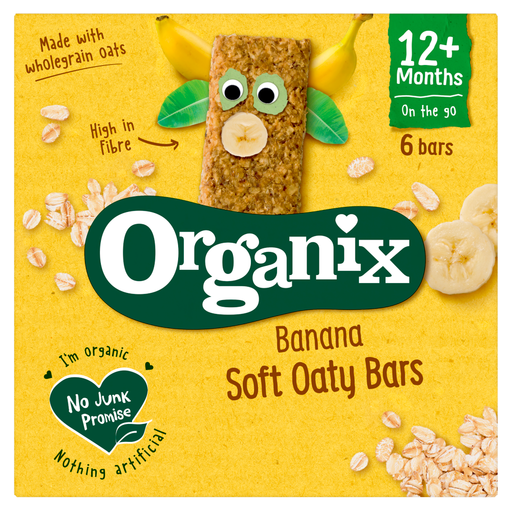 No image available
The 6 x 23g format gives you a stated portion size to compare for your journey. These soft bars are marketed for children aged 12+ months; check whether that portion and texture suit you, along with the current pack’s organic and allergen information.
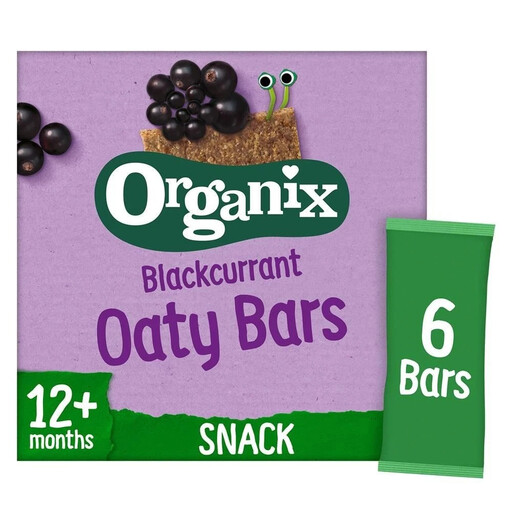 No image available
This blackcurrant variant is named as organic and comes as 6 x 23g soft bars for children aged 12+ months. If considering it for your own journey, check the exact pack’s certification information, nutrition and allergens, as well as whether the portion suits you.
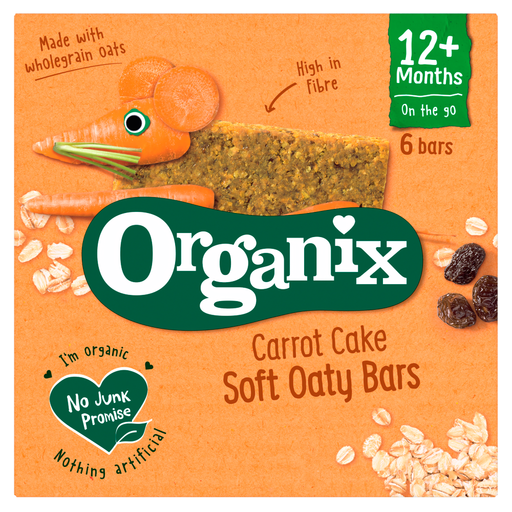 No image available
This is a 138g pack of soft oat bars marketed for children aged 12+ months. Check the number and size of bars on the pack before planning a train snack, and verify its organic claim, nutrition and allergens on the exact variant.
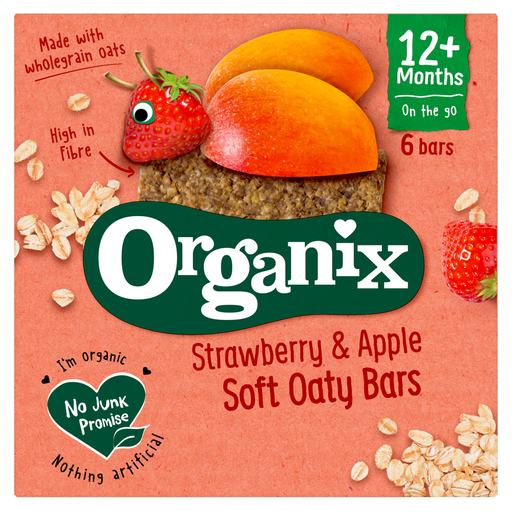 No image available
The 6 x 23g pack makes the size of each bar clear when planning what to carry. It is marketed for children aged 12+ months, so consider the soft texture and portion size, and check the precise organic claim, nutrition and allergens before choosing it.
 No image available
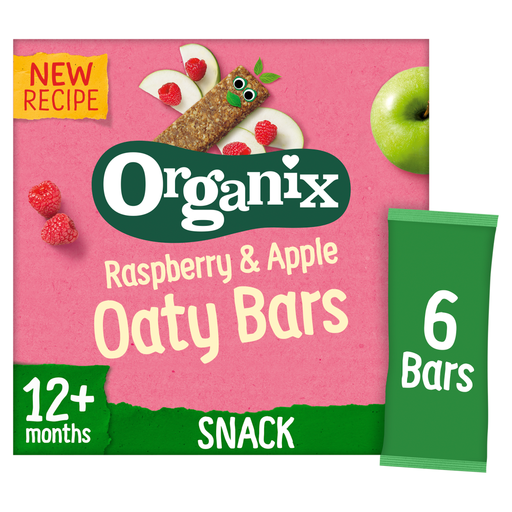
This raspberry-and-apple option is sold as 6 x 23g soft bars for children aged 12+ months. For a train journey, compare that portion with what you intend to eat and read the exact pack’s organic, nutrition and allergen information.
Organic food labelling must meet production and certification rules. The UK Department for Environment, Food & Rural Affairs says a food labelled or described as organic generally needs at least 95% organic agricultural ingredients and certification through an approved control body; where the proportion is lower, organic wording is restricted to the ingredients list. Check the claim on the exact bar rather than assuming it applies across a range.
No: organic status and sugar content are separate product attributes. Compare total sugars on the exact bars’ nutrition panels per 100g, then check the amount per bar. Action on Salt & Sugar’s November 2025 audit classified 37% of 458 snack bars from 10 major UK retailers as high in sugars under UK front-of-pack thresholds; that figure is not a finding about organic bars alone.
Use the nutrition figures per 100g for a like-for-like comparison, then read the values per bar or stated serving to understand the portion you plan to eat. The NHS notes that prepacked food labels provide information per 100g and may also show it per portion.
No. Organic labelling concerns production and ingredient rules, not whether a bar is vegan or gluten-free. Check those claims and the ingredients on the exact variant; a claim about one product range does not establish the attributes of every bar from the same brand.
Read the current pack’s ingredients, highlighted allergens and any precautionary allergen wording for the exact flavour you will carry. Do not rely on a previous purchase or a picture of a different pack when an ingredient or allergen matters to you.