Organic-first snack packers
If organic status is the reason for buying, check the claim and certification information for the exact bar before comparing flavours or pack sizes. Descriptions such as “natural” answer a different question.


Start with an organic claim on the exact bar rather than treating “natural”, “vegan” or “no added sugar” as proof. For a road trip, choose a format that fits the people travelling and the portion you want to pack, then check the current pack’s ingredients, allergen statements, nutrition and storage instructions; organic status does not settle those questions.
If organic status is the reason for buying, check the claim and certification information for the exact bar before comparing flavours or pack sizes. Descriptions such as “natural” answer a different question.
Ingredients and precautionary allergen statements matter for each flavour and pack. An organic or vegan label does not establish that a bar meets a particular allergy-related restriction.
A small oat-and-fruit bar and a larger protein bar serve different packing needs. Compare the stated serving size and nutrition on a consistent basis rather than relying on the format name.
Check organic status on the exact product first, then narrow the choice by dietary fit, portion and journey conditions.
| Priority | What to check | Your needs |
|---|---|---|
| Organic status | Look for an organic claim and certification details for the exact product. The UK Department for Environment, Food & Rural Affairs says food labelled organic must meet organic-production and certification rules; “natural” and “vegan” are not substitutes. | I’m choosing an organic bar, so I want that claim established before comparing other features. |
| Allergens | Read the current ingredients and any “may contain” statement for the chosen flavour. The Food Standards Agency explains that precautionary allergen labelling can signal possible unintended allergen presence. | If someone travelling has an allergy or another dietary restriction, I need to check the particular pack—not assume another flavour has the same labelling. |
| Portion and nutrition | Check the bar weight, sugars and protein per serving, then use per 100g figures to compare different sizes. NHS food-label guidance explains that nutrition information is given per 100g and may also be given per portion. | A smaller bar might suit a brief stop; for a longer journey, I want to know what each packed portion contains. |
| Storage | Follow the bar’s storage instructions and keep it out of direct sun where the pack requires this. Treat chilled picnic food separately: UK government heatwave guidance advises using a cool bag for food that needs to stay cold. | I want snacks that fit the journey without assuming chilled food and sealed bars can be packed in the same way. |
Natural ingredients, wholegrains, vegan suitability and no added sugar describe different characteristics. UK organic labelling has production and certification conditions, according to the Department for Environment, Food & Rural Affairs.
Check the organic claim and certification information on the exact bar before comparing flavour or nutrition.
Different bar sizes can make per-bar figures hard to compare directly. A “no added sugar” claim also does not tell you the total sugars stated in the nutrition declaration.
Compare like-for-like per 100g figures, then check the figures for the portion you intend to pack. NHS food-label guidance describes both bases.
An organic or vegan bar can still contain an allergen or carry a precautionary statement. The Food Standards Agency says that statement communicates possible unintended allergen presence.
For an allergy-related restriction, read the current ingredients and precautionary labelling for every flavour you choose.
Food that needs refrigeration has different storage requirements from a sealed bar intended for ambient storage. UK government heatwave guidance warns that food-poisoning bacteria can multiply faster at higher temperatures.
Follow each bar’s storage instructions, and use a cool bag for chilled picnic food when travelling in hot conditions.
These examples illustrate different product attributes; a brand name alone does not establish organic status or dietary suitability across its range.
FREEE’s Chocolate Chip Oat Bars are presented on its product page as organic, with Soil Association, vegan and gluten-free certification.
Equal Exchange UK lists the Date & Cocoa 40g bar as vegan and certified organic by the Soil Association and EU Organic.
BodyMe describes its organic vegan protein-bar range as 60g bars containing 16g plant protein from three plant proteins.
nakd. describes its fruit-and-nut bars as containing no added sugar, syrups or artificial ingredients.
TREK describes protein flapjacks with 9g plant protein and high-protein bars with 15g plant protein.
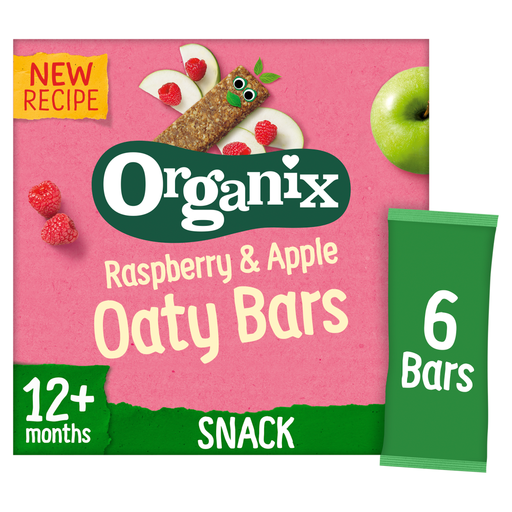
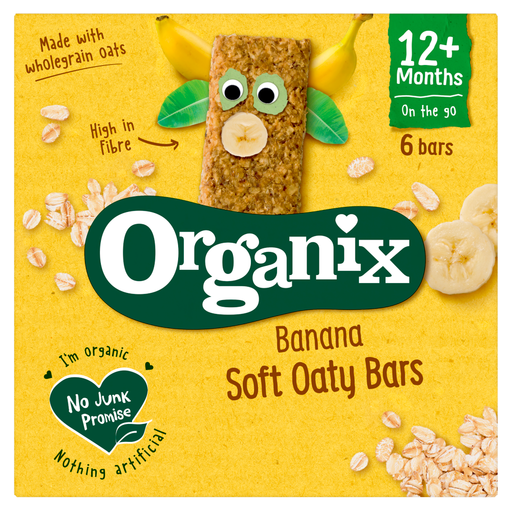
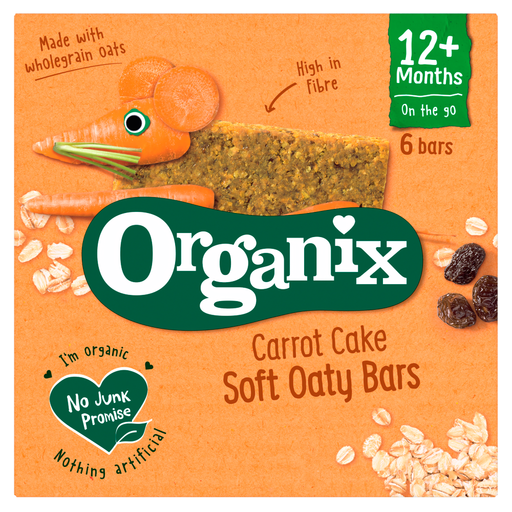
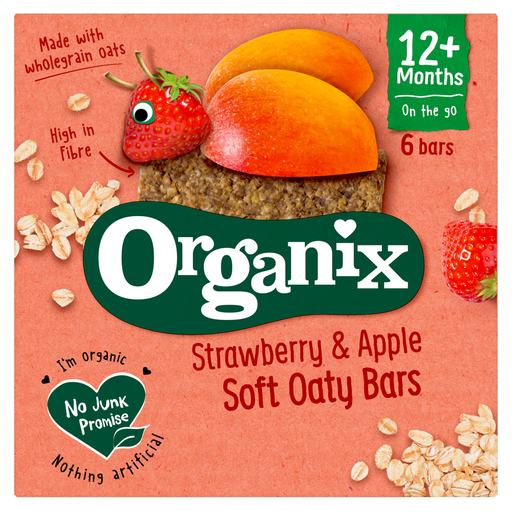
These Organix soft oat-bar options are labelled for children aged 12 months and over. Their small-bar format may suit a family road trip; compare the exact pack’s organic information, allergens and portion size before choosing them for other travellers.
 No image available
Six 23g bars provide small portions for packing on a family journey. This is a 12+ months product; check the current pack’s organic and allergen information, including its oat ingredients and any precautionary statements.
 No image available
The six 23g bars are a small-portion option for a family trip. The product is labelled 12+ months; check the current pack’s organic information and its oat and precautionary allergen labelling.
 No image available
The name identifies these as organic soft oat bars in six 23g portions for ages 12+ months. Check the pack’s certification information and allergen statements before adding them to a shared snack bag.
 No image available
This 138g pack is labelled for ages 12+ months. If you are choosing it specifically as an organic road-trip snack, confirm the organic claim on the exact pack, along with its portion and allergen information.
 No image available
Six 23g bars offer small portions to pack for a family journey. This is a 12+ months product; confirm its organic information and check the current ingredients and precautionary allergen statements.
Check the organic claim and certification information for the exact product, rather than relying on “natural”, “vegan” or “wholegrain”. The UK Department for Environment, Food & Rural Affairs says food labelled organic must meet organic-production rules, including requirements concerning organic agricultural ingredients and certification.
No. Check the total sugars in the nutrition declaration per 100g and, where shown, per bar. NHS food-label guidance explains these two ways of presenting nutrition information, which are useful when comparing differently sized bars.
No. Read the ingredients and precautionary allergen statements on the exact pack. The Food Standards Agency explains that “may contain” labelling can communicate possible unintended allergen presence; organic status does not remove that possibility.
Follow each bar’s stated storage instructions rather than applying one rule to every product. For chilled picnic food, UK government heatwave guidance advises keeping it cold in a cool bag when outside.
No organic status follows from a brand name or from attributes such as fruit-and-nut ingredients, protein or fibre. If organic is your priority, check the claim and certification information for the particular bar and flavour you plan to pack.