Organic-first home workers
You want a bar to keep by your desk and need to distinguish an organic claim from the separate question of what its nutrition label says.


Choose a certified organic snack bar if organic sourcing is your priority, but assess its nutrition separately. For a working-from-home lunch, compare values per 100g and per bar, then check the ingredients and allergens for the exact product; an organic claim does not tell you how the bar fits with the rest of your lunch.
The useful starting point is what you need the bar to do alongside lunch: meet an organic preference, fit an ingredient restriction or provide a stated amount of protein or fibre.
You want a bar to keep by your desk and need to distinguish an organic claim from the separate question of what its nutrition label says.
You need the ingredients and allergen statement for the exact flavour and pack. An organic or protein-led description does not answer that question.
You are choosing a bar to accompany lunch and want to compare its stated protein or fibre per bar, as well as the nutrition values per 100g.
Check the claim that brought you to a bar, then compare its nutrition and exact ingredients with an alternative you would actually eat.
| Priority | What to check | Your needs |
|---|---|---|
| Organic claim | Check the claim on the named product and its certification details. Read the ingredients rather than treating organic wording as a nutrition rating. | I want organic sourcing to be a defined part of this purchase. The Department for Environment, Food & Rural Affairs sets out UK requirements for using an organic food claim. |
| Nutrition and portion | Use the per-100g panel to compare different bar sizes, then check the values for the bar or portion you will eat. If traffic-light labelling appears, read it alongside the full panel. | I want to compare sugars, saturates and salt without mistaking a smaller bar for a different nutritional profile. In a Food Standards Agency and Ipsos survey of 611 adults in Northern Ireland in September–November 2024, 92% recognised traffic-light labelling and 49% actively used it when shopping for food; neither figure measures snack-bar preferences. |
| Ingredients and allergens | Read the ingredient list, declared allergens and any may-contain statement for the exact flavour and pack. Check product-specific dietary claims rather than applying a brand-wide description. | If I need to avoid particular ingredients, the precise bar matters: Joybuy lists peanuts, soya and milk for Nature Valley Protein Peanut & Chocolate and warns that it may contain nuts. |
| Protein or fibre | Compare the stated amount per bar and the bar weight. Check any protein, fibre or no-added-sugar positioning against the current nutrition panel and ingredients. | A stated protein or fibre amount may matter more to me than an organic claim when choosing something to accompany lunch. It does not, by itself, describe the whole meal. |
Organic labelling and a bar’s sugars, saturated fat and salt answer different questions. Action on Salt and Sugar classified 64% of the 458 snack bars it reviewed across 10 major UK retailers in 2025 as ‘less healthy’ under the Government Nutrient Profiling Model; that category finding does not describe every organic bar.
Check the organic claim, then compare the full nutrition panel with the other bar you are considering.
A lower per-bar figure can reflect a smaller bar. The NHS explains that nutrition labels give values per 100g and may also give them per portion.
Compare per 100g first, then use the full bar’s weight and values to understand the portion you plan to eat.
FREEE describes its named Chocolate Chip Oat Bar as made without the top 14 allergens, while the Joybuy listing for Nature Valley Protein Peanut & Chocolate declares peanuts, soya and milk. Neither description applies automatically to another flavour.
Read the current ingredients, allergen declaration and may-contain statement for the exact pack before ordering.
These examples show how different brands describe their bars; check the named product rather than extending a claim across every flavour or range.
FREEE presents its Chocolate Chip Oat Bar as an organic, gluten-free option.
MadeGood describes its snacks as certified organic and says they are made in a dedicated nut-free facility.
Graze describes snacks with plant-protein, fibre or vitamin-and-mineral positioning.
Nature Valley offers protein-led bars alongside other snack-bar formats.
Bio&Me describes its flapjack oat bars as vegan and gluten-free, with a no-added-sugar claim.
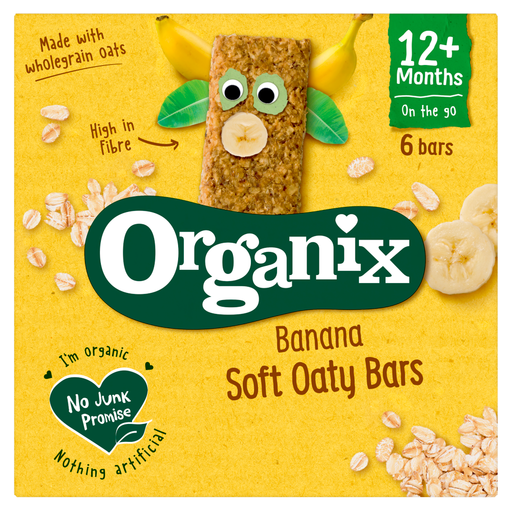
These Joybuy options include protein-led bars and an Organix banana oat bar labelled for children aged 12 months and over. Compare their stated purpose with your working-from-home lunch needs rather than treating every product here as an organic adult lunch option.
 No image available
Consider this salted caramel nut variant if you are comparing protein-led bars to accompany lunch. The pack contains four 40g bars; check its current nutrition and allergen label for this flavour.
 No image available
This is a banana oat-bar option labelled for children aged 12 months and over, rather than an adult-focused lunch bar. The pack contains six 23g bars; check the exact pack if an organic claim or dietary restriction is central to your choice.
 No image available
This is a protein-led choice if that stated nutrient matters more to you than an organic claim. The pack contains four 40g bars; Joybuy lists 10.24g protein per serving and declares peanuts, soya and milk, with a may-contain-nuts warning.
 No image available
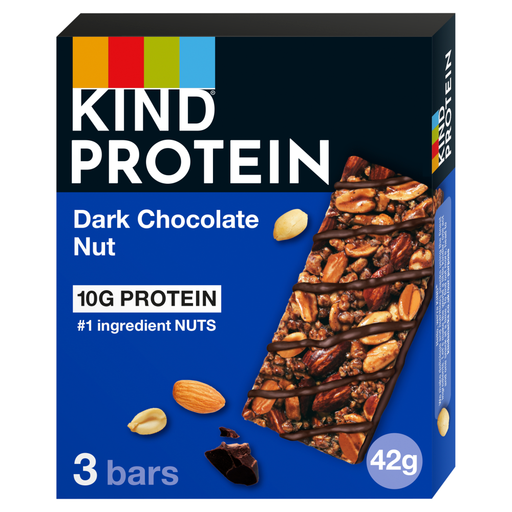
Consider this dark chocolate and nut variant when comparing protein-led bars for a lunch snack. The pack contains three 42g bars; check the current nutrition panel and exact nut and other allergen declarations before choosing it.
 No image available
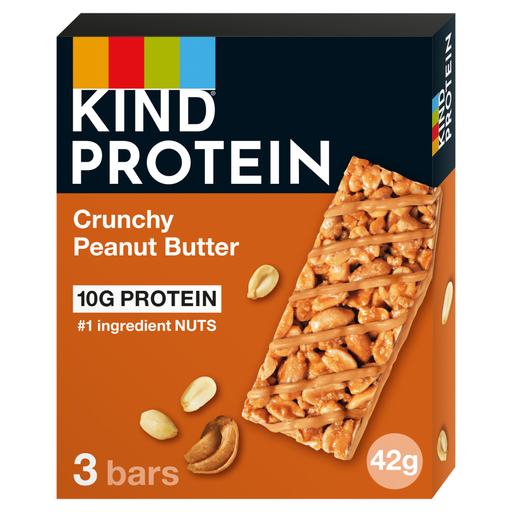
This crunchy peanut butter variant is another protein-led bar to compare with lunch. The pack contains three 42g bars; read its own nutrition panel and allergen statement rather than applying details from the dark chocolate variant.
Look for an organic claim and certification information for the named product, not just organic-sounding wording around its ingredients. The Department for Environment, Food & Rural Affairs publishes the UK guidance on organic food labelling; nutrition and allergens still need separate checks.
No. Organic status does not give the bar’s sugar value. Read the nutrition panel for the exact product and compare per 100g as well as the amount in the bar you intend to eat.
Compare their per-100g nutrition values first, then check the values for each full bar or your intended portion. The NHS notes that labels may show both per-100g and per-portion information, and the stated portion need not be the amount you eat.
Read the ingredients, declared allergens and may-contain statement for the exact flavour and pack. For example, Joybuy’s Nature Valley Protein Peanut & Chocolate listing declares peanuts, soya and milk and says it may contain nuts; do not apply that statement to another variant without checking it.