What should you check before choosing?
Start with any non-negotiable organic or dietary requirement, then compare the exact bars by serving size, ingredients and the nutrition figures that matter to you.
| Priority | What to check | Your needs |
|---|
| Organic status |
Look for an explicit organic claim and certification information for the food. The Department for Environment, Food & Rural Affairs says UK organic food requires approved-control-body certification and at least 95% organic agricultural ingredients. |
Organic production is essential to my choice; a “natural” description alone will not answer that question. |
| Ingredients and allergens |
Read the exact flavour’s ingredients, highlighted allergens and any “may contain” statement. Check vegan or gluten-free claims separately from organic status. |
I need to avoid particular ingredients, so another flavour’s label cannot stand in for the bar I am buying. |
| Nutrition per serving |
Compare sugars and fibre on the same serving basis, alongside bar size. FREEE lists 8.0g sugars and 4.6g fibre per 35g Apricot & Chia bar, versus 9.3g sugars and 5.2g fibre per 35g Cranberry bar. |
For my tea break, I want to compare the actual bar I would eat rather than assume every organic oat bar has the same figures. |
| Protein-led alternatives |
Check protein per bar and the exact range. TREK states 9g plant-based protein for its Protein Flapjacks; a protein figure does not establish organic certification. |
I may choose by a stated protein amount instead, if organic status is not essential. |
| Pack and portion |
Check the number and size of bars, whether the format suits carrying, and the seller’s current availability for the chosen flavour. |
A portable bar suits my afternoon routine, but I still want a portion and format that work for me. |
Brand and product-range references
A brand’s different ranges can answer different buying needs; check organic and dietary claims on the particular product rather than applying them across a whole brand.
FREEE
An oat-bar range to examine when certified organic status matters.
- FREEE identifies its Apricot & Chia, Banana & Chocolate Chip, and Cranberry oat bars as Soil Association certified.
- Organic certification does not make the flavours nutritionally identical; check the stated sugars and fibre per bar.
nākd.
A fruit-and-nut option when those ingredients matter more to you than an established organic claim.
- nākd. says its fruit-and-nut bars have no added sugar or syrups and are suitable for vegans.
- Those statements do not establish that a particular bar is certified organic; check its pack if organic status is required.
TREK
A range to consider when a stated protein amount takes priority over organic status.
- TREK states that its Protein Flapjacks provide 9g plant-based protein and its High Protein bars provide 15g.
- A protein figure does not verify an organic claim for either range.
Nature Valley
An oat- and protein-bar brand for shoppers not requiring organic status.
- Nature Valley states that its Protein + Fibre range provides 7g protein per bar.
- Nature Valley says none of its current products are organic.
Eat Natural
A fruit-and-nut format for shoppers comparing ingredients and dietary suitability by flavour.
- Waitrose lists the Almond & Apricot yoghurt-coated bar as free from cereals containing gluten.
- That bar contains almonds and milk ingredients and lists possible cross-contact with other nuts, peanuts and soya.
Graze
An oat-bar multipack option to assess by its exact product label.
- Waitrose lists Graze Lemon Blueberry Oat Boosts as a 4 × 30g multipack.
- A snack-bar listing alone does not establish organic certification for that product.
Alpen
Alpen’s muesli information illustrates why cereal ingredients and organic status should be checked separately; it is not a snack-bar recommendation here.
- Alpen lists wholegrain wheat and rolled oats in its Original muesli.
- That muesli also lists milk ingredients and nuts, and its details cannot establish the ingredients or organic status of an Alpen snack bar.
Organix bars on Joybuy
These Organix soft oaty bars are marketed for children aged 12 months and over. Their 23g-bar formats or stated pack size may differ from what an adult wants with afternoon tea; check the exact pack’s organic claim, certification, ingredients and allergens before choosing one.
 No image available
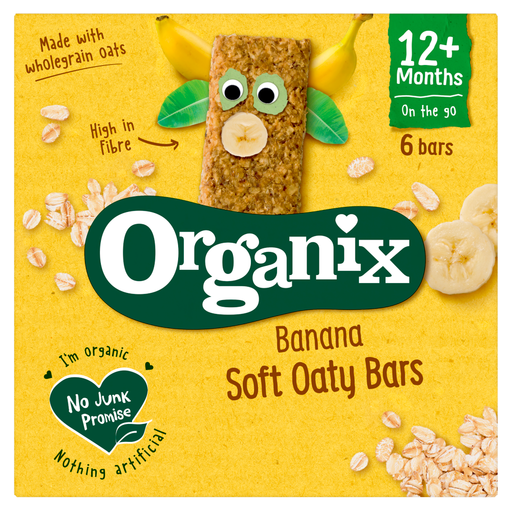
Organix Banana Soft Oaty Bars, 12+ months, 6 × 23g
Six 23g bars offer a small-bar format for carrying. This product is marketed for toddlers rather than an adult tea break; check its organic claim and current allergen statement, including information about tree nuts, soya and milk.
 No image available
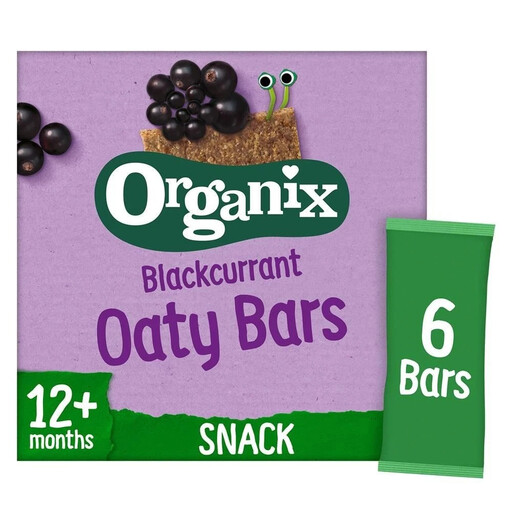
Organix Blackcurrant Organic Soft Oat Snack Bars, 12+ months, 6 × 23g
This six-pack explicitly describes the 23g bars as organic; check the exact pack’s certification details. It is marketed for toddlers, and its allergen information says it may contain traces of tree nuts, soya and milk.
 No image available
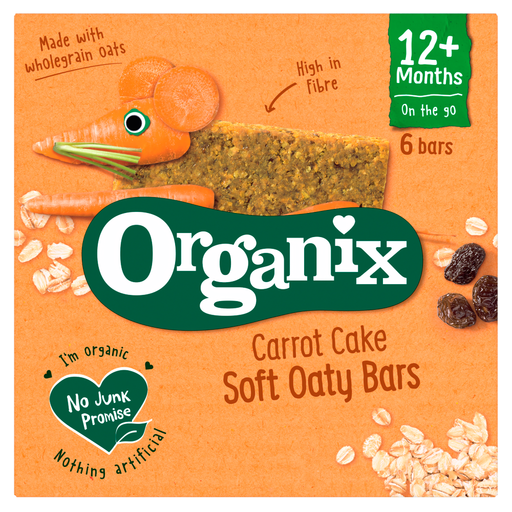
Organix Carrot Cake Soft Oaty Bars, 12+ months, 138g
The stated pack size is 138g. The bars are marketed for toddlers, so check the individual portion as well as the exact pack’s organic claim and certification; its allergen information says it may contain traces of tree nuts, soya and milk.
 No image available
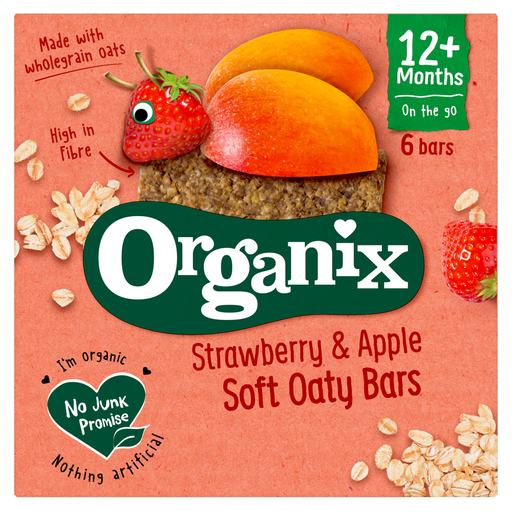
Organix Strawberry & Apple Soft Oaty Bars, 12+ months, 6 × 23g
The six 23g bars are a small-bar format marketed for toddlers. If considering them for an adult tea break, check the portion, organic claim and certification on the exact pack; its allergen information says it may contain traces of tree nuts, soya and milk.
 No image available
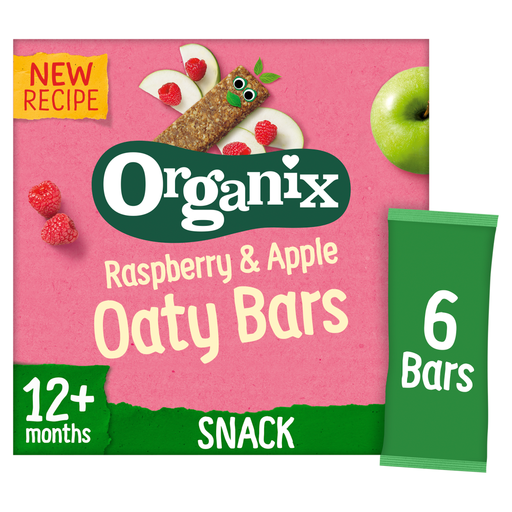
Organix Raspberry & Apple Soft Oaty Bars, 12+ months, 6 × 23g
These six 23g bars are marketed for toddlers, which makes the portion worth checking for an adult afternoon break. Check the exact pack’s organic claim, certification, nutrition declaration and allergen statement before buying.
Frequently asked questions
What does “organic” mean on a UK snack bar?
The Department for Environment, Food & Rural Affairs says a food described as organic must meet organic production rules, have at least 95% organic agricultural ingredients and have approved-control-body certification. Check the claim and certification information for the particular bar.
Does “natural” mean a bar is organic?
No. A description such as “natural”, or a claim of no added sugar, does not establish organic certification. Check for an explicit organic claim and certification information rather than treating the ingredient style as proof.
Are certified-organic oat bars necessarily low in sugar?
Organic certification does not establish a bar’s sugar content. FREEE lists 8.0g sugars per 35g Apricot & Chia bar and 9.3g per 35g Cranberry bar; compare the nutrition declaration for the flavour and serving size you intend to buy.
Can an organic bar also be vegan or gluten-free?
Yes, if the exact product carries the relevant claims, but organic status alone does not establish either one. FREEE identifies specific certified-organic oat bars as vegan and certified by Coeliac UK; check the current ingredients and allergen statement for your chosen flavour.
Will an individually wrapped bar suit an adult afternoon break?
It may suit carrying, but check the serving size and intended consumer. The Organix bars shown here are marketed for children aged 12 months and over, with 23g bars stated for several variants; that positioning does not make them an adult-focused snack.


