Organisers serving guests with different dietary requirements
Collect requirements before choosing a soup. Check the ingredients and allergen declaration for each product rather than treating its organic label as a vegan or free-from claim.


For a conference menu, choose an organic soup whose documented ingredients and allergen information match the attendees’ requirements: a free-from tomato soup may suit some mixed dietary groups, while a plant-based lentil soup offers a different recipe. A creamy organic tomato soup can work where milk is acceptable. Before ordering tins in quantity, confirm current labels, portions, supply and heating arrangements; an organic label alone does not establish vegan or allergen suitability.
Collect requirements before choosing a soup. Check the ingredients and allergen declaration for each product rather than treating its organic label as a vegan or free-from claim.
Set a serving portion, work out the number of tins needed and confirm supply for the event. Check that the venue can heat the soup and monitor temperatures during service.
Look for a product-specific vegan declaration. Waitrose & Partners lists Mr Organic Tomato & Lentil Soup as suitable for plant-based diets, whereas Tesco Groceries lists milk in Heinz Organic Cream of Tomato Soup.
Choose when: Ocado’s listed exclusions for Free & Easy Organic Tomato Soup match the specific dietary requirements you need to serve.
Plan for: Its 400g retail can has two declared servings; confirm the current label and the quantity available for your event.
Choose when: A plant-based lentil recipe fits the menu; Waitrose & Partners lists Mr Organic Tomato & Lentil Soup as suitable for plant-based diets.
Plan for: Set your own service portion and check the current allergen declaration rather than assuming a broad free-from profile.
Choose when: A creamy tomato option fits the menu and milk is acceptable to the guests receiving it.
Check before ordering: Tesco Groceries lists milk in Heinz Organic Cream of Tomato Soup, so it does not meet vegan or dairy-free requirements.
| Priority | What to check | Your needs |
|---|---|---|
| Organic labelling | Check the current product label and certification details. Under Defra’s UK guidance, processed food labelled organic must meet certification rules and contain at least 95% organic agricultural ingredients. | I need a product labelled organic, not one described only with terms such as ‘natural’. |
| Dietary fit | Read the exact product’s ingredients, allergen declaration and any vegan or free-from claims. Food Standards Agency guidance covers allergen information and allergen management in catering. | Guests’ requirements determine which soup I can serve; ‘organic’ does not tell me whether it contains milk or other allergens. |
| Portions | Check the pack weight and any declared serving size. Ocado lists two servings in a 400g Free & Easy can; Tesco Groceries gives nutrition per half can for its 400g Heinz soup. | I want to set a portion for this lunch service before calculating how many tins to order. |
| Recipe | Compare ingredient lists for the kind of soup you intend to serve. Waitrose & Partners lists a tomato and lentil option; Tesco Groceries lists cream containing milk in the Heinz tomato soup. | A lentil recipe might fit my plant-based menu, while a creamy tomato recipe is an option only for guests who can have milk. |
| Supply and service | Confirm the full quantity, delivery window and permitted substitutions. Check preparation directions and the venue’s heating and temperature-monitoring facilities; the Food Standards Agency’s MyHACCP guidance addresses these facilities. | I need enough of the agreed soup on the day, with equipment and staff ready to serve it. |
An organic soup can contain animal-derived ingredients or allergens. Tesco Groceries lists milk in Heinz Organic Cream of Tomato Soup; Ocado lists separate vegan and free-from claims for the Free & Easy tomato soup.
Collect dietary requirements, then compare them with the current ingredient and allergen declaration for each exact product.
A 400g tin is not automatically one lunch serving. Ocado declares two servings for the Free & Easy can, while Tesco Groceries uses a half-can nutrition reference for the Heinz soup.
Decide whether soup is a starter or a lunch component, set the service portion and calculate the order from expected attendance.
A product listing identifies a possible menu choice but does not establish that the full quantity can be delivered when needed.
Confirm quantity, delivery date and substitutions before committing to the menu. Keep an alternative that meets the same dietary requirements.
Food Standards Agency guidance addresses allergen information in catering, while its MyHACCP guidance covers facilities for heating and monitoring food temperatures. The packaged product does not remove those service tasks.
Keep current product information available to the service team and confirm the venue’s equipment and temperature-monitoring procedures before choosing heat-and-serve tins.
Ocado lists a Free & Easy organic tomato soup with product-specific vegan and free-from claims that may help when planning for particular dietary requirements.
Waitrose & Partners lists Mr Organic Tomato & Lentil Soup as an organic option suitable for plant-based diets.
Tesco Groceries lists Heinz Organic Cream of Tomato Soup as a 400g creamy tomato option for menus where milk is acceptable.
These organic-labelled soup options feature bean-based recipes for conference menu planning. Check each product’s current label, portion guidance and delivery details before placing an event order.
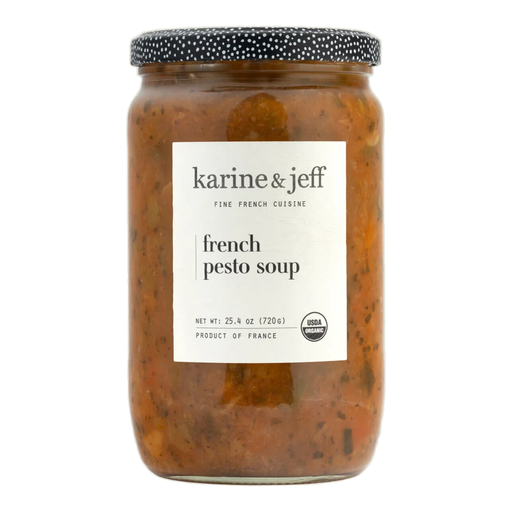 No image available
For a menu featuring beans and vegetables, the 680g pack provides a stated weight for initial quantity planning. The listing warns of possible wheat, soya and celery traces; compare the current label with guests’ requirements, and confirm serving guidance and heating directions before ordering.
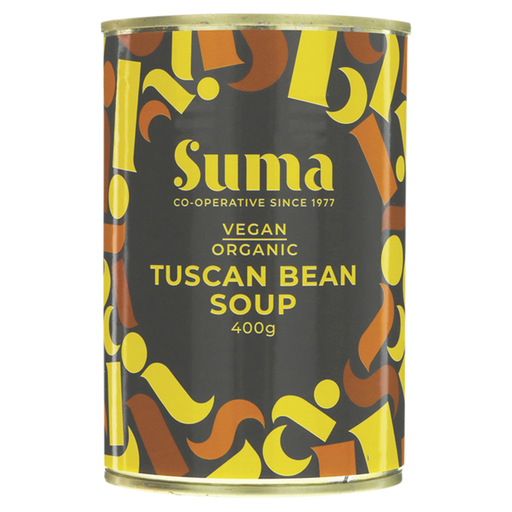 No image available
This 400g bean soup is an option when a bean-based recipe fits the menu. Its listing identifies celery as an allergen; check the current label, then confirm portions and heating directions before working out the event quantity.
No. Defra’s organic labelling guidance concerns organic production and certification, not vegan or allergen suitability. Tesco Groceries lists milk in Heinz Organic Cream of Tomato Soup, while Ocado lists separate vegan and dairy-free claims for its Free & Easy organic tomato soup. Check the current label of the exact product ordered.
Have accurate information for the soup being served, including its current ingredient and allergen declaration. Food Standards Agency guidance covers allergen information for prepacked and non-prepacked food in catering and the management of allergens during preparation; make sure the service team can communicate the relevant information to guests.
Set an event serving portion and calculate the tins needed from the expected number of servings. Ocado declares two servings per 400g Free & Easy can, while Tesco Groceries gives a half-can nutrition reference for its 400g Heinz soup. Do not assume every 400g product declares the same serving count.
Use it to shortlist, then confirm the current label, full order quantity, delivery window and substitution arrangements. Check preparation directions and the venue’s heating and temperature-monitoring facilities before committing to the soup service.