Care-home catering teams
Staff choosing a soya drink for cereals, hot drinks or cooking need to check the current allergen declaration and plan how cartons will be stored and used after opening.


Choose an organic soya drink for a resident who wants it only when it fits their assessed nutrition plan and allergy requirements; organic status does not make it interchangeable with dairy milk or a fortified alternative. The UK SACN/COT’s 2025 assessment states that organic-labelled plant drinks in the UK cannot be fortified with nutrients, so check the carton and seek appropriate dietetic or clinical advice when a resident’s plan depends on particular nutrients or nutrition support.
Staff choosing a soya drink for cereals, hot drinks or cooking need to check the current allergen declaration and plan how cartons will be stored and used after opening.
An organic preference can be accommodated only alongside each resident’s assessed needs. The Care Quality Commission says providers must assess nutritional needs and provide food that meets them.
When poor intake or unplanned weight loss is a concern, the resident’s nutrition care plan should determine the drink’s role rather than an organic label or a routine menu choice.
Start with the resident’s care plan, then check the delivered carton for nutrient declarations, allergens and instructions for use after opening.
| Priority | What to check | Your needs |
|---|---|---|
| Resident’s plan | Check the assessed food and drink requirements and whether the drink has a place in meals or recipes. Use the appropriate care-plan pathway when nutrition support is required. | I want to offer an organic choice without replacing food or drink that a resident’s plan requires. |
| Organic status and nutrients | Check the organic declaration and the nutrition panel on the exact carton, including energy and protein per 100 ml. Check separately for calcium, vitamin D, vitamin B12 and iodine. | If I am replacing dairy milk or a fortified soya drink, I need to know which nutrients the new carton declares. The UK SACN/COT’s 2025 assessment states that UK organic-labelled plant drinks cannot be fortified with nutrients. |
| Allergens | Read the current soya declaration and any precautionary allergen wording. Keep menu records and handling arrangements aligned with the pack. | I need staff to identify soya-containing drinks and protect food for residents with relevant allergies from cross-contact, as advised by the Food Standards Agency. |
| Carton use | Check unopened storage conditions, whether shaking is instructed, and the stated refrigeration and use period after opening. | Our service needs a carton size and ordering pattern that lets staff date, refrigerate and use each opened carton as instructed. |
Replacing a fortified drink with an organic one can change the nutrients a resident receives. The UK SACN/COT’s 2025 assessment states that organic-labelled plant drinks in the UK cannot be fortified with nutrients.
Compare the exact cartons and review the resident’s plan if calcium, vitamin D, vitamin B12 or iodine from the previous drink matters.
An organic soya drink chosen for everyday service does not, by itself, address a resident’s assessed requirements when intake or weight is a concern.
Follow the resident’s nutrition care plan and the appropriate food-first, dietetic or prescribed-support pathway.
Soya is an allergen, and individual cartons may carry further allergen warnings. Food Standards Agency guidance calls for allergenic ingredients to be controlled and other food to be protected from cross-contamination.
Check the delivered pack, keep resident and menu information current, and follow the home’s storage and preparation controls.
Instructions for refrigeration and use after opening differ by product. A routine that works for one carton should not be applied to another without checking its label.
Date opened cartons and follow their own storage and use instructions when planning orders and service.
Cartons that cannot be used within their stated opened-life period may create avoidable food waste.
These examples illustrate different carton labels and nutrient declarations; a brand name alone does not establish what a delivered product contains.
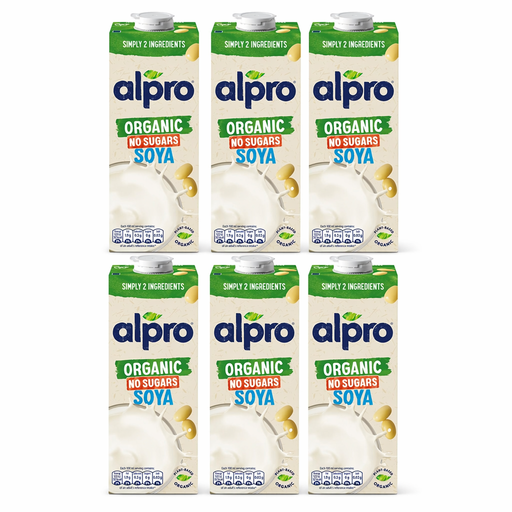
Sainsbury’s lists Alpro Organic No Sugars Soya Drink as a UHT organic soya drink.
Waitrose lists Plenish Organic No Added Sugar Soya as an organic soya drink.
Tesco describes Rude Health Soya Drink with Calcium as organic and containing calcium.
Tesco Unsweetened Soya Drink is a non-organic option whose listing names added calcium, iodine, vitamin D2, vitamin B12 and riboflavin.
Waitrose lists Essential Unsweetened Soya Drink as a non-organic UHT drink with added calcium, vitamin D, vitamin B12, vitamin B2 and iodine.
This organic soya drink is an option for routine care-home dining where the resident’s plan permits it. Check the delivered carton before deciding how to serve it.
 No image available
An organic soya drink to consider for routine service when it fits a resident’s assessed plan. It contains soya; check the current carton’s nutrient declaration and storage instructions before serving.
Do not assume that it does. The UK SACN/COT’s 2025 assessment says plant-drink nutrient content varies and organic-labelled plant drinks in the UK cannot be fortified with nutrients. Check the exact carton against the resident’s assessed diet before making a substitution.
Not without checking individual requirements. The Care Quality Commission says providers must assess nutritional needs and provide food to meet them; staff should also check the resident’s preferences, allergy information and care plan before service.
Use the resident’s assessed nutrition plan rather than treating a routine organic soya drink as a stand-alone response. Care-home nutrition guidance from Norfolk and Waveney Integrated Care System calls for residents’ needs to be assessed and reviewed, with the appropriate food-first or clinical pathway used when required.
Follow that carton’s instructions for shaking, refrigeration and use after opening. Date it when opened so staff can apply the correct instructions during later meal services.
Check the current pack for soya and any further allergen warnings, then keep menu and resident records aligned with it. Food Standards Agency guidance says allergenic ingredients should be carefully controlled and other food protected from cross-contamination.