An organic, unsweetened soya drink can suit an adult who prefers organic ingredients, but an organic claim does not tell you whether the drink is fortified. If a child aged one or over will use it as a dairy alternative, check the carton for calcium and iodine; Kingston and Richmond NHS Foundation Trust notes that many organic alternatives are not fortified. NHS guidance says babies should continue to receive breast milk or first infant formula until at least age one, so a standard soya drink must not replace either.
Who is the drink for?
A parent choosing an everyday drink
If you want soya drink for cereal, tea, coffee or cooking, choose the ingredients and sugar profile you prefer. If it regularly replaces dairy in your diet, check the carton for the nutrients you need rather than relying on its organic claim. The NHS says breastfeeding alone does not require a special diet.
A family with a child aged one or over
If the child avoids dairy, look beyond the word ‘organic’ and check the drink’s fortification, particularly calcium and iodine. Kingston and Richmond NHS Foundation Trust cautions that many organic alternatives are not fortified; the child’s wider diet and any professional dietary advice also matter.
A parent managing a possible allergy
A household soya drink is not a substitute for infant feeding advice. Soya is itself an allergen, as the Food Standards Agency identifies, so seek appropriate clinical advice before changing a baby’s milk because of a suspected allergy.
What should you check before buying?
Decide who will drink it first, then compare the current cartons for fortification, ingredients and allergens.
Organic drink for adult use
Choose when: Organic ingredients and an unsweetened drink are your priorities for everyday adult use.
Bear in mind: Organic status alone does not establish calcium, iodine or vitamin fortification.
Fortified drink for family use
Choose when: A child aged one or over may use the drink as a dairy alternative and the carton confirms the relevant fortification.
Bear in mind: The Tesco and M&S fortified examples described here are not presented as organic; fortification alone does not settle every dietary or allergy question.
| Priority |
What to check |
Your needs |
| Age and use |
Identify whether the drink is for an adult, a child aged one or over, or use in cooking. NHS guidance says breast milk or first infant formula should continue until at least age one; a standard soya drink is not a replacement. |
I need a household drink, not something to take the place of my baby’s milk. |
| Fortification |
Read the current carton for calcium, iodine and relevant vitamins. Kingston and Richmond NHS Foundation Trust notes that many organic alternatives are not fortified. |
If my child will regularly have a dairy alternative, I want to know which nutrients that particular drink provides. |
| Ingredients and sugar |
Compare the organic claim, ingredient list and sugar declaration separately. ‘No added sugar’ and the stated amount of sugars are different label details. |
For cereal or drinks, I may prefer a short ingredient list or an unsweetened option without assuming all soya drinks are alike. |
| Allergens and current label |
Check the soya allergen declaration and the physical carton’s ingredients and nutrition information. Tesco cautions that food products can be reformulated. |
Where an allergy or a particular nutrient matters to my family, I need to check the carton I am actually buying. |
Mistakes to avoid
-
Using an organic soya drink instead of infant formula
A standard soya drink does not serve the same role as breast milk or first infant formula for a baby under one. The NHS advises continuing breast milk or first infant formula until at least that age.
Follow age-specific feeding guidance, and seek clinical advice if your baby needs a specialist formula.
-
Assuming ‘organic’ means fortified
An organic drink may not supply the calcium or other added nutrients you are looking for in a dairy alternative. Kingston and Richmond NHS Foundation Trust notes that many organic alternatives are not fortified.
Check the carton for calcium, iodine and relevant vitamins when those nutrients matter to the intended diet.
-
Assuming soya suits every milk-allergy plan
Soya is an allergen, according to the Food Standards Agency. Avoiding cow’s milk does not, by itself, establish that a soya drink is suitable for a baby or child.
Check the allergen declaration and get appropriate clinical advice for a suspected allergy.
-
Relying on an older online nutrition panel
Ingredients, allergens and fortification can change when a product is reformulated, as Tesco cautions in its product information.
Confirm the current carton’s ingredients, nutrients, allergens and storage directions before relying on an earlier listing.
Brand and product-line references
These examples illustrate different ingredient and fortification choices; a brand name alone does not establish what every carton contains.
Alpro
Alpro has an organic soya drink for shoppers comparing organic ingredients with everyday household use.
- The Alpro Organic Soya Drink listing identifies organically grown soya.
- Check the particular carton for calcium, iodine and vitamin fortification if these matter to its intended use.
Plenish
Plenish Organic No Added Sugar Soya is an organic option for shoppers who want to compare ingredient lists.
- Waitrose describes this product as made with two ingredients.
- Check its current carton for calcium and iodine before choosing it to contribute those nutrients to a child’s diet.
Tesco
Tesco Unsweetened Soya Drink is a fortified comparison for households where listed added nutrients take priority over an organic claim.
- Tesco lists added calcium, potassium iodide, vitamin B12, riboflavin and vitamin D2 for this product.
- The fortified product described here is not presented as organic; check the current label because formulations can change.
M&S Plant Kitchen
Plant Kitchen Unsweetened Soya Drink offers another product-level fortification comparison.
- Marks & Spencer lists calcium, iodine, vitamin D and vitamin B12 fortification for this drink.
- Its product information does not present this drink as organic.
Joybuy soya drink options
These options cover an organic soya drink for adult household use and a separate unsweetened, calcium-fortified drink. Check the current carton against the needs of the person who will drink it.
 No image available
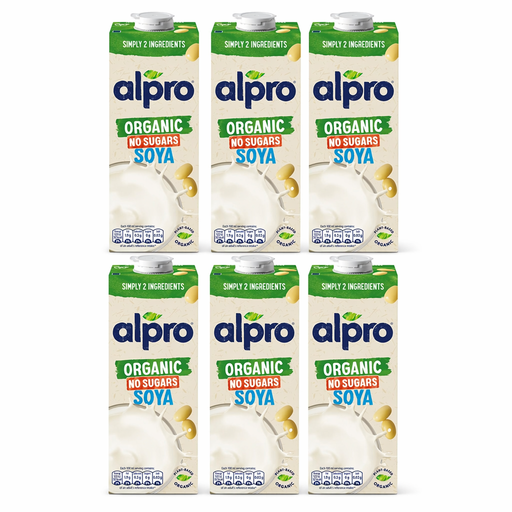
Alpro Organic Soya Drink (6)
An organic soya drink listed for everyday adult uses including cereal, tea and cooking. Its product details state 0 g sugars per 100 ml; check the carton for calcium, vitamin D and iodine if it will regularly replace dairy. Contains soya.
View on Joybuy
 No image available
Alpro Soya No Sugars Long Life Drink, 8 x 1L
An unsweetened long-life soya drink whose ingredients list includes calcium and vitamins B2, B12 and D2. If considering it for a child aged one or over, check the current carton for iodine and assess it alongside the child’s wider diet. It is not a substitute for breast milk or first infant formula.
View on Joybuy
Frequently asked questions
Can organic soya drink replace breast milk or infant formula?
No. NHS guidance says babies should continue to receive breast milk or first infant formula until at least age one. A standard soya drink is not a substitute for either; seek clinical advice if your baby has a feeding or allergy concern.
Can a child aged one or over have an organic soya drink?
An organic soya drink may be considered as part of the child’s wider diet, but choose the individual carton rather than relying on its organic claim. Check calcium and iodine fortification: Kingston and Richmond NHS Foundation Trust notes that many organic alternatives are not fortified.
Do I need to buy organic soya drink because I am breastfeeding?
No. The NHS says breastfeeding does not, by itself, require a special diet. If you choose a soya drink as a regular dairy alternative, check its ingredients and fortification against your dietary needs.
Should I switch to soya drink if my baby has a suspected cow’s-milk allergy?
Do not replace your baby’s milk with a standard soya drink without clinical advice. Babies under one still need appropriate milk feeding, and soya is itself an allergen, as the Food Standards Agency identifies.


