For a child aged 1 or over who will regularly have a soya drink instead of dairy milk, prioritise an unsweetened, calcium-fortified option: NHS guidance identifies that type of milk alternative as suitable from age 1 as part of a balanced diet. An organic soya drink can meet an organic-shopping preference, but the reviewed organic ingredient lists do not establish calcium fortification. Check the child’s allergy arrangements and the nursery’s rules before packing either type.
Who is choosing the drink?
Families using a regular dairy alternative
For a child aged 1 or over, the choice is about more than an organic label. NHS guidance identifies unsweetened, calcium-fortified milk alternatives, including soya drinks, as an option from this age as part of a balanced diet.
Organic-first nursery shoppers
An organic carton may suit a preference for organically grown soya or a short ingredient list. If the drink will regularly replace dairy milk, check its fortification separately rather than assuming organic status answers that question.
Families managing food allergies
A dairy-free description does not mean a soya drink is free from allergens. Check the actual carton against the child’s allergy plan and confirm what the nursery permits.
What matters when choosing?
Start with the child’s age and whether the drink will regularly replace dairy milk; then compare fortification, organic status and the allergen information on the carton.
Unsweetened, calcium-fortified soya
Consider when: a child aged 1 or over will regularly have the drink as a dairy alternative, in line with NHS guidance.
Check: organic status separately if it matters to you; fortification does not establish it.
Organic soya drink
Consider when: organic status is the priority and you are not relying on that claim to establish calcium fortification.
Check: the reviewed organic ingredient lists do not establish calcium fortification, so read the current nutrition panel if the drink will be a regular dairy alternative.
| Priority |
What to check |
Your needs |
| Age and regular use |
For a child aged 1 or over, look for an unsweetened, calcium-fortified drink. Check calcium on the nutrition panel rather than relying on the word “soya”. |
I’m packing a drink that will regularly replace dairy milk, so I need to consider fortification as well as flavour and ingredients. This follows NHS guidance for milk alternatives from age 1. |
| Organic preference |
Check the organic description, ingredients and sugars declaration. Read the fortification information separately; a short ingredient list does not establish added calcium. |
Organic status matters to me, but I don’t want to mistake it for evidence that the drink has the nutrients listed on a fortified carton. |
| Allergens and nursery rules |
Read the current soya and precautionary allergen statements. Check the child’s allergy plan and the nursery’s packed-lunch requirements. |
I need a carton that fits the child’s documented requirements and the nursery’s arrangements, not just one described as dairy-free. |
Checks that are easy to miss
-
Assuming organic means calcium-fortified
The reviewed organic soya drinks have ingredient lists that do not establish calcium fortification. NHS guidance specifically identifies unsweetened, calcium-fortified alternatives for children from age 1.
If the drink will regularly replace dairy milk, check its current nutrition panel for calcium before deciding whether organic status also meets your preference.
-
Reading dairy-free as allergen-free
Soya is itself an allergen. Tesco’s Plenish listing says the drink is produced in an environment that handles nuts, while M&S says its unsweetened soya drink is not suitable for people with nut or peanut allergy.
Check the exact carton against the child’s allergy plan, and confirm the nursery’s arrangements before sending it.
-
Treating a grocery drink as infant milk
NHS guidance describes unsweetened, calcium-fortified milk alternatives as an option from age 1; that advice does not make a standard soya drink an infant milk replacement.
For a child under 1, or where specialised feeding advice is needed, follow the child’s clinical feeding plan rather than selecting a nursery drink by its organic label.
-
Relying on an old product listing
The carton you buy is the relevant place to check ingredients, nutrition and allergen wording, particularly when choosing between organic and fortified formulations.
Read its label before purchase and check that the product is available when you need it for nursery.
Relevant brand and retailer ranges
These examples illustrate the organic-versus-fortified choice; a brand name alone does not establish what is in a particular carton.
Alpro
Alpro has both an organic soya drink and a separate Soya No Sugars drink.
- Alpro UK lists 120 mg calcium per 100 ml, iodine and vitamins D2, B2 and B12 for its Soya No Sugars Drink 1L.
- The reviewed organic drink’s stated soya-base ingredients do not establish calcium fortification; check its current carton if that matters to the decision.
Plenish
Its reviewed organic soya drink lists spring water and organic soybeans.
- The short stated ingredient list may suit a preference for a simple organic formulation.
- The listed ingredients do not establish calcium fortification, and Tesco’s listing says it is produced in an environment that handles nuts.
Tesco Organic
The reviewed Organic Longlife Soya Drink Unsweetened is another organic UHT option.
- Tesco lists water and 9% organic soya bean as its ingredients.
- Those listed ingredients do not establish calcium fortification; check the current carton when choosing a regular dairy alternative.
M&S Plant Kitchen
Its reviewed Unsweetened Soya Drink offers a non-organic fortified route.
- M&S lists calcium, iodine, vitamin D and vitamin B12 fortification.
- M&S states that this drink is not suitable for people with nut or peanut allergy.
Joybuy soya drink options
These two options represent different nursery-lunch decisions: a No Sugars soya drink and an organic soya drink. Check the individual carton before relying on either for a child’s regular dairy alternative.
 No image available
Alpro Soya No Sugars Long Life Drink 8 x 1L
Consider this No Sugars option when choosing a regular dairy alternative for a child aged 1 or over. Alpro UK lists calcium, iodine and vitamins for its Soya No Sugars Drink 1L; check the carton in this pack for its current nutrition and allergen information, and confirm nursery arrangements before sending it.
View on Joybuy
 No image available
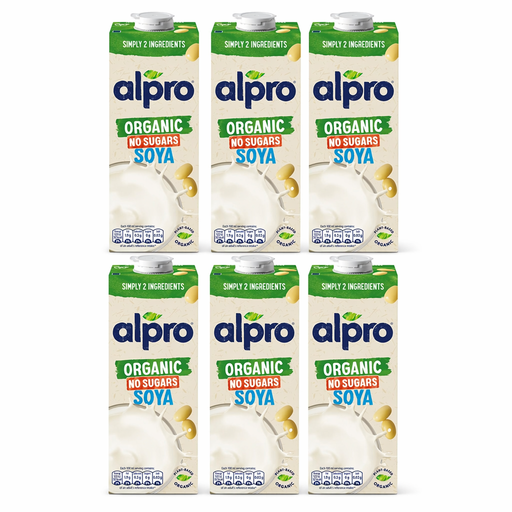
Alpro Soya Drink OG (6)
Consider this option if an organic soya drink is the priority. Before using it regularly instead of dairy milk for a child aged 1 or over, check the current carton for calcium fortification. Soya-allergy arrangements and the nursery’s rules also need checking.
View on Joybuy
Nursery lunch questions
Can an organic soya drink replace milk in a nursery lunch?
Do not rely on organic status alone if the drink will regularly replace dairy milk. For children aged 1 or over, NHS guidance identifies unsweetened, calcium-fortified milk alternatives as an option within a balanced diet. Check the organic carton’s nutrition panel for calcium rather than assuming its ingredient list establishes fortification.
Does dairy-free mean a soya drink is suitable for a child avoiding cow’s milk?
Not automatically: soya is a separate allergen. Check the exact product’s ingredients and allergen statement against the child’s documented requirements; for a diagnosed or suspected allergy, follow the child’s clinician-led plan rather than trialling a new drink at nursery.
Should a child under 1 have an ordinary soya drink instead of infant milk?
Do not treat an ordinary soya drink as an infant milk replacement. NHS guidance on unsweetened, calcium-fortified milk alternatives applies from age 1; follow age-appropriate clinical feeding advice for a younger child.
Should I ask the nursery before packing a soya drink?
Yes. Confirm its packed-lunch and allergen arrangements, including any requirements in the child’s care plan. Department for Education guidance addresses food-allergy risks in schools in England, but an individual nursery’s arrangements still need to be checked directly.


