What should you check?
Start with the child’s age and how the drink will be used; then compare the exact carton’s fortification, age advice and allergen information.
| Priority |
What to check |
Your needs |
| Age and use |
Check whether the drink is for cooking or as a main drink. NHS guidance says breast milk or first infant formula should continue until at least age 1; Frimley Healthier Together’s NHS guidance allows an appropriate fortified plant drink in cooking from around 6 months. |
I’m adding a drink to a weaning recipe, not replacing my baby’s milk feeds. If the child is older, I still need to check the carton’s age instructions for the intended use. |
| Fortification |
For a child aged 1 or over needing a dairy-free main-drink alternative, look for an unsweetened soya drink with added calcium, iodine, vitamin D and vitamin B12. NHS North West Knowledge Now identifies unsweetened, fortified soya as a preferred plant-drink type for this age group, while product-specific age warnings still apply. |
I want to compare what the drink actually contains, rather than choose by its front-of-pack description alone. |
| Organic label |
Check the ingredients and nutrition information separately from the organic claim. Frimley Healthier Together’s NHS guidance warns that not all organic versions have added vitamins and minerals; Sainsbury’s lists added calcium, iodine and vitamins for Alpro Original. |
Organic sourcing matters to me, but I don’t want to assume an organic variant has the same added nutrients as a different Alpro drink. |
| Soya allergen |
Read the soya declaration on each carton. NHS North West Knowledge Now cautions that soya may not suit some children with cow’s-milk protein allergy. |
If my child has a suspected or confirmed food allergy, I need to follow their clinician’s or dietitian’s plan before using soya as a milk alternative. |
Brand and range references
These product-line examples show why the label matters: fortification and age instructions can differ even among unsweetened soya drinks.
Alpro
Alpro has organic and non-organic soya-drink variants; compare the exact variant rather than relying on the brand name.
- Asda describes Alpro Organic Soya No Sugars as organic and lists 3.3g protein per 100ml.
- Sainsbury’s lists added calcium, iodine and vitamins B2, B12 and D2 for Alpro Original. Check the organic carton separately before assuming it has the same fortification.
Sainsbury’s
Its Unsweetened Soya Drink listing provides nutrient details alongside specific advice about children’s use.
- Sainsbury’s lists calcium at 120mg per 100ml, as well as iodine, vitamin D and vitamin B12.
- Sainsbury’s says this drink is not suitable as a main milk-drink alternative for children under 2, although it can be part of a balanced diet from age 1.
Waitrose Essential
The Essential Unsweetened Soya Drink listing specifies added nutrients and an age restriction.
- Waitrose lists added calcium, iodine and vitamins D, B12 and B2.
- Waitrose warns that this product is not suitable for children under 2, so its nutrient list alone does not establish suitability for a one-year-old.
M&S Plant Kitchen
Its Unsweetened Soya Drink is another range for comparing the nutrients stated on the pack.
- M&S describes the drink as fortified with calcium, iodine, vitamin D and vitamin B12.
- Check the current carton for soya allergen information and age advice before using it for a child.
Tesco
Tesco is a supermarket range to assess by the details on the individual soya-drink carton.
- An unsweetened product can be checked against the fortification criteria in NHS North West Knowledge Now’s guidance for children aged 1 or over.
- Check its own added nutrients, soya declaration and age instructions; another retailer’s product statement does not apply to it.
Joybuy soya drinks
These two Alpro listings represent different parts of the decision: a No Sugars drink to assess for its stated added nutrients, and an organic drink for households considering organic soya in cooking. Neither listing replaces the need to check the carton for a child’s age and intended use.
 No image available
Alpro Soya No Sugars Long Life Drink, 8 x 1L
For a household comparing unsweetened soya drinks, check this carton’s fortification and age advice before using it for a child. Its listing describes added calcium and vitamins B2, B12 and D2, and use in cereal or cooking; confirm iodine content on the current carton. It is not identified as organic and must not replace breast milk or first infant formula as a baby’s main drink before age 1.
Joybuy
 No image available
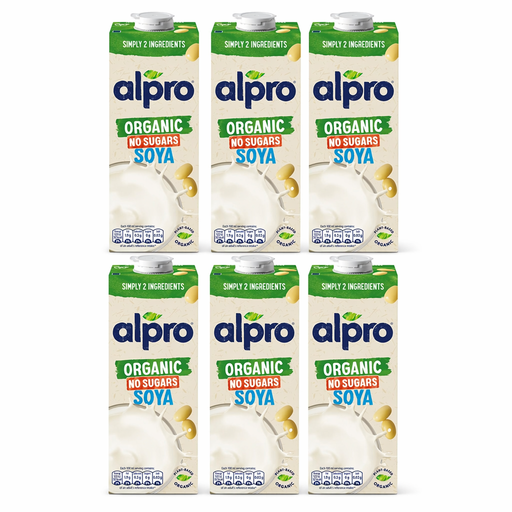
6 Alpro Soya Drink OG
This listing identifies organically produced soya, which may suit an organic preference for family cooking but does not establish suitability as a child’s main drink. Before using it in weaning recipes, check the current carton for added nutrients, soya allergen information and age advice. A supermarket soya drink must not replace breast milk or first infant formula as the main drink before age 1.
Joybuy
Common questions
Can organic soya drink be my baby’s main drink during weaning?
No, not before age 1: NHS guidance says to continue breast milk or first infant formula until at least then. Frimley Healthier Together’s NHS guidance allows an appropriate fortified plant drink in cooking from around 6 months, but not as the baby’s main milk drink.
Is organic soya drink automatically suitable for a dairy-free toddler?
No. Organic status does not tell you whether calcium, iodine or vitamins have been added. For a child aged 1 or over needing a dairy-free main-drink alternative, check for an unsweetened, fortified product that permits the intended use under its own age instructions; Frimley Healthier Together’s NHS guidance warns that not all organic versions are fortified.
What should I check on a soya-drink carton for a child aged 1 or over?
Check that it is unsweetened, look for added calcium, iodine, vitamin D and vitamin B12, and read its age and allergen statements. NHS North West Knowledge Now favours unsweetened, fortified soya among plant-drink alternatives for this age group, but a particular product may restrict its use as a main drink until a later age.
Can a child with cow’s-milk protein allergy have soya drink?
Not automatically. NHS North West Knowledge Now cautions that soya may not suit some children with cow’s-milk protein allergy. Follow the child’s clinician’s or dietitian’s plan before using a retail soya drink as an alternative.
Does a dairy-free soya drink contain milk?
A soya drink described as dairy-free is not a dairy-milk drink, but it contains soya, which is an allergen. Check the exact carton’s ingredients and allergen declaration each time you choose one.


