Dairy-free shoppers who can have soya
If soya is suitable for you, the choice is whether organic ingredients or added nutrients matter more for the way you use the drink.


Choose an organic soya drink only if everyone who will consume it can have soya: organic labelling does not make the drink free from allergens. Check the current carton’s ingredients and precautionary wording first, then decide whether a short ingredient list or nutrient fortification matters for how the drink will be used, particularly if it will regularly replace dairy for a child.
If soya is suitable for you, the choice is whether organic ingredients or added nutrients matter more for the way you use the drink.
Check the exact variant for declared ingredients and precautionary wording. A plain soya drink and a barista version from the same brand can carry different ingredient and nut warnings.
If a child can have soya but cannot have dairy, check the child’s age, the drink’s fortification and the advice given for their diet. Kingston and Richmond NHS Foundation Trust notes that many organic dairy alternatives are not fortified.
Start with the ingredients and allergy advice on the exact carton; compare organic labelling, fortification and intended use only after those checks fit the household’s needs.
| Priority | What to check | Your needs |
|---|---|---|
| Allergens | Read the soya declaration and any precautionary wording on the current carton. Check the exact variant rather than relying on an organic, vegan or dairy-free label. | I need a drink that fits everyone’s allergy plan. If someone must avoid soya, a soya drink is not an appropriate choice. |
| Organic labelling | Check the product’s organic labelling alongside its full ingredient list. UK government guidance says foods labelled organic must meet organic production rules and have at least 95% organic agricultural ingredients. | Organic sourcing matters to me, but I still need to assess the ingredients and allergy advice separately. |
| Fortification | Compare calcium, iodine and vitamin declarations per 100ml on the drinks you are considering. Kingston and Richmond NHS Foundation Trust notes that many organic dairy alternatives are not fortified. | If this will regularly replace dairy, especially for a child, I need to consider its nutrient content as well as its ingredient list. |
| Intended use | Compare a plain formula with the ingredients in a barista variant. Plenish Organic Barista Soya lists agave syrup, coconut milk and salt alongside soya, and states ‘May Contain Nuts’. | For coffee, I may want a barista formula, but added ingredients and precautionary wording still have to fit our household. |
Organic rules concern production and labelling; they do not remove soya from a soya drink. Vegan labelling does not replace allergen information or address every cross-contact concern.
If the intended consumer must avoid soya, choose another category in line with their allergy plan. Otherwise, read both the ingredients and precautionary wording on the carton.
Plenish Organic Soya lists spring water and organic soybeans, while Sainsbury’s Unsweetened Soya Drink lists added calcium, iodine and vitamins. Kingston and Richmond NHS Foundation Trust notes that many organic dairy alternatives are not fortified.
For a regular dairy replacement, compare nutrient declarations per 100ml. If choosing for a child with an allergy-related diet, follow the advice given for that child.
The plain Plenish organic drink is described as produced in an environment handling nuts; its Organic Barista Soya variant lists coconut milk and states ‘May Contain Nuts’.
Check the full name, ingredients and precautionary statement of the variant you intend to use, rather than relying on the brand name alone.
A previous listing or purchase does not establish what is printed on the carton delivered now.
Before use, read that carton’s ingredients, allergy advice, best-before date and storage instructions.
These product examples illustrate different ingredient and fortification choices; a brand name alone does not establish whether a particular carton fits an allergy plan.
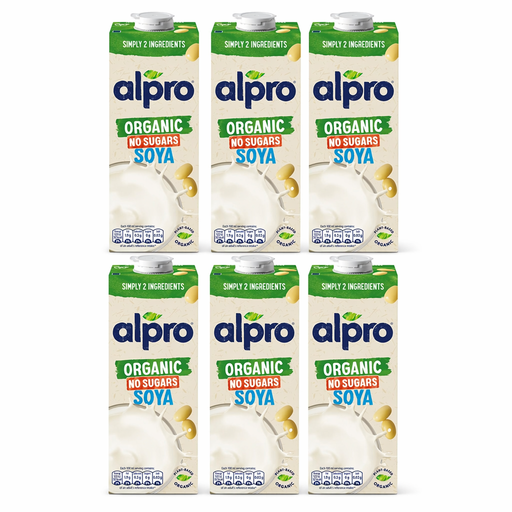
Alpro Organic Soya Drink is an organic option for shoppers who can have soya.
Its plain organic soya drink and Organic Barista Soya offer different formulas.
Tesco Organic Longlife Soya Drink Unsweetened is another organic option for shoppers who can have soya.
Sainsbury’s Unsweetened Soya Drink illustrates a fortified dairy-free option rather than an organic-labelled one.
Essential Unsweetened Soya Drink is a fortified option to compare when added nutrients matter more than an organic claim.
This Alpro option is relevant to shoppers considering an organic soya drink for everyday use, provided everyone drinking it can have soya.
 No image available
An organic soya-drink option for everyday use if soya is suitable for the intended consumer. Check the carton’s ingredients and precautionary wording against the household’s allergy plan; if it will regularly replace dairy, compare its calcium and iodine declarations too.
No. Organic labelling does not remove soya from a soya drink. UK food-allergen guidance identifies soya beans as an allergen that must be declared when present as an ingredient; anyone who must avoid soya should not choose a soya drink.
UK government guidance says a food labelled organic must meet organic production rules and have at least 95% organic agricultural ingredients. That claim does not replace checking the full ingredients list or allergy advice.
No. Those labels are not substitutes for the product’s allergen information, and cross-contact can still matter. Read the ingredients and any precautionary wording on the current carton.
Not on ingredient count alone. Kingston and Richmond NHS Foundation Trust notes that many organic dairy alternatives are not fortified. Check the child’s age, the drink’s nutrient declarations and the advice given for their diet, particularly if the drink will regularly replace dairy.
Use the listing to narrow down options, then read the carton received before anyone drinks it. Confirm the exact variant, ingredients and precautionary wording, as well as the best-before date and storage instructions.