Parents baking dairy-free recipes with children
An unsweetened organic soya drink can go into batters for cakes or pancakes. Before children help prepare or eat the bake, check that everyone eating it can have soya.


For family baking, an unsweetened organic soya drink is a useful choice when its ingredients suit the recipe and everyone eating it can have soya. If the same carton will also be a young child’s regular milk alternative, check fortification separately: the reviewed organic products do not list added calcium or vitamins, while NHS guidance discusses unsweetened calcium-fortified alternatives from age 1.
An unsweetened organic soya drink can go into batters for cakes or pancakes. Before children help prepare or eat the bake, check that everyone eating it can have soya.
If a child will also drink it regularly, organic status is not a substitute for checking fortification. NHS guidance identifies unsweetened calcium-fortified milk alternatives, including soya, as an option from age 1 as part of a balanced diet.
A soya drink offers a dairy-free baking ingredient, but dairy-free does not mean free from other allergens. Check the current carton and the needs of everyone who will eat the finished food.
Decide whether the carton is mainly for recipes or will also be a regular drink for a child; then check the label and the recipe’s heating method.
Choose for recipes: An unsweetened organic drink fits when organic ingredients are the priority and everyone eating the bake can have soya.
Keep separate: The reviewed organic drinks do not list added calcium, iodine, vitamin D or vitamin B12, so their recipe use does not establish suitability as a child’s regular milk alternative.
Consider for regular use: If a child aged 1 or over also needs a plant-based milk alternative, check the fortification against the relevant dietary advice, rather than choosing on organic status alone.
Trade-off: A fortified option may not meet an organic-only preference. M&S, for example, lists calcium, iodine, vitamin D and vitamin B12 in its Unsweetened Soya Drink but does not present it as organic.
| Priority | What to check | Your needs |
|---|---|---|
| Organic ingredients | Look for an organic claim on the product label and read the ingredient list. Alpro Organic lists water and 8.8% organically grown hulled soya beans; Plenish lists spring water and 8% organic soybeans. | I want an organic ingredient for cakes or pancakes, rather than assuming any plant-based carton is organic. |
| Sweetness | Compare the ingredients and sugars line with the recipe. Alpro describes its organic drink as having no sugars; Plenish lists no added sugar. Those descriptions are not interchangeable, so check the carton you buy. | For a recipe where I add the sweet ingredients myself, I want to know what is already in the drink. |
| Hot mixtures | Follow the specific carton’s directions. Waitrose advises heating soya alternatives gently and stopping before boiling; Tesco says not to mix its organic drink with boiling water. | If I am making a sauce or hot drink, I want to avoid separation while heating it. |
| Regular drinks for children | Check whether calcium and other nutrients are added. NHS guidance identifies unsweetened calcium-fortified alternatives from age 1; Hertfordshire and West Essex Clinical Guidance advises checking calcium, vitamin D, vitamin B12 and iodine when moving a child from cow’s-milk-allergy formula to a non-dairy alternative. | The carton may also be a child’s regular drink, not just an ingredient in an occasional bake. |
| Allergens | Read the current soya allergen statement and any additional precautions. Tesco’s Plenish listing says it is produced in an environment that handles nuts. | Other children may share the bake, so I need to check that its ingredients suit everyone eating it. |
The reviewed Alpro, Plenish and Tesco organic drinks have short ingredient lists without added calcium or vitamins listed. That distinction matters if the carton will also be a young child’s regular milk alternative.
For baking, choose by the recipe and label. For regular use by a child, check fortification separately against NHS guidance and any advice relevant to the child’s diet.
“No sugars” and “no added sugar” describe different things. The ingredients and nutrition panel give a clearer basis for comparing drinks for a recipe.
Read both panels before deciding how much sweetness to add to the bake.
Waitrose warns that soya alternatives can curdle or separate when heated, changing the texture of a sauce or hot drink.
Heat gently and follow the carton’s instructions. Tesco advises against mixing its organic soya drink with boiling water.
Soya is an allergen, and individual products may carry further precautions. Tesco’s Plenish listing, for example, mentions an environment that handles nuts.
Check the current carton and confirm that everyone eating the finished bake can have its ingredients.
These examples show the difference between organic recipe ingredients and fortified alternatives; check each product’s current label when choosing.
Alpro describes its Organic Soya Drink as versatile for recipes.
Its Organic Soya Drink is an option for baking with a short ingredient list.
Tesco Organic Longlife Soya Drink Unsweetened is an own-brand organic option.
M&S Unsweetened Soya Drink illustrates a fortified option when regular-drink checks matter alongside baking.
Waitrose lists organic soya options as well as its separate Essential Original Soya Drink.
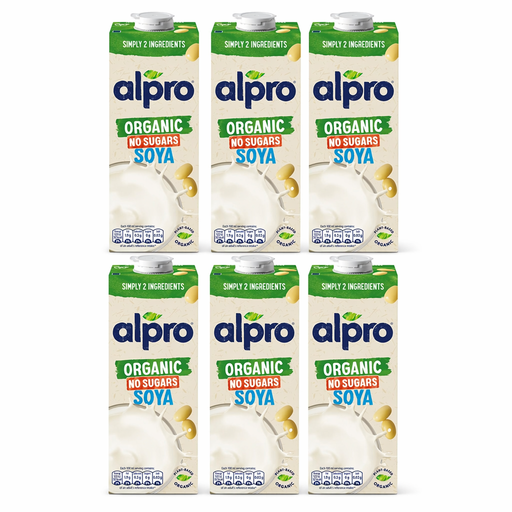
This Alpro soya drink option relates to the organic, recipe-led baking choice. Check its current carton if it will also be used as a child’s regular milk alternative.
 No image available
Alpro describes its organic soya drink as versatile for recipes. Soya is an allergen, so check the current pack before baking for children or others; check fortification separately if it will also be a child’s regular milk alternative.
No: organic status and fortification are separate checks. NHS guidance identifies unsweetened calcium-fortified milk alternatives, including soya, as an option from age 1 as part of a balanced diet. Hertfordshire and West Essex Clinical Guidance advises checking calcium, vitamin D, vitamin B12 and iodine when moving a child from cow’s-milk-allergy formula to a non-dairy alternative.
Yes, but follow the carton’s heating directions. Waitrose advises heating soya alternatives gently and removing them from the heat before boiling because they can curdle or separate; Tesco says not to mix its organic soya drink with boiling water.
Check that everyone eating it can have soya, which is an allergen, and read the current carton for other precautions. Tesco’s Plenish listing says the drink is produced in an environment that handles nuts.
Follow the instructions on that carton rather than assuming all soya drinks have the same opened life. Tesco’s listing for Plenish Organic Soya says to refrigerate after opening and consume within 4 days.