Who is this choice relevant to?
An organic label and a low-FODMAP designation answer different questions. The ingredient list matters whichever reason brings you to the soya-drink aisle.
Shoppers who prefer organic food
If you want an organic soya drink during a low-FODMAP diet, check whether its soya base is extracted protein or whole or hulled beans. Monash University identifies that distinction as relevant to FODMAP content; organic status does not settle it.
Vegan or dairy-free shoppers during restriction
If a plant drink will go into your cereal, tea or coffee regularly, check the soya ingredient and any serving guidance. Check calcium on the nutrition panel separately if the drink will replace dairy milk.
People discussing a low-FODMAP diet for IBS
The NHS says a dietitian may recommend a low-FODMAP diet for IBS. If you are following one, discuss how a proposed soya drink fits your current stage rather than treating its organic label as dietary guidance.
What should you check on the carton?
Start with the ingredient that determines how the soya drink was made. Then consider organic sourcing, serving guidance and nutrition as separate checks.
Soya-protein drink
Consider it when: You want a soya-based option during strict restriction; Monash University says drinks made from extracted soya protein tend to be low FODMAP.
Check separately: The soya-protein ingredient does not establish whether the drink is organic or contains added calcium.
Organic whole- or hulled-bean drink
Consider it when: Organic sourcing matters to you and you can check guidance for the particular drink and serving before using it during restriction.
The limitation: Monash University says whole-bean soya milk tends to be high in GOS; an organic claim does not establish a low-FODMAP serving.
| Priority |
What to check |
Your needs |
| Soya base |
Read the ingredients for extracted soya protein versus whole or hulled soya beans. Monash University says GOS can enter drinks made from whole beans, while extraction leaves it behind in soy-protein drinks. |
I want a soya drink I can assess for the strict stage without mistaking a whole-bean recipe for a soy-protein one. |
| Organic claim |
Check the carton’s organic designation, but assess FODMAP suitability separately. UK government guidance describes organic as a production and labelling claim; Monash Low FODMAP Certification instead indicates independent FODMAP testing. |
Organic sourcing matters to me, but I do not want its label to stand in for FODMAP guidance. |
| Serving guidance |
For a drink made from whole or hulled beans, check current guidance for the particular product and serving before using it during restriction. Do not infer suitability from an unsweetened or short-ingredient description. |
Before pouring a regular serving, I want to know whether that drink and amount fit the stage I am following. |
| Calcium |
Compare calcium per 100 ml on the current nutrition panels if a plant drink will regularly replace dairy milk. Check whether the drink is fortified rather than assuming that organic status answers the nutrition question. |
If I use this instead of dairy milk most days, I want to know what its calcium label says. |
Organic soya drink brand references
These ingredient examples help you read organic soya-drink labels; brand inclusion does not establish a low-FODMAP serving.
Alpro
Alpro Organic Soya is an organic soya drink made with hulled soya beans.
- Alpro UK lists water and 8.8% organically grown hulled soya beans as its soya base, and 3.3 g protein per 100 ml.
- Hulled beans are not extracted soya protein. Do not assume a low-FODMAP serving without guidance for the drink and amount.
Plenish
Plenish has an organic long-life soya drink and a separate organic Barista drink; check which recipe is on the carton.
- Sainsbury's lists spring water and 8% organic soybeans for the long-life drink, with 3.2 g protein per 100 ml.
- The long-life drink uses soybeans rather than extracted soya protein. Waitrose lists soya, agave syrup and coconut milk among the Barista version’s ingredients; its use in coffee does not establish FODMAP suitability.
Rude Health
Rude Health Organic Soya Drink is a long-life drink with a short listed ingredient list.
- Ocado lists water, 12% organic soya beans and sea salt, with 3.0 g protein per 100 ml.
- Its whole-soya-bean ingredient is the relevant FODMAP consideration; the organic claim and short list do not establish suitability during strict restriction.
Organic soya drink on Joybuy
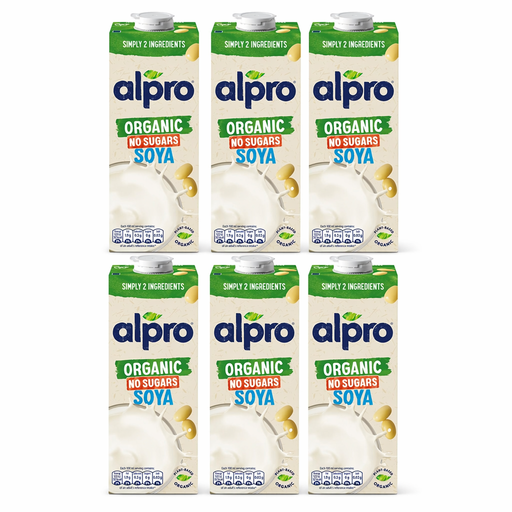
This Alpro organic soya drink represents the hulled-bean option. Check guidance for the product and serving before relying on it during strict low-FODMAP restriction.
 No image available
Alpro Organic Soya Drink (6)
This organic soya drink is made with hulled soya beans, so its organic label alone does not establish a low-FODMAP serving. Alpro UK lists 8.8% hulled soya beans and 3.3 g protein per 100 ml for Alpro Organic Soya. Check the current carton and product-specific serving guidance before using it during strict restriction; check its calcium label separately if it will regularly replace dairy milk.
View on Joybuy
Questions about organic soya milk and FODMAPs
Is organic soya milk automatically low FODMAP?
No. Organic describes production, not a FODMAP test result. Monash University says drinks made from whole soya beans tend to be high in GOS, while those made from extracted soya protein tend to be low FODMAP. Read the ingredient list as well as the organic label.
What should I look for in a soya drink during strict restriction?
Look for extracted soya protein as the base ingredient rather than assuming whole soya beans are equivalent. Monash University distinguishes the two processes; its Low FODMAP Certification, where present on a product, indicates independent testing. Check the current carton and any applicable serving guidance.
Can I assume Alpro, Plenish or Rude Health organic soya drinks suit the strict stage?
No. Alpro UK lists hulled soya beans for Alpro Organic Soya; Sainsbury's lists soybeans for Plenish Organic; and Ocado lists soya beans for Rude Health Organic. Monash University says whole-bean soya milk tends to be high in GOS. Check guidance for the particular drink and serving rather than treating those ingredient lists as confirmation of suitability.
Should the strict low-FODMAP stage continue indefinitely?
No. Monash University describes an initial step of 2–6 weeks and a move to reintroduction if symptoms improve. The NHS says a dietitian may recommend a low-FODMAP diet for IBS; seek individual guidance on how to follow its stages.
What else matters if a plant drink replaces dairy milk?
Check its calcium content on the current nutrition panel, particularly if you will use it regularly in place of dairy milk. An organic label does not tell you whether the drink is calcium-fortified.


