Traditional black-tea drinkers
If a familiar black-tea cup is the aim, look for an organic black-tea blend rather than a fruit or herbal infusion. Check the ingredients and follow the brewing directions for the particular pack.


For a traditional winter cup, start with an organic black-tea blend; if avoiding caffeine matters for an evening drink, choose a product explicitly labelled caffeine-free instead. Check the exact pack for its organic claim, ingredients, brewing directions and tea-bag disposal guidance, as these differ between blends.
If a familiar black-tea cup is the aim, look for an organic black-tea blend rather than a fruit or herbal infusion. Check the ingredients and follow the brewing directions for the particular pack.
A product-specific caffeine-free statement matters more than an organic label. Twinings describes its Organic Pure Camomile as naturally caffeine-free; do not extend that statement to other blends.
Check the bag material and the pack’s disposal directions as well as the tea itself. Plant-based, biodegradable and industrially compostable describe different claims, not a universal collection route.
Decide on the type of drink and whether caffeine avoidance matters, then check the exact pack’s organic wording, ingredients and preparation directions.
| Priority | What to check | Your needs |
|---|---|---|
| Organic claim | Read the product name and ingredients. For food marketed as organic in the UK, Defra’s organic labelling guidance requires compliance with organic production rules, at least 95% organic agricultural ingredients and certification by an approved organic control body. | I want the organic wording to apply to the product I am buying, rather than relying on a general impression from its packaging. |
| Tea and flavour | Distinguish black tea from camomile, mint and fruit or spice-led infusions. Read the ingredients and the flavour description for the exact blend. | For a conventional tea flavour, I would choose a black-tea blend. For something floral, minty or fruit-led, I would look at the named ingredients instead. |
| Caffeine | Look for an explicit caffeine-free statement if that is essential. Do not treat an organic claim, an herbal-sounding name or a decaffeinated label as the same statement. | When I make an evening drink and want to avoid caffeine, I need the caffeine wording to apply to that particular product. |
| Brewing | Check the water and infusion directions on the pack. Clipper gives freshly boiled water and 2–5 minutes for its Organic & Fairtrade Everyday 40-bag product; directions for another blend or pack should be checked separately. | I want a cup that matches the blend I chose, so I will use its own preparation instructions rather than assume every tea bag brews alike. |
| Bag disposal | Read the exact pack’s disposal instructions and check local collection rules. Clipper describes its heat-seal material as plant-based PLA; Twinings describes the bags for Organic Pure Camomile as industrially compostable. | If disposal affects my choice, I need to know where the used bags from this pack can actually go. |
Organic labelling does not tell you whether the drink is black tea, a multi-ingredient infusion or caffeine-free. Under Defra’s UK food-labelling guidance, the 95% threshold concerns agricultural ingredients; it does not mean every component is organic.
Read the full product name and ingredients, then choose the tea or infusion style you want.
A black-tea blend and an explicitly caffeine-free camomile infusion answer different buying needs. An organic label alone does not establish caffeine status.
If caffeine avoidance is important, look for a caffeine-free statement on the exact product; do not assume that a decaffeinated product makes the same claim.
Clipper describes its PLA-sealed bags as plant-based and biodegradable, while Twinings describes its Organic Pure Camomile bags as industrially compostable. Neither description establishes acceptance in every home compost bin or local collection.
Follow the pack’s disposal directions and check what your local collection accepts.
These examples show different organic tea and infusion styles; a brand name alone does not establish the ingredients, caffeine status or disposal route of every product it sells.
Clipper’s Organic & Fairtrade Everyday is an organic black-tea option for a traditional hot cup.
Pukka presents organic black tea alongside fruit and botanical infusions, offering different flavour styles.
Twinings Organic Pure Camomile is a floral alternative to black tea for shoppers seeking an evening hot drink.
These options cover black-tea and herbal-infusion styles for a winter hot drink. Compare each pack’s organic wording, ingredients and caffeine description before choosing.
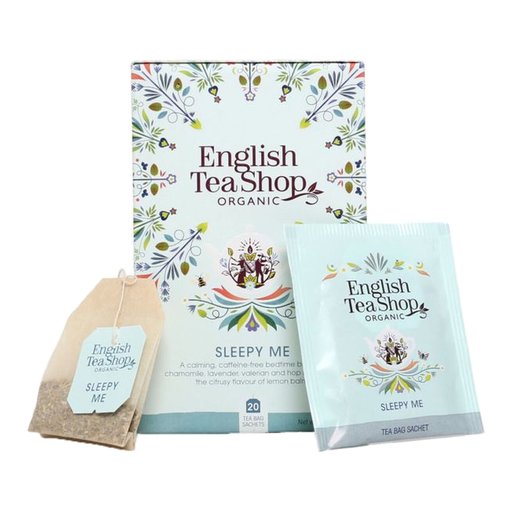 No image available
For an evening herbal drink, the listing describes this blend as caffeine-free and names camomile, lavender, hops, valerian and lemon balm. Check the full ingredients if any botanical matters to your choice, and check the exact pack’s organic certification details.
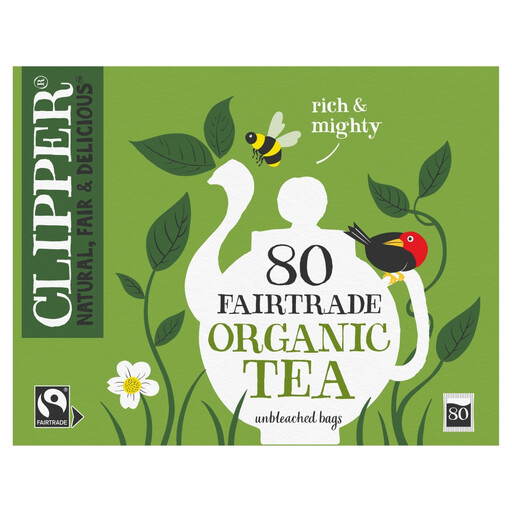 No image available
For a traditional black-tea cup, this pack lists organically grown black tea as its ingredient. Check its organic certification details, brewing directions and tea-bag disposal instructions on the exact pack.
 No image available
This is a decaffeinated black-tea option for shoppers who want a traditional tea style. Decaffeinated is not a caffeine-free statement: check the product information if strict caffeine avoidance matters, and check the exact pack’s organic certification details.
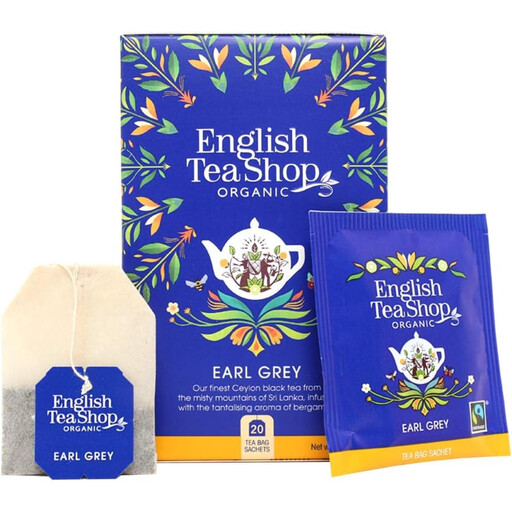 No image available
For an Earl Grey-style black tea, the listed ingredients identify black tea and bergamot oil. This is not presented as caffeine-free; check the exact pack’s caffeine information and organic certification details if they affect your choice.
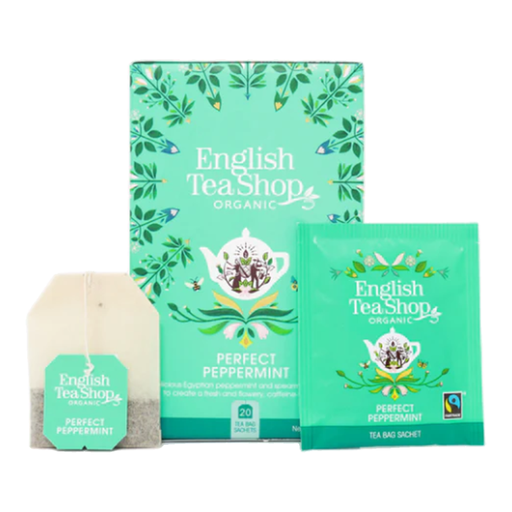 No image available
For a mint infusion rather than black tea, the listing identifies peppermint and spearmint and describes the blend as caffeine-free. Check the exact pack’s organic certification and tea-bag disposal directions if those claims matter to your choice.
Defra’s UK organic food-labelling guidance says that food marketed as organic must meet organic production rules, have at least 95% organic agricultural ingredients and be certified through an approved organic control body. Check the wording and certification information on the pack you intend to buy; an organic claim does not establish its flavour or caffeine status.
Choose a product that explicitly states it is caffeine-free. Twinings describes its Organic Pure Camomile as naturally caffeine-free and made with 100% organic camomile; do not assume the same status for other organic teas or herbal blends.
Follow the directions for the exact blend. Clipper directs shoppers to use freshly boiled water and infuse its Organic & Fairtrade Everyday 40-bag product for 2–5 minutes; check a different product or pack for its own instructions.
Follow the exact pack’s instructions and check local collection rules. Clipper says used bags from its Organic & Fairtrade Everyday product can go in food waste, while Twinings describes its Organic Pure Camomile bags as industrially compostable; neither statement means every local collection or home compost bin accepts them.