Hosts prioritising organic sourcing
If organic status is the deciding factor, look for an explicit organic label and check the certification information on the individual pack rather than relying on natural-looking packaging.


For a brunch with mixed preferences, put out an organic black tea for guests who want a traditional cup and an organically labelled, naturally caffeine-free herbal infusion for those who do not want black tea. If certified-organic sourcing matters, check the current pack’s organic label and certification information: Fairtrade, Rainforest Alliance and tea-bag material claims address different questions.
If organic status is the deciding factor, look for an explicit organic label and check the certification information on the individual pack rather than relying on natural-looking packaging.
A breakfast-style black tea and a naturally caffeine-free herbal infusion give guests two distinct choices. A herbal infusion will not taste like black tea with milk, so one need not replace the other.
Organic status, Fairtrade, Rainforest Alliance sourcing and tea-bag material describe different aspects of a product. Check each claim separately if more than one matters to you.
Decide which drinks to serve first, then check the organic claim and practical pack details for each tea.
Choose it when: guests want a familiar breakfast-style tea, including a cup served with milk.
Bear in mind: black tea does not replace a naturally caffeine-free choice for guests avoiding caffeine.
Choose it when: you want a clearly labelled, naturally caffeine-free drink alongside black tea.
Bear in mind: a floral or mint infusion is a different drink from breakfast-style black tea.
| Priority | What to check | Your needs |
|---|---|---|
| Organic status | Look for an explicit organic claim, the ingredients and current certification information on the pack. The Department for Environment, Food & Rural Affairs says food labelled organic must meet UK organic-labelling rules, including the requirement that at least 95% of its agricultural ingredients are organic. | I want an organic claim I can assess on the tea I am buying, rather than treating another sustainability label as equivalent. |
| Tea choice | Check whether each option is black tea, a decaffeinated black tea or a naturally caffeine-free herbal infusion. Clipper identifies its Organic Fairtrade English Breakfast as black tea; Twinings labels Organic Pure Camomile naturally caffeine free. | Some friends may want black tea with milk, while others would rather have a caffeine-free herbal drink. |
| Serving | Check the bag count and each product’s brewing instructions before preparing several cups. Clipper gives a 2–4 minute brew for its Organic Fairtrade English Breakfast; Twinings gives three minutes for Organic Pure Camomile. | I want enough bags for the table and clear instructions for making the different drinks. |
| Tea-bag disposal | Read the current pack’s material and disposal instructions. Check local collection rules before putting used bags in food waste; an organic claim does not establish how the bag should be disposed of. | If tea-bag material matters to me, I want to know what the claim applies to and which disposal route is available locally. |
Organic, Fairtrade, Rainforest Alliance and biodegradable claims do not establish the same thing. For an organic purchase in the UK, the organic claim needs to meet the rules described by the Department for Environment, Food & Rural Affairs.
Check the individual pack’s organic label and certification information first if that is your priority. Compare sourcing and tea-bag material claims separately.
Organic status does not tell guests whether a drink suits their caffeine preference. A conventional black-tea choice also differs in flavour from a herbal infusion.
Put a clearly labelled, naturally caffeine-free herbal option alongside black tea when you do not know what everyone will want. If choosing decaf black tea instead, check its caffeine information if a specific limit matters.
A plant-based or biodegradable material claim does not, by itself, tell you which local collection will accept a used bag. Organic status concerns the tea’s production and labelling, not the bag’s disposal route.
Follow the current pack instructions and your local council’s collection guidance rather than relying on an older announcement about a brand’s packaging.
These examples illustrate different product and sourcing claims; a brand-wide claim is not a substitute for checking the tea bag you choose.
Clipper lists organic black-tea products, including Organic Fairtrade English Breakfast, for a traditional brunch cup.
Twinings Organic Pure Camomile provides an organic herbal option alongside a breakfast-style tea.
Tetley is a reference for shoppers comparing sourcing certification with organic status.
Yorkshire Tea is relevant when tea-bag sealing material is part of the buying decision.
Typhoo provides another example of a sourcing claim to assess separately from organic certification.
These options include black tea, decaf black tea and herbal infusions for different drinks at a brunch table. If certified-organic status is essential, check the current pack’s organic label and certification information for the product you choose.
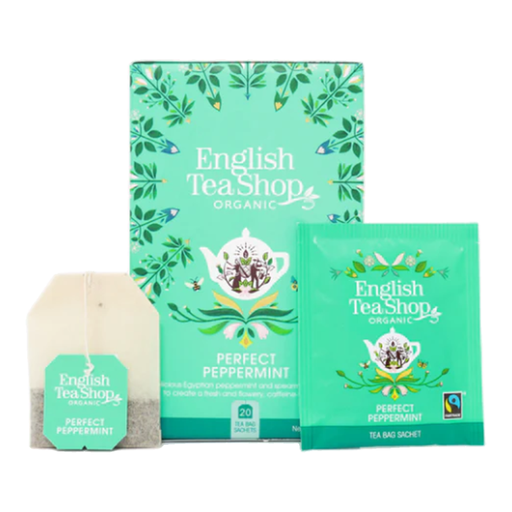 No image available
A mint herbal choice to put alongside black tea for guests who prefer a different drink; it is described as caffeine free. Check the pack’s bag count when planning servings and its certification information if organic status is decisive.
 No image available
A decaffeinated black-tea choice for guests who want that style rather than a herbal infusion. The listing identifies 80 bags; decaf is not the same claim as naturally caffeine free, so check the pack if a specific caffeine limit matters. Check its current organic certification and bag-disposal information separately.
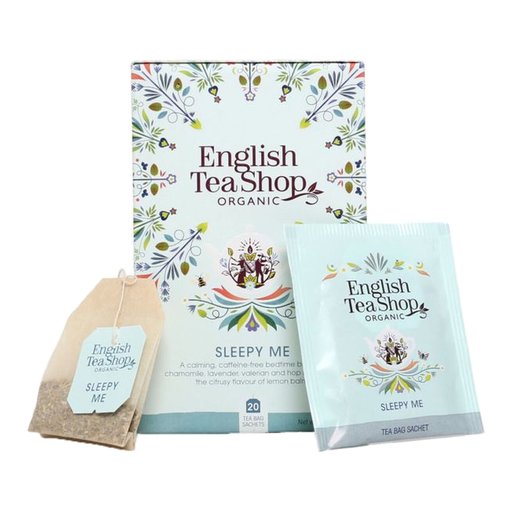 No image available
A herbal alternative described as caffeine free, in a 20-sachet pack. Its evening-oriented blend is a different choice from breakfast-style black tea; check the ingredients against guests’ flavour preferences. The stated infusion instruction is at least five minutes, and the current pack should confirm the organic certification details.
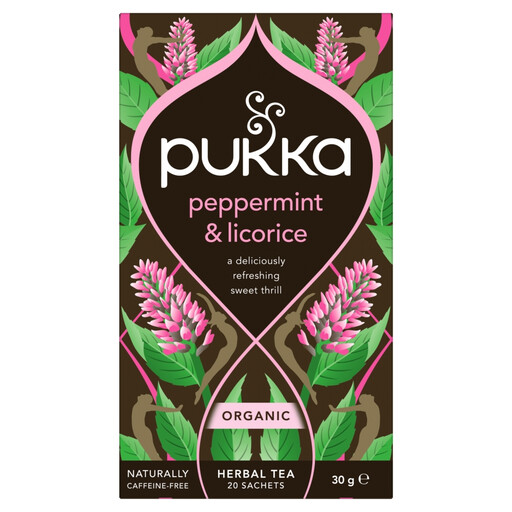 No image available
A peppermint and liquorice herbal option described as caffeine free, with 20 sachets. It contains liquorice: read the pack warnings before serving, particularly where pregnancy or high blood pressure is relevant. Check the current organic certification and sachet-disposal information if those affect your choice.
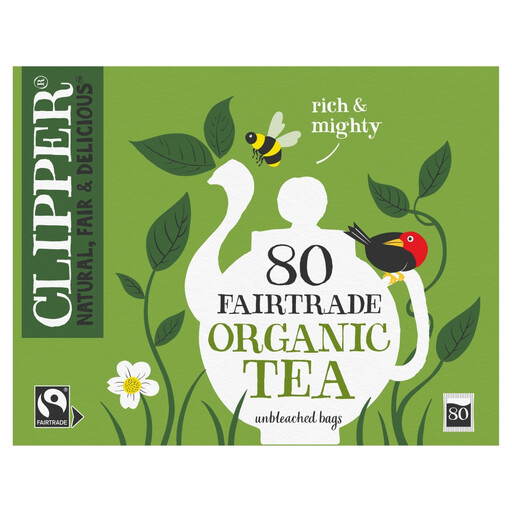 No image available
A black-tea option for guests who prefer a traditional cup; the listing identifies 80 bags and makes organic and Fairtrade claims. Check this pack’s certification information rather than assuming it is identical to another Clipper product, and check its caffeine information if a guest needs a particular limit.
It is a regulated food-labelling claim, not simply a description of the tea’s appearance or packaging. The Department for Environment, Food & Rural Affairs says food labelled organic must meet organic-production rules, including a requirement that at least 95% of its agricultural ingredients are organic. Check the individual product’s current label and certification information.
No: assess each claim separately. Clipper makes both organic and Fairtrade claims for its Organic Fairtrade English Breakfast product, while Tata Consumer Products and Typhoo describe Rainforest Alliance-certified sourcing for their teas. Neither Fairtrade nor Rainforest Alliance wording alone establishes an organic claim under the UK rules described by the Department for Environment, Food & Rural Affairs.
A black tea and a naturally caffeine-free herbal infusion offer two distinct choices when you do not know every guest’s preference. Clipper’s Organic Fairtrade English Breakfast is black tea; Twinings Organic Pure Camomile is an organic herbal infusion described as naturally caffeine free. A decaf black tea is another option, but check its caffeine information if a specific limit matters.
Follow the instructions for the particular product rather than using one time for every tea. Clipper gives 2–4 minutes for its Organic Fairtrade English Breakfast, while Twinings gives three minutes for its Organic Pure Camomile infusion.
Organic status alone does not determine where a used bag can go. Check the current product’s disposal instructions and your local council’s collection rules; material and compostability claims can differ between tea bags.